

If you are searching for jobs in Quetta, you have probably heard two things: that there is nothing here except government posts, and that everyone serious about a career eventually moves to Karachi. Both are half-truths, and the half that’s wrong costs people real money. Quetta is the capital of Balochistan, Pakistan’s largest province by area, and in 2026 it sits on one of the most interesting — and least understood — job markets in the country. Yes, the public sector dominates. But trade, logistics, mining-adjacent services, healthcare and a quietly growing remote-work scene employ thousands of people the job boards never quite capture.
This guide is the honest version. We will go through the sectors that genuinely hire in Quetta right now, where the real vacancies get posted, what salaries look like in 2026, how the Quetta–Karachi economic corridor creates jobs on both ends, the scam patterns that target job seekers here, and how to apply if you are coming from another city. If you live in Balochistan and have been told your only options are a government job or a one-way ticket to Karachi, read this first.
Why Searching for Jobs in Quetta Makes Sense in 2026
Three shifts are quietly working in Quetta’s favour.
First, the city’s position on Pakistan’s western trade routes has turned it into a genuine logistics and commerce hub. Quetta anchors the trade corridor into Afghanistan and Central Asia, and the wholesale markets around the city — dry fruit, garments, electronics, auto parts — employ an enormous number of people in sales, accounts, warehousing and transport coordination. With CPEC-adjacent infrastructure and the expansion of road links across Balochistan, transport and freight companies keep growing their Quetta operations.
Second, the cost math is the best in any provincial capital. A decent portion or flat in Satellite Town, Samungli Road or Model Town rents for a fraction of what you would pay in Karachi or Lahore. Daily life — food, transport, everything — costs noticeably less. So a salary of 70,000 PKR in Quetta buys a lifestyle that would need well over 100,000 in Karachi. Employers know this and anchor offers lower, but the gap between the offer and your actual standard of living is smaller than it looks.
Third, competition is thin. For every two hundred applicants fighting over a bank officer role in Lahore, the same role in Quetta might draw forty — and banks, telecoms, FMCG distributors and hospitals here regularly say they cannot find good local talent. If you are a capable graduate or mid-career professional, Quetta is a market where you can genuinely stand out instead of being CV number 847.
Industries That Actually Hire in Quetta
Forget the generic “top sectors” lists. Here is where the hiring really happens:
- Government and public sector — the giant. The Balochistan government departments, the Balochistan Public Service Commission (BPSC) track, federal bodies with Quetta postings (NADRA, FBR, customs, WAPDA/QESCO), the judiciary and the police. These come through advertised posts and testing, the process is slow, but the security and pension math still draws the biggest applicant pools in the province.
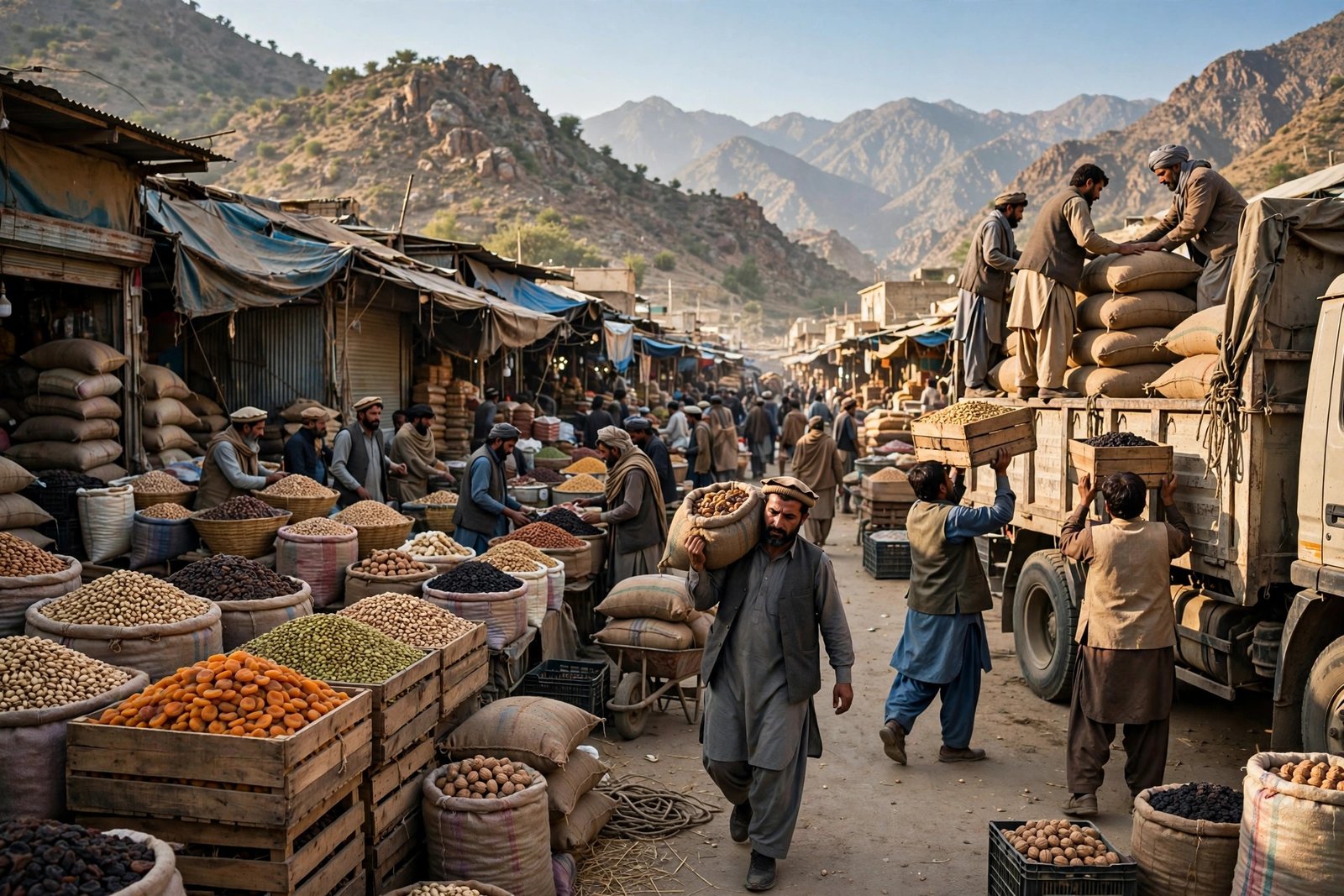
- Trade and wholesale commerce — Quetta’s commercial DNA. The city is famous for its dry-fruit trade — almonds, pistachios, pine nuts, dried apricots moving in and out of the wholesale markets — plus garments, electronics and auto parts. Traders, commission agents, distributors and stockists employ thousands in sales, bookkeeping, shop management and supply coordination.
- Transport and logistics — one of Quetta’s real growth stories. Freight companies, cargo terminals, goods transport agencies and clearing agents run routes to Karachi, Lahore, Peshawar and across the border. They hire operations coordinators, dispatchers, drivers, loaders and documentation staff continuously. If you understand routes, rates and paperwork, there is steady work here.
- Healthcare — Bolan Medical Complex, Civil Hospital and Sandeman Provincial Hospital anchor the public side, and private hospitals and clinics keep expanding. Beyond doctors and nurses, the sector hires administrators, lab technologists, pharmacists, medical billing staff and receptionists. Anyone with a health-sector qualification has real, steady demand in Quetta.
- Education — the University of Balochistan, BUITEMS, Bolan Medical College plus a large network of private schools, colleges and academies. Lecturers, school teachers, admin staff and admissions counsellors are in perennial demand, with the big hiring wave in the admission season and smaller ones through the year.
- Security services — a significant employer given the province’s security profile. Government security agencies, private security companies guarding banks, industrial sites and commercial plazas, and corporate security roles. Licensed private security firms hire guards, supervisors and operations staff year-round.
- Banking and microfinance — every major bank has a strong Quetta presence, and microfinance institutions hire for branch operations, credit officers and field staff across Balochistan. Among the most reliable entry-level white-collar jobs in the city.
- Mining-adjacent services — Balochistan’s mineral wealth (coal, chromite, marble, onyx) means mining companies and their contractors run offices and operations out of Quetta. Geologists, mining engineers, surveyors, accounts staff and logistics coordinators find work here, though much of the field work happens out in the districts.
- Remote and online work — the quiet escape hatch. A growing number of Quetta-based professionals work remotely for companies in Karachi, Lahore, Dubai or Europe — development, design, content writing, digital marketing, customer support. If your skill is digital, this is often the highest-paying path available, and Quetta’s low cost of living turns a dollar or Karachi-level salary into a genuinely comfortable life.
Where to Find Jobs in Quetta in 2026
The vacancies exist, but Quetta has its own information channels, and the national portals only catch part of the picture.
- Rozee.pk — still the best starting point for Quetta listings. Filter by city and you will find bank, telecom, hospital, NGO and trading-company postings. Set up a job alert for Quetta so new postings reach your inbox before the crowd.
- BPSC and Balochistan government job portals — the only legitimate route for provincial government posts. Check the Balochistan Public Service Commission’s advertised posts regularly; application windows are short and they do not get re-announced on social media.
- Newspaper classifieds — still alive and well. The Urdu dailies (Jang, Express) and local papers carry Quetta job ads that never make it online, especially for government-adjacent, school and hospital posts. Sunday editions are the ones to check.
- LinkedIn — increasingly useful for Quetta’s banking, NGO, telecom and remote roles. Follow Balochistan-based companies and recruiters; several firms post openings only on LinkedIn and their own pages.
- University placement cells and alumni groups — the University of Balochistan and BUITEMS run placement activity, and their Facebook and WhatsApp alumni groups circulate openings you will not find elsewhere.
- Walk-ins to the wholesale markets and transport terminals — for sales, accounts, dispatch and admin roles in trading and logistics companies, a well-timed walk-in with a CV still works in Quetta’s business culture. Dress properly, go mid-morning, ask for the seth or the manager.
One more angle: many Quetta professionals work the Karachi route — senior roles, corporate head offices and bigger markets sit there, and plenty of people split their careers between the two cities. Our guide to jobs in Karachi covers that market, which is worth knowing about if you are open to the Quetta–Karachi corridor for senior roles or relocation.
What Quetta Salaries Look Like in 2026
Honesty first: nominal salaries in Quetta run 15–30% below Karachi and Lahore for equivalent private-sector roles. Government pay scales are the same nationwide, which is part of why government jobs are so fiercely competitive here. The realistic picture:
- Entry-level (fresh graduate, sales/admin/support): 30,000–50,000 PKR/month. Banks and telecoms start around 40,000–50,000; trading companies sometimes lower but with faster increments and commissions.
- Mid-level (2–5 years, executive/officer roles): 55,000–110,000 PKR/month. Logistics and bank officers sit in the middle of this range; IT and remote workers earn more.
- Doctors, lecturers, engineers: 70,000–200,000+ PKR/month depending on institution. Private hospitals and universities pay at the top; public sector pays less but adds the pension.
- Security and field roles: 35,000–70,000 PKR/month for guards and supervisors, more for operations managers.
- Remote-for-foreign-client work: 100,000–400,000+ PKR/month equivalent — the ceiling-breaker, because the salary is set by another market while you live at Quetta prices.
The negotiation advice is Quetta-specific: employers anchor low because living costs are low. Counter by anchoring to the role’s market rate, not the city’s — cite what the same job pays in Karachi, then settle between the two. And always ask about the full package: pick-and-drop, medical, annual bonuses and accommodation allowances are common in Quetta and do not show in the headline salary.
Applying From Outside Quetta: What Actually Matters
If you are in Karachi, Lahore or elsewhere and eyeing a Quetta role, a few practical points:
Address the relocation question in your cover line. Employers skip out-of-city CVs because they assume you will not actually move. One sentence — “I am relocating to Quetta in [month] and available for in-person interviews” — removes the objection. Family ties in Balochistan? Say so.
Visit before you commit. Quetta’s neighbourhoods vary in rent and feel. Satellite Town and Samungli Road are the comfortable professional zones; Model Town and parts of Cantt are pricier; areas around the old city are cheaper and busier. Winters are genuinely cold — heating is a real household cost people forget to budget for. A short trip to view areas and do in-person interviews pays for itself.
Language helps more than you think. Urdu and English carry you in corporate and government jobs. But even basic Pashto, Balochi or Brahui greetings change how trading-company and field employers see you — it signals you will stay, and in Quetta’s business culture, staying power is half the hiring decision.
Consider the corridor, not just the city. Plenty of careers in this region run on the Quetta–Karachi axis: head office in Karachi, territory or operations role based in Quetta, regular travel between the two. Apply to both markets and let the role decide where you sit.
Job Scams Targeting Quetta Seekers: Red Flags
Quetta’s job market has a scam problem, and it preys on desperation. Know the patterns:
- “Government job — guaranteed selection” — anyone asking for money to secure a Balochistan government post is lying. Real government hiring goes through BPSC or the relevant department, with published merit lists. No agent, no shortcut, no exceptions.
- Overseas job agents demanding advance fees — fake recruiters exploit the Gulf-migration route. A legitimate overseas recruiter is licensed by the Bureau of Emigration and Overseas Employment; verify the license number before paying a rupee, and never pay for a “visa” to a person instead of a company.
- Fake interviews and “training fee” traps — some scams rent a small office, “interview” dozens of candidates, collect “training fees,” and vanish. Check that the company has a real website, a verifiable address history and a presence on LinkedIn or Rozee before you hand over documents or money.
The rule is simple: money flows from employer to employee. The moment a “job” asks you to pay — for registration, training, a uniform, a visa, anything — walk away.
FAQs About Jobs in Quetta
Are there good private-sector jobs in Quetta, or is it all government?
Both exist, but the mix is different from other cities. Government is the single biggest formal employer, yet trade, logistics, banking, healthcare and education employ thousands privately. And the remote-work route lets you earn a Karachi or international salary while living in Quetta — for digital skills, that is often the best private-sector option of all.
How do I apply for Balochistan government jobs?
Through the Balochistan Public Service Commission for gazetted and most non-gazetted posts, or directly to the department for posts outside BPSC’s purview. Watch the advertised posts, apply within the window, and prepare for the test — competition is intense and the process is slow. Never pay anyone who claims they can “confirm” your selection.
What is the biggest hiring sector for fresh graduates in Quetta?
Banking and microfinance for white-collar entry roles, sales and accounts in the trading sector for commercial roles, and teaching for education graduates. IT graduates increasingly go remote — the local software-house scene is small, but remote work for Karachi, Lahore and foreign clients is very real.
Is it worth moving to Quetta for work?
If the role is right, yes — especially in government, logistics, healthcare or education, where Quetta offers genuine careers at a cost of living no other provincial capital can match. Do the winter math (heating costs are real), visit first, and negotiate on the role’s market rate rather than accepting a “Quetta discount” without question.
How do I avoid job scams in Quetta?
Verify everything. Government jobs only through BPSC or the department’s official announcement. Overseas recruiters only with a Bureau of Emigration license. Never pay any fee to get hired — registration, training, uniform, visa, none of it. If an offer feels rushed or too good, it is not real.
Final Word: Jobs in Quetta Reward the Ones Who Look Properly
Jobs in Quetta will not come to you the way Karachi listings flood your feed — this market rewards people who know where to look. The BPSC track for government, the wholesale markets and transport terminals for trade and logistics, Rozee.pk and LinkedIn for the formal private sector, and the remote-work route for anyone with digital skills. The Quetta–Karachi corridor doubles your options if you stay open to it. Competition is thinner here than anywhere else in the country, the cost of living is the kindest of any provincial capital, and employers are genuinely short of good people. If you are in Balochistan and have been told the future is somewhere else, the honest answer for 2026 is this: the future is also here — you just have to go and take it.
2 Responses