
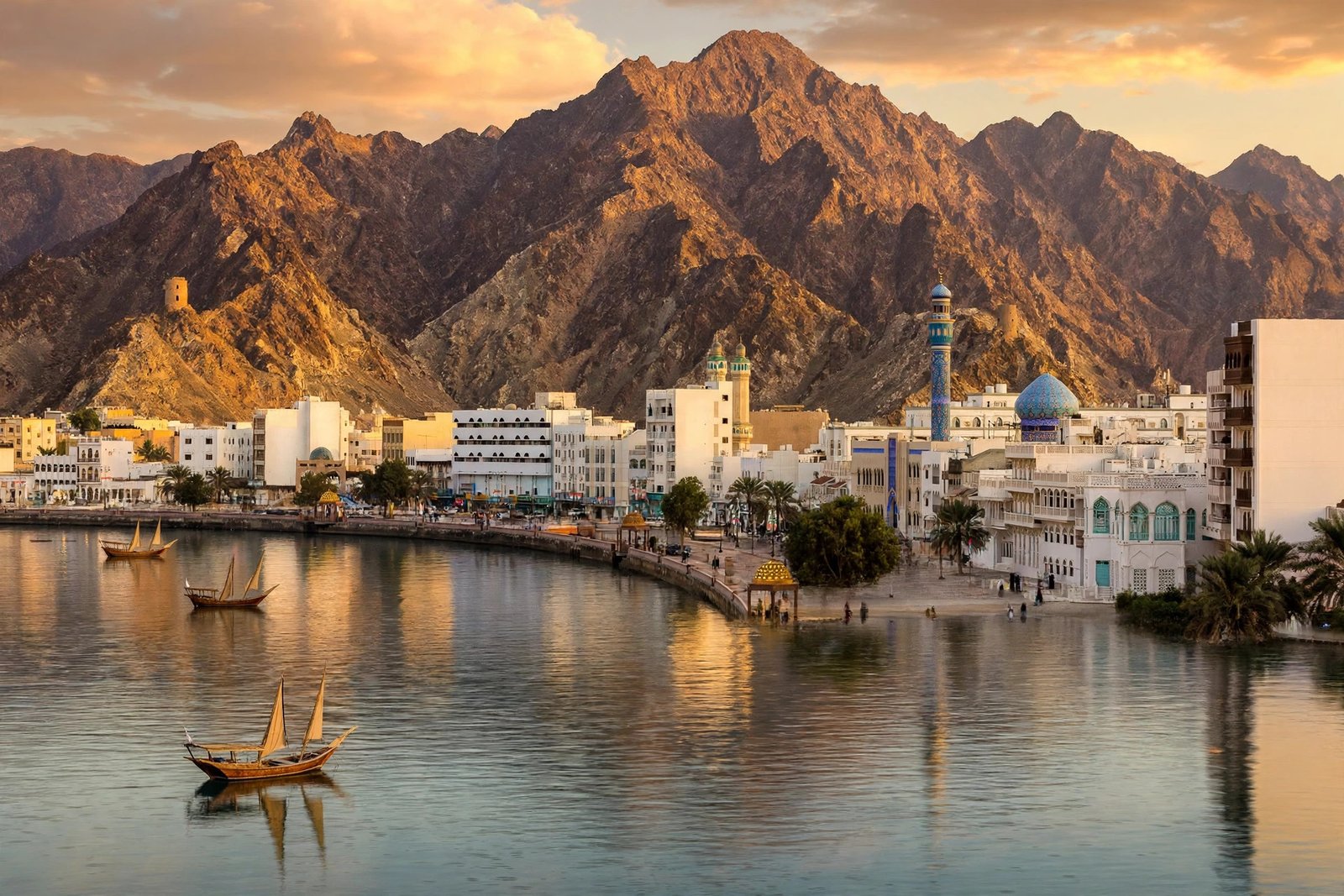
Ask a Pakistani worker who has spent a few years in the Gulf which country treated him best, and Oman comes up more often than you would expect. It is quieter than Dubai, smaller than Saudi Arabia, and it does not make the headlines the way its neighbours do. But for thousands of Pakistanis, that is exactly the point. Oman has been hiring Pakistani workers for decades — in construction, in hospitals, in hotels, in workshops — and in 2026 it is still one of the most realistic Gulf destinations for a first-time worker who wants a legal job, a proper contract, and a salary that actually reaches home.
This guide covers jobs in Oman for Pakistanis 2026: what they pay in Omani rials, who can apply, how the visa and work permit work, and the one rule that matters more than any other — apply only through legal channels, because the fake-agent industry around Gulf jobs is still very much alive.
One thing to be clear about from the start: there is no special new Oman quota or scheme for Pakistanis in 2026. Pakistan and Oman did discuss more jobs, skills training and labour mobility for Pakistani youth at a meeting in Muscat in September 2026, and the Punjab government said in October that Oman had agreed to ease visa curbs on Punjab’s skilled workers. But no job numbers, no quota and no signed agreement were announced. Anyone telling you they have a seat under a “new Oman scheme” is selling you something that does not exist. The real route is the ordinary one — employer-sponsored work permits through the Overseas Employment Corporation (OEC) or a licensed agency — and this guide explains exactly how it works.
Jobs in Oman for Pakistanis 2026 at a Glance
Oman is a smaller job market than Saudi Arabia or the UAE, but it has a long history of employing South Asian workers, and Pakistanis are among the largest foreign communities there. Hiring is concentrated in a handful of cities — Muscat, the capital and the biggest job hub; Sohar, the industrial port city; and Salalah in the south, which has its own port, free zone and tourism industry. Most Pakistani workers arrive on employer-sponsored work permits, which means the employer in Oman applies for the permit and the worker travels on a work visa arranged around that job.
The Omani government’s Vision 2040 programme is driving construction, industrial zones, smart-city projects and renewable energy work, and the private sector keeps recruiting foreign workers to staff them. Construction and civil works are the biggest employers of Pakistani labour, followed by oil-and-gas support services, hospitality, retail, logistics, manufacturing and healthcare. Office and professional roles exist too — engineers, accountants, IT staff and medical professionals — but the bulk of the demand, and the bulk of the Pakistani workforce, is in skilled trades and general labour. If you are comparing Gulf options before deciding, our guide to jobs in Dubai for Pakistanis covers the UAE’s much larger market, so you can weigh the two side by side.
Salaries are paid in Omani rials (OMR), one of the strongest currencies in the world, which is why even modest-sounding monthly figures convert into respectable rupees. A helper earning OMR 120 a month is taking home roughly PKR 78,000 at late-2026 rates, and that is before the free accommodation, food and medical cover that most contracts include. The catch, and it is a real one, is Oman’s nationalisation policy — Omanisation — which reserves certain jobs and job titles for Omani citizens and can restrict visas for some professions. Some categories are closed to foreign workers entirely, and others are open only in limited numbers. That is why it is worth checking the specific category before you spend money on an application, not after.

What Oman Jobs Pay: Salaries by Role in 2026
Salary figures for Oman jobs move with the employer, the city and the contract, so treat the ranges below as what active 2026 advertisements actually showed, not as a promise. Always confirm the exact figure in your written employment contract before you travel — a verbal promise from an agent is worth nothing.
General labourers and helpers earn roughly OMR 95 to 180 a month. The lower end of that range covers construction helpers and general labourers; the upper end covers helpers in factories and warehouses with overtime. At October 2026 exchange rates, OMR 95 to 150 works out to about PKR 62,000 to PKR 98,000 a month. Most helper contracts include free accommodation, a food or meal allowance, medical insurance and overtime pay, which is why the headline salary is only part of the story — the package matters as much as the number.
Skilled tradespeople — electricians, plumbers, welders, masons, steel fixers, drivers and mechanics — earn roughly OMR 180 to 350 a month, or about PKR 117,000 to PKR 228,000. A certified electrician or welder with Gulf experience sits at the top of that range; a newly trained tradesman starts nearer the bottom. Drivers deserve a special mention: heavy-vehicle and trailer drivers with a valid licence and experience are consistently in demand, and their pay reflects it.
Technicians and supervisors in construction, maintenance and oil-and-gas support earn more again, typically OMR 300 to 600 a month depending on the specialisation. Instrument technicians, HVAC technicians and site supervisors with several years of experience fall in this bracket.
Professional roles — engineers, accountants, nurses, IT staff and hotel managers — are paid on a different scale entirely, from OMR 400 a month for junior roles to well over OMR 1,000 for senior engineers and specialists. Nurses and other medical staff are recruited steadily by Oman’s hospitals, and their contracts usually include housing and annual leave tickets.
Two honest warnings about money. First, the Omani rial is strong, so converting to rupees flatters the salary — but the cost of living in Muscat is real, and workers who send everything home and live on the company’s food and accommodation do far better than those who rent privately and eat out. Second, never pay an agent a “visa fee” or “processing fee” in cash without a receipt and a verifiable job offer. The legal route costs little; the illegal route costs everything.
Which Sectors Are Hiring Pakistanis in Oman
Construction and civil works. The biggest employer by far. Road, bridge, housing and industrial projects across Muscat and Sohar need labourers, masons, shuttering carpenters, steel fixers, electricians, plumbers and site supervisors. Oman’s Vision 2040 infrastructure programme keeps this demand steady, and Pakistani workers have a long track record on Omani construction sites, which counts in their favour with employers.
Oil and gas support. Refinery maintenance, drilling support and related services around Sohar and Duqm hire technicians, welders, pipe fitters, riggers and drivers. These jobs usually require prior experience and sometimes trade certification, but they pay at the top of the skilled range.
Hospitality and tourism. Muscat and Salalah have a growing hotel sector, and Pakistani workers fill roles as waiters, housekeeping staff, cooks, receptionists and front-office staff. Salalah’s khareef (monsoon) tourist season creates a yearly spike in hospitality hiring.
Healthcare. Omani hospitals and clinics recruit nurses, lab technicians, pharmacists and other medical staff from Pakistan. Medical roles require the relevant degree or diploma plus registration with the Omani health authorities, and the hiring process is usually handled through licensed agencies or direct employer recruitment.
Retail, logistics and manufacturing. Supermarkets, warehouses, transport companies and factories in Muscat and Sohar hire salesmen, storekeepers, drivers, forklift operators and machine operators. These are steady, year-round jobs, and many Pakistani workers build long careers in them.
Domestic and service work. Drivers, cooks and household staff are recruited for Omani homes, usually through agencies. These roles come with accommodation and food as standard, but the terms vary widely, so the written contract matters even more here than elsewhere.
Who Can Apply: Eligibility for Oman Jobs
The requirements are straightforward, and that is part of Oman’s appeal for first-time Gulf workers. You need to be a Pakistani citizen with a valid passport with at least six months of validity remaining. For most labour and trade roles there is no strict age ceiling, though employers generally prefer workers between 21 and 45. Education requirements depend on the job: helpers and labourers need little formal education, tradespeople need the relevant trade skill (a certificate from a technical institute helps enormously), and professional roles need the degree and experience the employer specifies.
Experience matters more than paper qualifications for most categories. A welder with three years of documented work in Pakistan will be hired before a fresh graduate with a certificate and no site experience. If you have worked in the Gulf before, say so — previous Gulf experience is a genuine advantage, and employers ask for it specifically.
One restriction to know about: Omanisation. The Omani government reserves certain professions for its own citizens and periodically adds roles to that list. The practical effect for Pakistani applicants is that some job titles that were open a few years ago are now closed or restricted. Your agency or the OEC advertisement will tell you whether a particular category is open — if an agent offers you a job in a category that the official channels say is closed, walk away.
How to Apply for Jobs in Oman from Pakistan
There are two legal routes, and only two. Everything else is a risk.
Route one: the Overseas Employment Corporation (OEC). The OEC is the Government of Pakistan’s official recruitment body, and it is the safest and cheapest way to get a Gulf job. Watch the OEC portal at oec.gov.pk for Oman job advertisements, and apply exactly as the advertisement instructs. OEC advertisements name the employer, the posts, the salary and the deadline, and there is no agent’s fee in between. If no Oman advertisement is active when you check, keep checking — new advertisements appear through the year.
Route two: a BEOE-licensed Overseas Employment Promoter. If you go through an agency, it must hold a valid licence from the Bureau of Emigration & Overseas Employment. Before you pay anyone anything, verify the agency’s licence on the Bureau of Emigration & Overseas Employment website. The Bureau’s register lists which licences are active — only a fraction of the licences ever issued are still active, and an expired or cancelled licence is a red flag you should not ignore. A licensed promoter will show you the employer’s demand letter, explain the contract terms in writing, and process your Protector registration properly.
The work permit and visa. Once you have a genuine offer, your employer in Oman applies for your work permit through the Omani Ministry of Labour’s electronic services portal (also available at Sanad service centres across Oman). The permit is tied to that employer and that job. You then complete your medical examination, obtain Protector registration from the Protectorate of Emigrants in Pakistan — this is compulsory, and it is what makes your employment legal and your rights enforceable — and travel on the work visa issued against the permit.
Never travel on a visit visa with a promise that it will be “converted” into a work visa later. That promise is the single most common trick in Gulf job fraud, and workers who fall for it arrive in Oman with no legal status and no way home without paying for it themselves.
Documents you will need. A valid passport, your CNIC, educational certificates and any trade certificates, experience letters from previous employers, passport-size photographs, and a medical fitness certificate. Keep originals and attested copies, and keep a copy of your signed employment contract with you when you travel. Photograph the contract and send a copy to your family before you leave — it costs nothing and it has saved workers more than once.
Avoiding Scams: The Rules That Protect You
Gulf job fraud follows the same script every year, and knowing the script is the best protection. Be suspicious of any “agent” who asks for a large advance fee before showing you a written job offer from a named employer. Be suspicious of offers that arrive through WhatsApp with no company name, no demand letter and no licence number. Be suspicious of salaries that are far above the market rate for the role — OMR 600 for a helper job does not exist. And be suspicious of anyone who tells you to travel on a visit visa and sort the paperwork out later.
The legal checks are simple and free: the job should appear in an OEC advertisement or come from a BEOE-licensed promoter whose licence you have verified yourself; your Protector registration should be done before departure; and your contract should state the salary, the job title, the working hours, the accommodation and the leave entitlement in writing. If any of those are missing, stop and ask questions before you pay or travel.
Life in Oman for Pakistani Workers
For most Pakistani workers, Oman is a manageable first step abroad. The Pakistani community is large and well established, especially in Muscat, Ruwi and Sohar, and you will find Pakistani restaurants, shops and mosques in every city. English is widely used at work, and Urdu is understood in most places Pakistanis live and shop. The climate is hot and dry for most of the year, with a famously pleasant monsoon season in Salalah. The working week in Oman runs Sunday to Thursday for the public sector, with many private companies working six days — check your contract for the exact schedule, because it varies.
The money side is what most workers care about, and it is worth planning properly. Open a bank account in Oman, use official channels to send money home, and keep a record of every transfer. Workers who save a fixed portion of their salary every month — even a small one — come home in a far stronger position than those who spend as they earn. And keep your family’s expectations honest: a helper’s salary supports a household in Pakistan comfortably, but it does not make anyone rich overnight.
Frequently Asked Questions
How much do helper jobs in Oman pay for Pakistanis in 2026?
Helper jobs pay roughly OMR 95 to 150 a month — about PKR 62,000 to PKR 98,000 at October 2026 rates — usually with free accommodation, a food or meal allowance, medical insurance and overtime. Skilled trades pay OMR 180 to 350, and technicians and professionals earn more.
Is there a new Oman jobs scheme for Pakistanis in 2026?
No. Pakistan and Oman discussed expanding jobs and labour mobility in September 2026, but no quota, job count or scheme was announced. Apply only through OEC advertisements or BEOE-licensed agencies.
How do I apply for Oman jobs from Pakistan?
Through the OEC portal at oec.gov.pk, or through a BEOE-licensed Overseas Employment Promoter whose licence you have verified on beoe.gov.pk. Complete Protector registration before travelling, and never travel on a visit visa for a job.
Do I need a visa to work in Oman?
Yes. Your Omani employer arranges your work permit through the Ministry of Labour, and you travel on a work visa issued against that permit. A visit visa is not a work visa, and working on one is illegal.
Which jobs in Oman are open to Pakistanis?
Construction, oil-and-gas support, hospitality, healthcare, retail, logistics, manufacturing and domestic work all hire Pakistanis. Some professions are restricted under Omanisation, so check the specific category before applying.
Is Oman better than Dubai or Saudi Arabia for Pakistani workers?
It depends on what you want. Oman is smaller and quieter, the community is close-knit, and the cost of living is lower than Dubai. Salaries for the same role are usually higher in Saudi Arabia and the UAE, but so are living costs and competition. For a first-time worker, Oman’s simpler requirements and lower costs make it a very practical first Gulf job.