

Every month, thousands of Pakistanis land at Dubai International with a job offer in one hand and big dreams in the other. And every month, hundreds more come back home — poorer than they left, burned by a fake agent, or stuck in a job that pays half of what was promised.
Here’s the truth: Dubai still works for Pakistanis in 2026. It works very well, actually. But it works for the ones who go in with their eyes open. This is the guide I wish someone had handed my cousin before he paid an “agent” in Gujranwala Rs 4 lakh for a “confirmed visa” that turned out to be a photoshopped PDF.
No sugarcoating. No agency sales pitch. Just the real picture — salaries, visas, the legal process, the scams, and the honest math of what you’ll actually save.
Why Dubai Still Works for Pakistanis in 2026
Let’s start with why this route makes sense, because it genuinely does — for the right person, in the right job.
Pakistanis are one of the largest expat communities in the UAE — well over a million and a half of us live and work there. That matters more than you think. It means Urdu is understood on most job sites, Pakistani restaurants and grocery stores are everywhere, and you’ll find someone from your own city in almost every neighbourhood. You won’t feel like a stranger for long.
The money side is straightforward: there’s no income tax in the UAE, the dirham is pegged to the US dollar (so it’s rock-steady), and one dirham is worth roughly Rs 75–77 at typical 2026 rates. A salary that sounds modest in dirhams converts into serious money back home.
And the demand is real. Dubai keeps building — new communities, new hotels, new infrastructure — and the city is chasing aggressive tourism targets through 2031. Construction, hospitality, logistics, healthcare, and retail all keep hiring. This isn’t a dying market; it’s a maturing one, which means it’s more competitive than it was ten years ago, but the jobs are absolutely there for people with real skills and real paperwork.
Which Sectors Actually Hire Pakistanis (And What They Really Pay)
Forget the WhatsApp forwards promising “office jobs, 5,000 dirham, no experience needed.” Here are the sectors where Pakistanis genuinely get hired, with the salary ranges employers are actually offering in 2026. All figures are monthly, in AED, with rough PKR equivalents at Rs 76 per dirham.
Skilled trades — electricians, welders, plumbers, HVAC technicians
AED 1,500–2,800 (roughly Rs 114,000–213,000). This is the bread and butter for Pakistani workers. If you have a real trade certificate and a few years of experience, you’re in demand. Welders with Gulf experience sit at the top of this range.
Drivers — delivery riders, light vehicle, heavy truck
Delivery riders and light-vehicle drivers: AED 2,000–3,000 (Rs 152,000–228,000), often plus tips. Heavy truck and trailer drivers with a UAE heavy licence: AED 3,000–5,500 (Rs 228,000–418,000). Note the catch: you’ll usually need to convert or earn a UAE driving licence, and the good heavy-licence jobs go to drivers who already hold one.
Construction and site work
General labour: AED 900–1,400 (Rs 68,000–106,000). Foremen and site supervisors with experience: AED 2,500–4,500 (Rs 190,000–342,000). Labour pays the least in Dubai — go this route only if it’s a stepping stone and the employer provides accommodation.
Hospitality — waiters, baristas, housekeeping, front desk
Waiters, baristas, and housekeeping staff: AED 1,800–3,000 (Rs 137,000–228,000), usually plus a service charge and tips that can add a few hundred dirhams. Front desk and guest relations: AED 2,500–4,000. Hotels love Pakistani staff for their work ethic — a good reference from one hotel opens doors across the city.
Retail and sales
AED 2,000–3,500 (Rs 152,000–266,000) plus commission. Malls, electronics shops, and car showrooms hire heavily. If you can sell and you speak decent English, commissions can double your base — but treat the base as your real salary when doing your math.
Security guards
AED 1,500–2,500 (Rs 114,000–190,000). Steady, undemanding work. Many guards use the free hours to study or plan their next move.
Healthcare — nurses, technicians, caregivers
Staff nurses: AED 6,000–10,000 (Rs 456,000–760,000). This is one of the best-paying realistic paths, but there’s a gate: you need a DHA (Dubai Health Authority) or DOH licence, which means passing an exam and getting your Pakistani nursing credentials verified. Start that process while you’re still in Pakistan.
IT, accounts, and office roles
Software developers and IT support: AED 8,000–18,000 depending on skill. Accountants: AED 4,000–8,000. These jobs exist but the competition is fierce — you’re up against Indians, Filipinos, and Arabs with degrees. A strong portfolio or a professional certification (ACCA, AWS, etc.) is what separates the hired from the ignored.
One honest note on all of these: salaries in Dubai have barely moved for entry-level roles in years, while rents have climbed. The money is real, but only if you pick a job and a lifestyle that leave room to save — more on that below.
The Legal Routes — How Pakistanis Actually Get to Work in Dubai
There are really only a few legitimate ways in. Everything else is either a grey area or a straight-up scam.
1. The employment visa (the gold standard)
This is how it should work: a Dubai employer offers you a job, signs an offer letter, and applies for your employment visa through the Ministry of Human Resources and Emiratisation (MOHRE). You get an entry permit, you fly in, the company completes your medical and Emirates ID, and you start work. Your residence visa is tied to that employer. This is the safest, cleanest route — if you can land the offer from Pakistan, take it.
2. The visit-visa job hunt (common, legal to search, illegal to work)
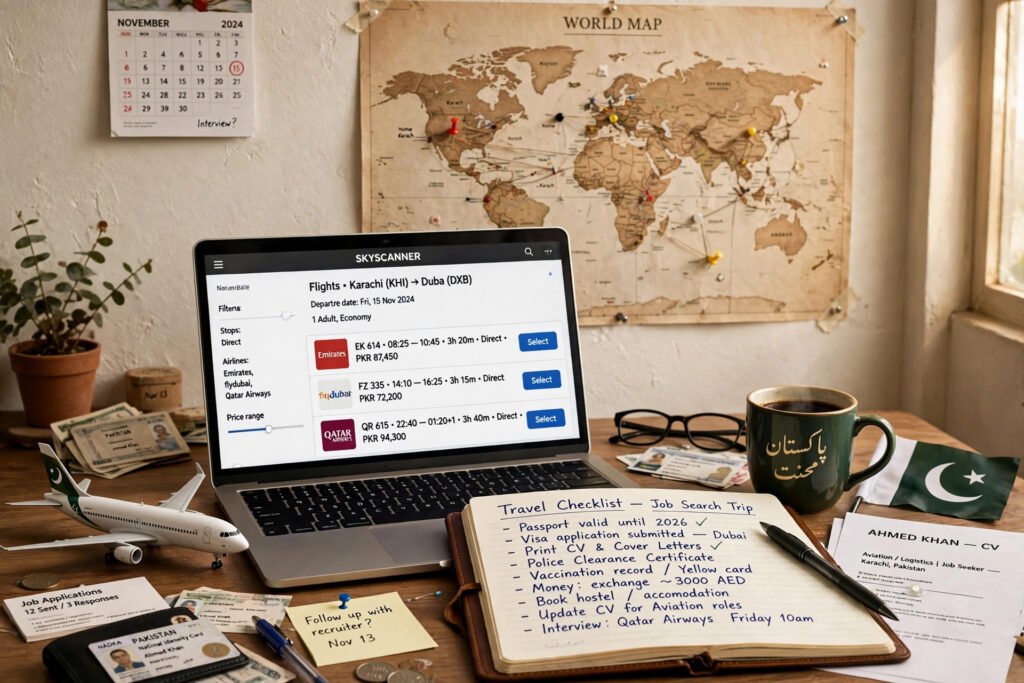
This is what most Pakistanis actually do: fly to Dubai on a 30- or 60-day visit visa, stay with a relative or in shared accommodation, and hunt for jobs in person. Searching for work on a visit visa is legal. Working on one is not — if you’re caught doing a job before your employment visa is issued, you and the employer both face fines and bans.
Two things changed that you need to know for 2026: UAE authorities have tightened visit-visa rules — you may be asked to show proof of funds, a return ticket, and hotel booking or a host’s details at immigration. And never, ever overstay a visit visa. Overstay fines pile up daily and an overstay stamp can get you banned from re-entering. Go with enough money for two months, a return ticket, and a hard deadline: if you don’t have an offer by week six, reassess instead of drifting.
3. Licensed overseas employment promoters (OEPs)
Pakistan’s Bureau of Emigration and Overseas Employment (BEOE) licences recruitment agencies called Overseas Employment Promoters. A licensed OEP can legally recruit you for a Gulf employer. Always check the agency’s licence on beoe.gov.pk before handing over a single rupee or your passport — unlicensed “agents” operating from a shop in Lahore or Sialkot are where most scam stories begin. To get a sense of which roles are genuinely in demand right now, a licensed promoter’s published in-demand jobs list for Dubai and the UAE in 2026 is a useful reality check against the fantasy salaries floating around on social media.
4. Green visa and freelance permits (for skilled professionals)
If you’re a skilled freelancer, degree holder, or earn above the threshold, the UAE’s Green Visa lets you sponsor yourself for five years without an employer. It’s a great option for IT professionals, consultants, and skilled tradespeople with strong credentials — but it has income and qualification requirements, so it’s not the route for a first-time job seeker.
Step-by-Step: Getting a Dubai Job From Pakistan
Here’s the process in order, exactly as it works in practice:
Step 1 — Get your documents in order. Valid passport (at least 6 months), CNIC, passport-size photos with white background, and your educational and experience certificates. Degrees and diplomas meant for skilled or professional jobs need attestation — first from your board/university and the IBCC or HEC as applicable, then Pakistan’s Foreign Office, then the UAE Embassy. Start attestation early; it takes weeks.
Step 2 — Build a Gulf-format CV. One to two pages, with your photo, nationality, visa status, and a Pakistan phone number plus WhatsApp. Gulf employers skim — put your job title, years of experience, and key skills right at the top. No life stories.
Step 3 — Apply through real channels. LinkedIn, company career pages, Gulf job portals, and walk-in interviews advertised by hotels and malls. If you use a recruiter, use a BEOE-licensed OEP only. Apply daily and track everything in a notebook — who you applied to, when, and what they said.
Step 4 — Verify every offer before you celebrate. A real offer comes on company letterhead with a trade licence number, a clear salary breakdown (basic + allowances), and the job title matching what you’ll actually do. Call the company’s published landline — not the mobile number the “agent” gave you — and confirm the job exists. Check the employer’s status through MOHRE’s official channels.
Step 5 — The employer processes your employment visa. Once you accept, the company applies for your entry permit. You should receive a copy. Typical processing takes one to three weeks.
Step 6 — GAMCA/Wafid medical in Pakistan. Before flying for employment, you’ll do a medical at a designated GAMCA (now called Wafid) medical centre in Pakistan. Book through the official Wafid system, go yourself, keep your receipt. Anyone offering to “arrange” your medical result for cash is setting you up for a ban.
Step 7 — The BEOE protector of emigrants. This is the step most first-timers have never heard of, and it matters: before leaving Pakistan for overseas employment, you register with the Bureau of Emigration and get the “protector of emigrants” stamp through beoe.gov.pk or your nearest Protector of Emigrants office. It records you as a legal overseas worker, and it’s what gives you access to government support — including compensation schemes — if something goes wrong abroad. Skipping it to “save time” is never worth it.
Step 8 — Fly, finish formalities, start work. On arrival, your employer completes your UAE medical, fingerprints, and Emirates ID. Your labour contract gets registered with MOHRE. Keep copies of everything — your contract, visa, Emirates ID — photographed on your phone and backed up.
The Scam Problem — Read This Before You Pay Anyone a Rupee
I’m going to be blunt, because this section could save you lakhs: the Dubai job dream is also Pakistan’s most productive scam factory.
The rule is simple and has no exceptions: a genuine employer never charges you for giving you a job. Not a “visa fee,” not a “processing charge,” not a “security deposit,” not a “training fee.” The moment someone asks you to pay for the job offer itself, walk away.
Here’s how the common scams work:
- The fake visa seller. An “agent” shows you a visa copy with your name on it and asks for Rs 2–5 lakh. Real UAE entry permits are verifiable online through official UAE channels — a screenshot proves nothing. Demand verifiable documents or walk away.
- The WhatsApp recruiter. A foreign number messages you about a “hotel job, 4,500 dirham, free food and housing, send your documents and Rs 50,000 advance.” Real hotels recruit through HR departments and licensed promoters, not random WhatsApp accounts.
- The bait-and-switch. You’re promised an electrician’s job at AED 2,500 and land to find a labourer’s job at AED 1,000 — with your passport held by the employer. Never surrender your passport to anyone; under UAE law, holding an employee’s passport is illegal.
- The visit-visa trap. An agent sells you a visit visa at triple the price, promising “job confirmed on arrival.” You arrive, there’s no job, and you’re burning through savings in one of the world’s most expensive cities.
Your legitimate costs are small and receipted: your Wafid medical fee, the BEOE protector fee, your air ticket, and your living costs while job hunting. That’s it. If the total anyone quotes you runs into lakhs “for the visa,” you’re being robbed politely.
And this applies at home too — the same discipline of never paying for the promise of work protects you whether the job is in Dubai or in Lahore. Our guide on never paying fake agents or fees when hunting for genuine work lays out the same rules for the Pakistani job market, and every one of them applies doubly to overseas offers.
Cost of Living vs Savings — The Honest Math
Dubai pays well and spends fast. Here’s what life actually costs for a Pakistani worker in 2026, per month:
- Bed space in a shared room: AED 400–700 (Rs 30,000–53,000). This is how most workers start — areas like Sonapur, Muhaisnah, and parts of Deira and Bur Dubai.
- Your own room in a shared flat: AED 800–1,500. More privacy, still sensible.
- Studio apartment (outskirts): AED 2,000–3,200. Only makes sense once you’re earning AED 5,000+.
- Food: AED 400–600 if you cook Pakistani food at home (and you should — groceries from Pakistani supermarkets are cheap). Eating out regularly will double this without you noticing.
- Transport: a monthly metro/bus pass runs AED 140–300 depending on zones. Most workers spend under AED 300.
- Phone and odds and ends: AED 100–200.
Now the math that matters. Take an electrician earning AED 2,200 (about Rs 167,000). Living lean — bed space, home cooking, metro pass — his monthly spend is around AED 1,200–1,400. That leaves AED 800–1,000 in savings: roughly Rs 60,000–76,000 sent home every month. Over a two-year contract, that’s life-changing money for a family in Pakistan.
But notice the two things that break this math: upgrading your lifestyle too fast, and arriving without a financial cushion. Your first two to three months are the expensive ones — deposits, settling in, the job hunt itself. Land with at least AED 3,000–4,000 (Rs 2.3–3 lakh) in reserve beyond your ticket, or don’t land at all.
The Bottom Line
Dubai in 2026 is not a lottery ticket — it’s a job market. It rewards skilled, documented, patient people and it punishes the desperate and the careless. Get a real skill, get your papers attested, use only licensed recruiters, never pay for a job offer, and do the savings math before you fly. Do that, and the dirhams you send home every month will be the best decision you ever made.
Frequently Asked Questions
Can I find a job in Dubai on a visit visa?
Yes — job hunting on a visit visa is legal and it’s how most Pakistanis do it. But you cannot work until your employer converts you to an employment visa. Go with a return ticket, proof of funds, and enough savings for two months. Never overstay.
How much money do I need to go job hunting in Dubai?
Budget AED 3,000–4,000 (Rs 2.3–3 lakh) beyond your ticket for a two-month hunt — covering a bed space, food, transport, and a buffer. Anyone telling you Rs 50,000 is enough for two months in Dubai is setting you up to fail.
What is the BEOE protector of emigrants process?
Before leaving Pakistan for overseas work, you register with the Bureau of Emigration and Overseas Employment and get the protector stamp via beoe.gov.pk or a Protector of Emigrants office. It legally records you as an overseas worker and unlocks government protection and compensation schemes if your employer mistreats you. It’s cheap, it’s official, and skipping it is foolish.
Which jobs pay best for Pakistanis in Dubai without a degree?
Heavy truck drivers with a UAE licence (AED 3,000–5,500), experienced welders and HVAC technicians (AED 2,200–3,200), and hospitality roles with tips and service charge. Among degree holders, nurses with a DHA licence (AED 6,000–10,000) and IT professionals lead by a mile.
Is it legal to work while on a tourist or visit visa?
No. Working on a visit visa is illegal for both you and the employer, with fines and potential bans. Some small employers still ask workers to “start now, visa later” — understand the risk before you agree to anything.
How do I verify a Dubai job offer is real?
Four checks: the offer is on company letterhead with a trade licence number; you confirm the job by calling the company’s published landline yourself; the recruiter is a BEOE-licensed OEP (check beoe.gov.pk); and nobody asks you to pay for the offer. If any check fails, walk away.
Can my family join me in Dubai?
Once you’re on an employment visa earning at least AED 4,000 (or AED 3,000 plus employer-provided accommodation), you can sponsor your spouse and children for residence visas. Most workers spend their first year or two solo, stabilise their income, then bring family over — which is the sensible order.
How long does the whole process take from Pakistan?
If you have a direct offer: attestation (2–4 weeks), visa processing (1–3 weeks), medical and protector (1–2 weeks) — roughly 6–10 weeks total. If you’re going the visit-visa route, add your job-hunt time in Dubai. Rushing any step is how mistakes — and scams — happen.
3 Responses