
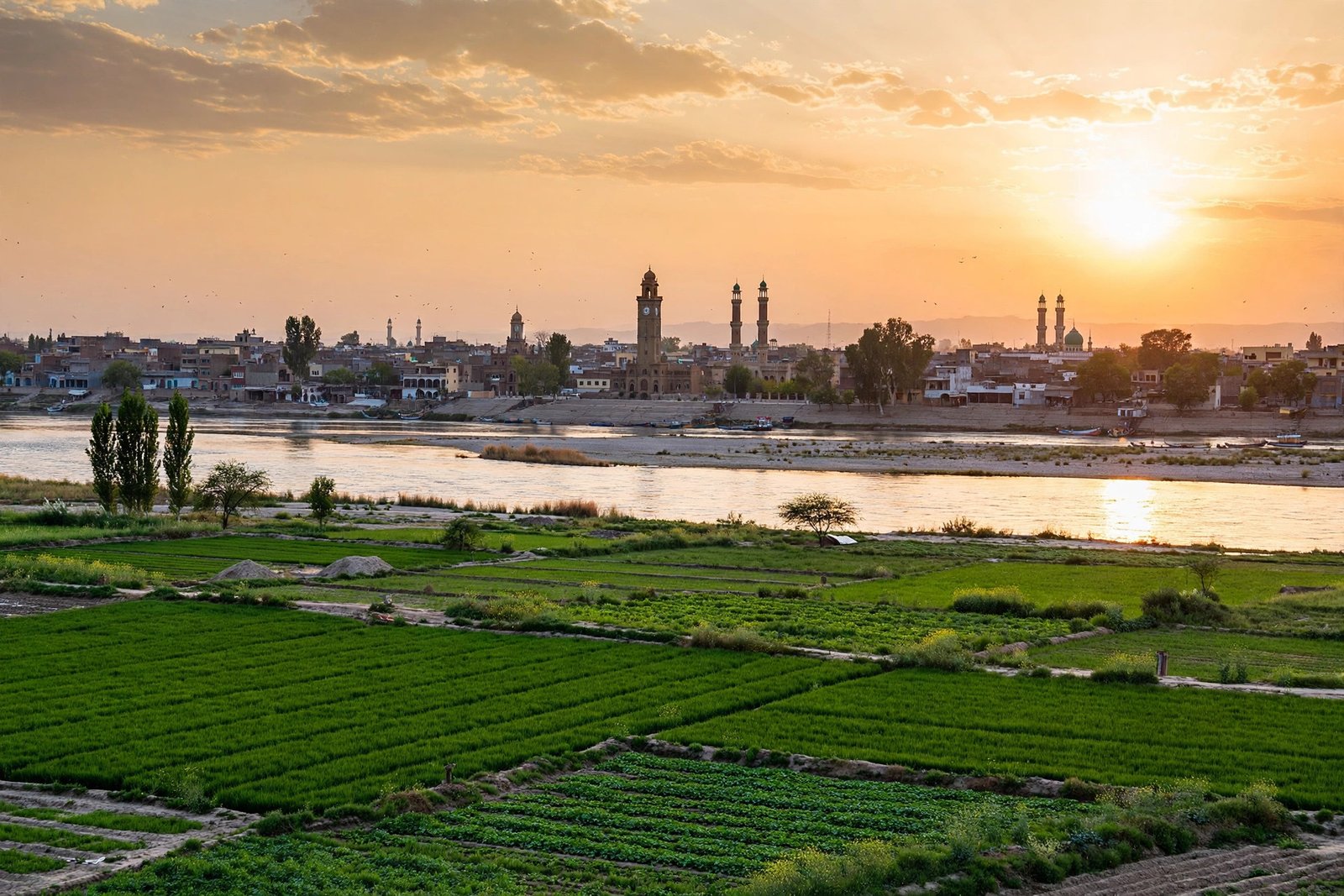
Jhang does not make the jobs headlines the way Lahore or jobs in Faisalabad do, and that is exactly why this guide exists. The city sits in the heart of Punjab’s agricultural belt, on the banks of the Chenab, and its job market runs on a different rhythm from the big cities — government departments, colleges and schools, the sugar industry, health services and a growing private sector, all hiring steadily through the year. For someone living in Jhang, or thinking of moving back from Lahore, the opportunities are real. They are just scattered across a dozen different sources, and nobody had put them in one place. Until now.
This guide covers the jobs in Jhang in 2026 that are actually available: the government and teaching posts, the private sector employers, what they pay, and — most importantly — where to look so you hear about a vacancy before the last date passes.
Jobs in Jhang 2026 at a Glance
Jhang is a district headquarters city with a population of around half a million in the urban area and several million across the district. Agriculture remains the backbone of the local economy — wheat, cotton, sugarcane and livestock — and that shapes the job market in ways that are easy to miss. The biggest employers are the ones tied to the land and to public service: the district administration, the education department, the health department, the University of Jhang, Chenab College, and the sugar mills, led by Shakarganj Limited, one of the largest agro-industrial employers in the region.
The private sector is smaller than in Faisalabad or Lahore, but it is growing. Banks, telecom companies, NGOs and retail chains all maintain offices and branches in Jhang Sadar, the district headquarters, and they hire locally for sales, customer service and branch operations. The pattern of hiring here is worth understanding: government jobs arrive through newspaper advertisements and the provincial job portals, teaching jobs cluster around the start of the academic year, and private sector jobs appear on the big job boards — Rozee, Indeed and the local jobs portals — often with short deadlines.
Salaries in Jhang reflect the city’s lower cost of living. A government clerk on BPS-11 earns a modest basic pay, but with allowances and job security it supports a family comfortably in Jhang, where rents are a fraction of Lahore’s. Private sector salaries for fresh graduates typically start around PKR 35,000 to 50,000 a month, rising to PKR 80,000 and above for experienced staff in banking, telecom and management roles. Teaching posts in private colleges pay less than government scales but offer regular work, and daily-wage government appointments — common in the health and education departments — pay on a per-day basis for fixed periods.
Government Jobs in Jhang
Government jobs are the first choice for most job seekers in Jhang, and the district produces a steady stream of them. The district administration, the police, the health department, the education department and the municipal bodies all recruit through the year, usually advertised in the Daily Jang, Express and Nawa-i-Waqt, and on the Punjab job portals.
District Health Authority Jhang. In early 2026 the District Health Authority announced vaccinator posts on a daily-wage basis for 89 days, supporting the Expanded Program on Immunization and the National Health Support Program. The posts were open to Punjab residents with preference for Jhang district residents, and the work covered vaccination across the district’s union councils. Health department hiring follows this pattern — short, practical recruitment drives tied to specific programmes — so the trick is to watch for the advertisements rather than waiting for an annual cycle.
NADRA jobs in Jhang. The National Database and Registration Authority recruited Junior Executives (Data Entry Operators) for Jhang district in 2026, with 13 posts and a walk-in test and interview at the NADRA Regional Head Office in Sargodha. The age limit was 25 years, and the selection was through a written test followed by an interview. NADRA is one of the most reliable government employers for young graduates in the district, and its recruitment is worth watching every year.
Police and district administration. Punjab Police constable recruitment covers Jhang district as part of the provincial intake, and the National Highway and Motorway Police have advertised junior patrol officer posts for the region. These are advertised centrally, so a Jhang candidate applies through the provincial process and is posted according to the district quota.
How to find them. The practical method is to check the Punjab job portals and the major newspapers’ jobs pages twice a week, and to keep your documents ready — domicile, CNIC, educational certificates and photographs. Government applications in Jhang still often require a hard-copy submission by courier or in person, and late applications are not accepted for any reason. A missed deadline here is a missed year.
Teaching Jobs in Jhang
Teaching is the single biggest source of professional employment in Jhang, and it comes in three flavours: government schools and colleges, the University of Jhang, and the private college sector led by Chenab College.
University of Jhang. The University of Jhang, on Chiniot Road, is the district’s only public university, and it has been hiring steadily as it grows. In 2026 it advertised visiting faculty for the fall semester across subjects including psychology, and it has also hired staff on a daily-wage basis — skilled, semi-skilled and unskilled workers across departments, including drivers and support staff, on 89-day appointments. Visiting faculty appointments require an MS or MPhil in the relevant subject from an HEC-recognised institution, and the processing fee and application procedure are published with each advertisement. For lecturers and academics in the district, the University of Jhang is the employer that matters most.
Chenab College Jhang. Chenab College is the district’s best-known private educational institution, and its teaching jobs are advertised regularly through the year. Teaching posts here suit fresh graduates with a master’s degree who want classroom experience, and the college also hires administrative and support staff. Private college teaching in Jhang pays less than the government scales, but it is regular, respected work, and for many teachers it is the first step toward a government teaching post.
Government schools. The Punjab School Education Department recruits educators for Jhang district through its provincial process, and private schools across Jhang Sadar, Shorkot and the surrounding tehsils hire teachers throughout the year. The demand is strongest for English, mathematics and science teachers, and for female teachers in girls’ schools, where the shortage is most acute.
Private Sector and Industry Jobs in Jhang
Shakarganj Limited. The largest private employer in the district is Shakarganj Limited, the sugar mill and bioethanol distillery that has operated in Jhang for decades. Its 2026 career plans cover chemical engineering, mechanical maintenance, quality assurance and supply chain logistics, with recruitment through its own online careers system. The sugar industry hires seasonally as well as permanently — the crushing season creates a surge of temporary and contract work every year — and the mill’s operations division regularly needs shift managers, process engineers and distillation technicians. All applications go through the company’s careers portal; Shakarganj does not accept applications by post or direct email.
Banking and finance. Banks with branches in Jhang — including the National Bank of Pakistan, which advertised multiple posts across Punjab in 2026 — hire for customer service, relationship management and branch operations. Bank jobs in a district city suit graduates who want a career without leaving home, and the branch network means there is usually something open.
Telecom and sales. Jazz, one of Pakistan’s largest telecom companies, advertised an Area Sales Manager post in Jhang in 2026 at grade L3, covering postpaid sales across the district. Telecom sales roles are among the better-paid private sector jobs in the district, and they value local knowledge — someone who knows Jhang’s markets and towns is worth more to a telecom company than an outsider with a better CV.
NGOs and development work. Organisations working in the district hire for community roles. Penny Appeal, for example, advertised a Social Organizer post in Jhang, involving community engagement and social mobilisation across the district, with 60 to 80 per cent travel within the coverage area. NGO work suits graduates in social sciences and management, and it pays reasonably while offering field experience that is hard to get elsewhere.
Retail, healthcare and services. Private hospitals and clinics in Jhang hire nurses, technicians and support staff. Retail chains, distributors and the transport sector hire salesmen, storekeepers, drivers and supervisors. These jobs are advertised on the job boards and, just as often, through a notice in a shop window or a word-of-mouth referral — which is why being present in Jhang’s commercial areas matters.
Jobs for Women in Jhang
Employment for women in Jhang has been growing, and the opportunities cluster in a few sectors. Teaching is the biggest — girls’ schools and colleges, private academies and the University of Jhang all recruit female teachers and lecturers, and the demand is consistently higher than the supply. Healthcare is the second — nursing, lady health work and the District Health Authority’s vaccination programmes all employ women, and the vaccinator recruitment specifically welcomed female candidates. Banking and telecom branch roles are increasingly open to women, and NGO community work, which involves visiting households, actively seeks female social organizers.
The practical advice for women job seekers in Jhang is the same as for everyone else, with one addition: check the women’s quota and the female-specific posts in every government advertisement, because departments reserve seats and the competition for them is often lighter than for the open merit seats.
How to Find Jobs in Jhang: Where to Look
The single biggest reason people in Jhang miss jobs is that they look in only one place. Here is the full picture:
Job boards. Rozee.pk and the other national job boards list Jhang posts from banks, telecom companies, NGOs and private employers. Search by city, and check at least twice a week — the good posts close fast. The Rozee jobs portal is the most practical starting point for private sector roles in the district.
Newspapers. Government jobs in Jhang are still advertised in the newspapers first. The Daily Jang, Express and Nawa-i-Waqt carry the district’s government advertisements, and the Sunday editions are the ones to watch. If you do not buy a newspaper, the jobs sections of the newspaper websites carry the same advertisements.
The Punjab job portal and department websites. The University of Jhang publishes its own advertisements on uoj.edu.pk, NADRA advertises on its own portal, and the Punjab government posts vacancies on the provincial job portal. Bookmark the ones relevant to you and check them weekly.
Walk-in and local notice. A surprising number of Jhang jobs never reach the internet — a notice at the district offices, a vacancy board at a college, a hiring drive at a sugar mill. If you live in Jhang, walk past the district complex and the colleges regularly. If you are applying from outside, ask someone in Jhang to keep an eye out. The old-fashioned method still works here.
Prepare before you apply. Keep a ready file: CNIC, domicile certificate, educational documents with attested copies, a simple one-page CV, and passport-size photographs. Many Jhang applications still require hard copies sent by courier or delivered in person, and a complete application sent on the first day beats a perfect application sent on the last day.
Salaries in Jhang: What to Expect
For a realistic picture: a government clerk or assistant on BPS-11 to BPS-15 earns a basic pay in the PKR 35,000 to 60,000 range before allowances; a schoolteacher on the government scale earns more with allowances and annual increments; a lecturer at the University of Jhang on visiting faculty terms is paid per lecture; a bank officer starts around PKR 45,000 to 60,000; a telecom area sales manager earns PKR 70,000 to 100,000 with incentives; a nurse in a private hospital earns PKR 40,000 to 60,000; and daily-wage workers in government departments earn the notified daily rate for the duration of their appointment.
The honest comparison is with Lahore, not with the salary figure alone. A salary of PKR 50,000 in Jhang, where a family can rent a house for a fraction of Lahore’s rents and the commute is measured in minutes, goes further than PKR 70,000 in Lahore. That is the calculation that brings people home — and it is the reason Jhang’s job market deserves a guide of its own.
Frequently Asked Questions
Where can I find the latest jobs in Jhang?
Check Rozee.pk and the other national job boards, the Sunday newspapers for government advertisements, the Punjab job portal, and the University of Jhang website at uoj.edu.pk for its own vacancies. Walk-in notices at the district offices and colleges still matter too.
Are there government jobs in Jhang in 2026?
Yes. The District Health Authority, NADRA, Punjab Police and the education department have all recruited in Jhang during 2026, and the University of Jhang has advertised visiting faculty and daily-wage posts. Government jobs are advertised in the newspapers and on the provincial portals.
What are the biggest employers in Jhang?
The district administration and the education and health departments, the University of Jhang, Chenab College, Shakarganj Limited (sugar and bioethanol), the banks, and the telecom companies. Together they account for most of the district’s formal employment.
Can I get a teaching job in Jhang?
Yes — teaching is the district’s biggest professional job source. The University of Jhang hires visiting faculty, Chenab College and private schools hire through the year, and government school recruitment runs through the Punjab School Education Department. English, mathematics and science teachers are in the highest demand.
What salary can a fresh graduate expect in Jhang?
A fresh graduate in a private sector role typically starts at PKR 35,000 to 50,000 a month. Government posts pay on the BPS scale with allowances, and bank and telecom roles start higher. The lower cost of living in Jhang means these salaries stretch further than the same figure would in Lahore.
Is Jhang a good place to build a career, or should I move to Lahore?
It depends on your field. For teaching, government service, agriculture-linked industry and local business, Jhang offers a real career with a far lower cost of living. For corporate, IT and media careers, Lahore still has more options. Many Jhang professionals split the difference — building experience locally, then moving for a senior role later.
2 Responses