
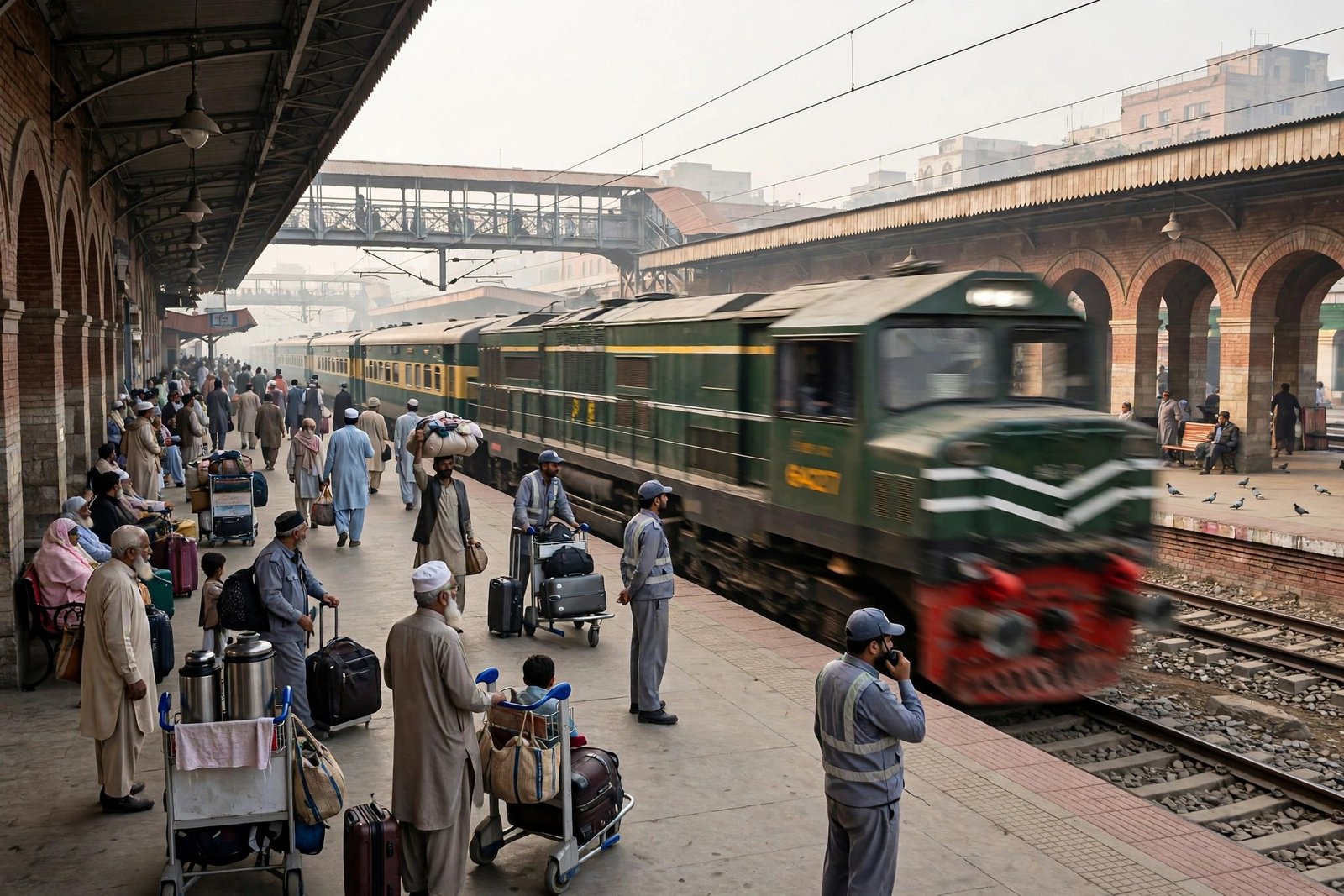
There is something about a railway job that still catches the imagination in Pakistan. The trains have been running for well over a century, and for generations a job with Pakistan Railways has meant a government pay scale, a pension, medical cover and a posting that could take you anywhere from Karachi to Peshawar. In 2026 that appeal has not faded — if anything, the fresh rounds of advertisements in November have put railway jobs back in the conversation for thousands of job seekers, from school leavers in Quetta to engineering graduates in Lahore.
This guide to railway jobs in Pakistan 2026 explains what Pakistan Railways actually hires for, who can apply, what the pay looks like on the Basic Pay Scales, and how the application process works through the National Job Portal. It also explains the part nobody should skip: how to tell a genuine railway advertisement from the fake ones that circulate on social media and WhatsApp every time a real round opens.
What Pakistan Railways Is — and Why Its Jobs Matter
Pakistan Railways is a federal department working under the Ministry of Railways. It runs the country’s passenger and freight train network, maintains the track, the stations, the workshops and the signalling systems, and employs tens of thousands of people across its divisions and headquarters in Lahore.
Because it is a federal employer, its posts are advertised nationally and filled on a mix of merit and provincial and regional quotas. That matters for applicants: a vacancy announced for Quetta Division is not the same competition as a headquarters post in Lahore, and the domicile rules in the advertisement decide who is eligible for which seats. Read the advertisement carefully before you apply — the details in it are the whole game.
Railway work is also unusually varied. The same department hires gangmen who walk the track, assistant drivers who sit in the cab, clerks who keep the paperwork moving, engineers who maintain bridges and signals, and station masters who run a station. Some of these jobs need a degree. Some need a matric certificate and a strong pair of hands. That spread is why railway advertisements attract such a wide range of applicants, and why it pays to know exactly which post fits your own qualifications.
The Kinds of Posts Pakistan Railways Advertises
The posts fall into a few broad groups, and the November 2026 rounds show the pattern well.
Operations and station staff. The most recognisable railway jobs sit in this group. Assistant Station Masters (ASM), including ASM Grade-I in BPS-14, run station operations — signalling trains, keeping the station register, dealing with passengers and making sure the timetable holds. Pointsmen and gatemen, such as the 271-plus posts advertised for Lahore Division in the latest round, work the track and the level crossings: setting points, guarding crossings and keeping the line safe. These are hands-on, shift-based jobs, and they are often the largest single intake in any round.
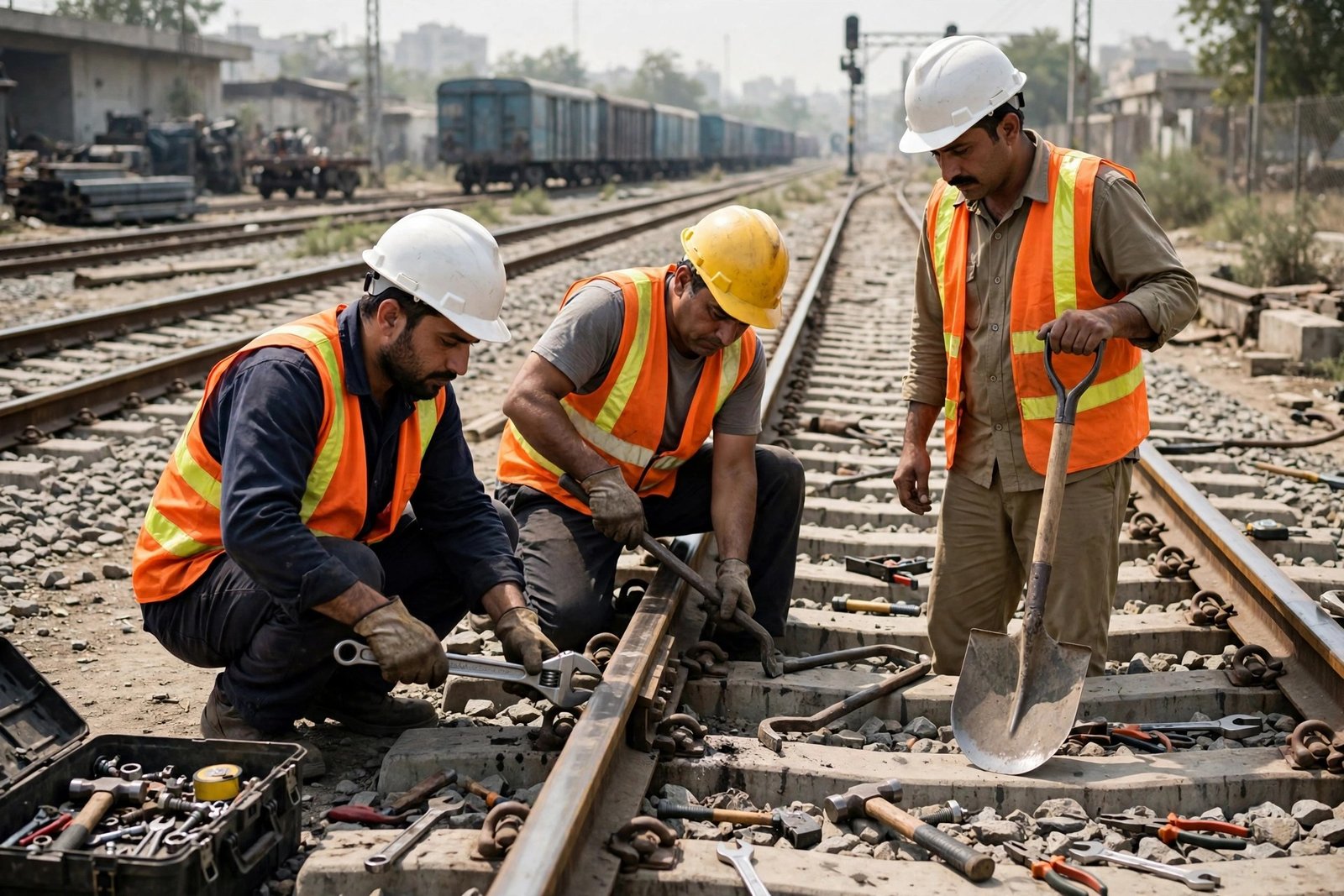
Track and workshop staff. Gangmen are the backbone of track maintenance, walking their section of line and carrying out repairs. The Quetta Division advertisement in November 2026 included 468 gangman posts, alongside assistant drivers and technicians — a reminder that the bulk of railway hiring is still in these working grades. Technicians and fitters work in the locomotive sheds and workshops, maintaining engines, coaches and wagons, and the trades involved range from mechanical and electrical work to welding and carpentry.
Drivers and running staff. Assistant drivers sit in the cab alongside the driver, learning the routes and the rules before progressing. It is a responsible job with long hours and night duties, and the selection includes medical fitness standards that are stricter than for office posts. If your eyesight or general fitness is a concern, check the medical requirements in the advertisement before applying.
Engineering and technical officers. Headquarters Lahore advertised sub-engineers in BPS-11 in the latest round, covering mechanical, signal and telecom, electrical and civil disciplines. These are the posts for diploma holders and engineering graduates — the people who maintain the signalling systems, the overhead equipment, the bridges and the track itself. A three-year Diploma of Associate Engineering (DAE) in the relevant field is usually the minimum here, and a BSc or BE improves your chances for the higher grades.
Clerical and administrative staff. Lower Division Clerks (LDC) appear in most rounds, including the Quetta Division advertisement, handling correspondence, records and accounts in divisional and headquarters offices. These posts generally ask for matric or intermediate with a typing speed, and they suit candidates who want office work with a regular routine.
Management and specialist posts. The Land Management Directorate round advertised manager-level posts, and headquarters rounds occasionally include officers in BPS-17 and above. These are fewer in number and attract experienced candidates, but they exist — and they show that a railway career has a ladder, not just an entry point.
Eligibility, Age Limits and Quotas
Eligibility depends on the post, and the advertisement is the final word. A few general patterns hold across most rounds.
Education. Gangman and pointsman posts generally ask for matric. LDC posts ask for matric or intermediate, often with a typing or computer test. Sub-engineer posts ask for a DAE in the relevant discipline. ASM Grade-I asks for a bachelor’s degree. Manager and officer posts ask for a master’s degree or the equivalent professional qualification. Do not apply for a post whose education requirement you do not meet — the application will be rejected at the shortlisting stage and the effort is wasted.
Age. The general age limit for most railway posts is 18 to 30 years, with a five-year general relaxation that takes the effective ceiling to 35. In the Balochistan-quota advertisements, the relaxation has been stated as up to 35 as well, so candidates from the province should check the exact wording in their round. Age is calculated as on the closing date of the advertisement, so a birthday that falls after the last date does not help you.
Domicile and quotas. Provincial and regional domicile quotas apply, and many rounds are advertised division by division — Quetta Division, Lahore Division and so on. Your domicile certificate decides which quota you fall under, so keep it ready and make sure it matches your CNIC. Candidates applying under a quota they do not belong to are rejected.
Physical and medical standards. Running staff and track staff face medical fitness tests, including eyesight standards. Office and clerical posts are less demanding, but all appointments require a medical examination before joining. If you wear glasses, check the eyesight requirement for driver and ASM posts specifically — the standard is stricter there than for a clerk.
Contract appointments. Appointments in the recent rounds are usually contract-based for two years. That does not mean the job is temporary in the casual sense — contract appointments in federal departments commonly lead to regularisation or extension subject to performance and departmental rules — but you should go in with your eyes open about the terms in the advertisement, including the contract period and any probation.
Salaries by BPS: What Railway Jobs Pay in 2026
Railway pay follows the federal Basic Pay Scales, so the scale tells you more than the post name. The figures below are the typical monthly ranges for 2026, including the usual allowances such as house rent, conveyance and ad hoc relief, which add a meaningful amount on top of basic pay.
Support staff in BPS-05 to BPS-09 — gangmen, pointsmen, gatemen and similar grades — typically earn roughly PKR 32,000 to 45,000 a month. It is modest pay, but it comes with the security of a federal job, annual increments, medical cover and a pension on regularisation, which is why these posts still draw thousands of applicants.
Clerical and technical staff in BPS-11 to BPS-14 — LDCs, sub-engineers and ASM Grade-I — typically earn roughly PKR 45,000 to 65,000 a month. A sub-engineer with a DAE or an ASM with a degree is in a stronger position than a fresh graduate in the private sector, and the allowances grow with the scale.
Officers in BPS-17 and above typically earn roughly PKR 90,000 to 140,000 a month, with larger allowances and better facilities. These posts are fewer and harder to get, but the pay reflects that.
Two honest notes. First, these are ranges, not promises — the exact figure depends on the scale, the allowances in force and whether the appointment is contract or regular. Second, salary is only part of the value: job security, medical facilities, annual increments, leave and a pension are worth real money over a career, and they are the reason railway jobs remain in demand even when a private-sector job pays a little more in the first year.
How to Apply for Railway Jobs in Pakistan 2026
The application process is straightforward once you know the two official channels, and it is worth learning them properly because almost every fraud in this space works by steering you away from them.
Applications go through the National Job Portal — njp.gov.pk — and the official Pakistan Railways careers page on pakrail.gov.pk. A genuine round will appear on one or both of these. When a new advertisement is published, it is also carried in the national newspapers, usually Jang, Express and Nawa-i-Waqt, and the newspaper version carries the same last date and the same instructions as the portal.
The steps are the same in most rounds. First, read the full advertisement and note the post you qualify for, the domicile requirement, the age limit and the last date. Second, create or log in to your account on the National Job Portal and complete your profile — education, domicile, CNIC and experience — before the rush at the end. Third, select the post, upload the documents the advertisement asks for, and submit before the closing date. Fourth, keep the application number or tracking reference safe, because it is how you check your test and interview status.
A word on timing. Railway rounds close hard. The Quetta Division round, for example, had its last date on 11 November 2026 — it has just closed as this guide is written. If you were aiming for those 468 gangman posts and missed it, that window is gone. That is how the cycles run: a round opens, it stays open for two or three weeks, and then it closes. The useful response is not to chase the closed round but to watch for the next one, because the pattern of the November 2026 advertisements — Quetta Division, Headquarters Lahore, the Land Management Directorate, Lahore Division — shows that new rounds follow each other through the year. Keep your documents ready so you can apply on day one of the next round instead of scrambling on the last day.
Prepare for the test while you wait. Most posts involve a written test, and the syllabus is given in the advertisement. Past papers for railway tests circulate widely, and a few weeks of focused preparation — general knowledge, basic mathematics, English, Islamiat and Pakistan Studies for most grades, plus technical questions for engineering posts — is often the difference between shortlisting and rejection. Shortlisted candidates are called for an interview, and running staff also face a medical examination.
For a wider view of the federal government job market while you wait for the next railway round, our guide to government jobs in Pakistan 2026 covers the other departments advertising this year.
Beware of Fake Railway Ads and Agents
This is the section that could save you money. Every genuine railway round produces a wave of fake advertisements — on Facebook, on WhatsApp groups, on small websites that copy the Pakistan Railways logo — promising posts that do not exist and asking for a “processing fee”, a “registration fee” or a “guarantee payment” to an agent.
Real applications are free through the official portal, except for any processing fee that is stated in the official advertisement itself. If someone asks you to pay them personally, through JazzCash or Easypaisa, or into a private bank account, it is a fraud. No genuine railway job is sold by an agent, and no agent can get your name on a merit list.
Check these things before you trust an advertisement. Is it on pakrail.gov.pk or the National Job Portal? Does the newspaper version match it? Does it name a real division and a real last date? Does it ask you to apply through the portal, or through a WhatsApp number? A real advertisement never asks you to send money to a person. If you are unsure, ask at the nearest railway station office or check with someone you trust before paying anything or sending your documents to a stranger.
Keep your original documents with you. No genuine employer asks for your original CNIC, domicile or degrees before the interview stage, and nobody legitimate needs your bank details to process a job application.
Practical Tips for Railway Job Seekers
Keep a folder ready: domicile, CNIC, matric and intermediate certificates, DAE or degree, experience letters if you have them, and a few attested copies. Railway rounds open and close in weeks, and a missing document on the last day is a missed opportunity.
Apply for the post that fits you, not the post that sounds best. A DAE holder who applies for sub-engineer has a real chance; the same person applying for a manager post does not. Match your qualification to the advertisement and your application has a far better chance of surviving shortlisting.
Prepare for the test early. Do not wait for the advertisement to start studying — by then you have two or three weeks. Keep general knowledge, basic maths and English fresh, and for technical posts keep your DAE or degree subjects in revision.
Consider the posting. Railway jobs can post you anywhere on the network, and the transferable nature of the work is part of the deal. If you have family constraints, think about which divisions you would genuinely accept before you apply under their quota.
And use the job boards as a second net. Rozee carries private-sector roles across Pakistan and is worth checking alongside the official portals, especially if you want a fallback while you wait for the next railway round. But for railway posts themselves, the National Job Portal and the official Pakistan Railways careers page are the only channels that count.
Conclusion
Railway jobs in Pakistan 2026 are what they have always been: a steady, respected route into federal government employment, open to everyone from matric holders to engineers. The November 2026 rounds — the Quetta Division intake, the Headquarters Lahore sub-engineers and ASM Grade-I posts, the Land Management Directorate round and the 271-plus pointsman and gateman posts in Lahore Division — show the department is hiring across the board, and the next round will follow.
The opportunity is real, and so is the competition. The candidates who get in are the ones who read the advertisement properly, apply through the official portal before the last date, prepare for the test, and ignore every agent promising a shortcut. Keep your documents ready, watch the National Job Portal and the official Pakistan Railways careers page, and be ready the day the next round opens.
Frequently Asked Questions
What is the last date to apply for railway jobs in Pakistan 2026?
It depends on the round. The Quetta Division round advertised in November 2026 closed on 11 November 2026. Each advertisement carries its own last date, usually two to three weeks after publication, so always check the date in the advertisement itself and on the National Job Portal rather than relying on a date you saw for an earlier round.
How do I apply for Pakistan Railways jobs online?
Apply through the National Job Portal at njp.gov.pk and check the official Pakistan Railways careers page on pakrail.gov.pk for the advertisement. Create your profile on the portal, select the post you qualify for, upload the required documents and submit before the closing date. Keep your application or tracking reference safe so you can check your test and interview status.
What is the age limit for railway jobs in Pakistan?
The general age limit is 18 to 30 years, with a five-year general relaxation that takes the effective ceiling to 35. In the Balochistan-quota advertisements the relaxation has also been stated as up to 35. Age is calculated as on the closing date of the advertisement, so check the exact wording in the round you are applying for.
What is the salary of a railway job in Pakistan?
It depends on the Basic Pay Scale. Support staff in BPS-05 to BPS-09 typically earn roughly PKR 32,000 to 45,000 a month, clerical and technical staff in BPS-11 to BPS-14 roughly PKR 45,000 to 65,000, and officers in BPS-17 roughly PKR 90,000 to 140,000. These figures include the usual allowances, and the exact amount depends on the scale, the allowances in force and whether the appointment is contract or regular.
Are Pakistan Railways jobs permanent or contract-based?
Appointments in the recent rounds are usually contract-based for two years. Contract appointments in federal departments commonly lead to regularisation or extension subject to performance and departmental rules, but you should read the terms in the advertisement itself — including the contract period and probation — before applying.