
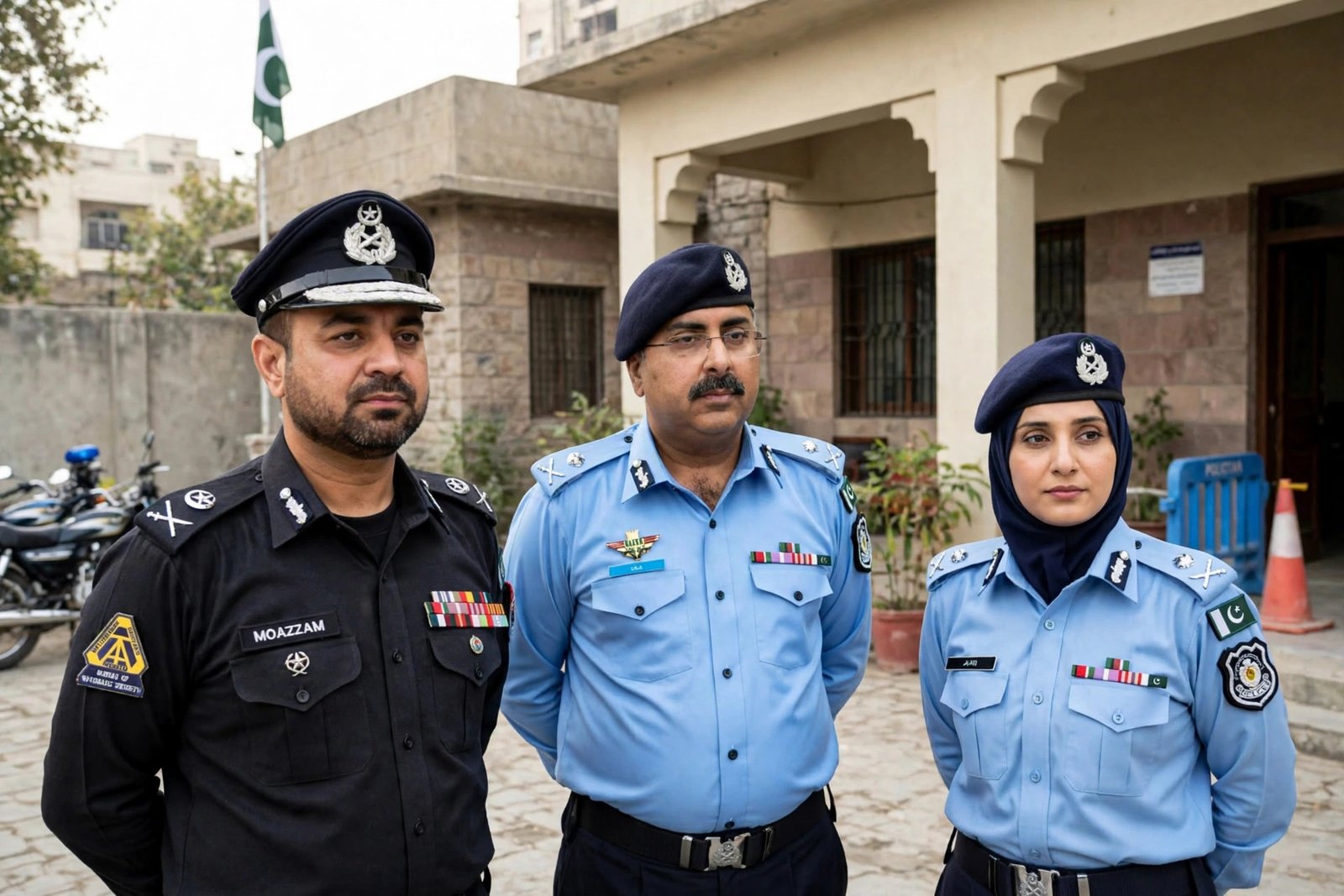
For thousands of young Pakistanis every year, a police job is the first serious career goal. It is a government job with a uniform, a regular salary, a pension, and a kind of respect in your neighbourhood that few other jobs carry. It is also a hard job to get into, and that is exactly why this guide exists. Police jobs in Pakistan are announced by several different departments, each with its own rules, its own testing service, and its own timeline, and the people who get selected are usually the ones who understood the process before they applied.
This guide covers the whole picture for 2026: the types of police jobs available, who can apply, the physical and education requirements, how recruitment actually works in each province, how to prepare for the physical and written tests, what the pay and career path look like, and how to avoid the fake advertisements that target police aspirants every single year.
Types of Police Jobs in Pakistan
The police in Pakistan is not one organisation. It is a set of provincial and federal forces, and each one recruits separately. The four provincial forces are Punjab Police, Sindh Police, Khyber Pakhtunkhwa Police and Balochistan Police. At the federal level there is the Islamabad Capital Territory Police, the National Highways and Motorway Police, and the Federal Investigation Agency, which is a separate federal body with its own recruitment.
Within each force, the most common entry-level posts are the same, and these are the posts that make up the bulk of police jobs in Pakistan advertised each year. A Police Constable, usually in Basic Pay Scale 7, is the starting rank for most recruits and requires Matric. A Lady Constable is the same rank for women, and women are recruited in every province now, with dedicated women police stations and units in the major cities. An Assistant Sub Inspector, usually BPS-11, requires Intermediate. A Sub Inspector, usually BPS-14, requires a bachelor’s degree. Above that sit Inspectors, Deputy Superintendents of Police and higher ranks, most of which are filled by promotion or through the Central Superior Services examination rather than open recruitment.
There are also specialist units that recruit from time to time: the Dolphin Squad and Police Response Unit in Punjab, the Traffic Police, the Special Branch, the Counter Terrorism Department, and the Special Protection Unit. These units often take serving constables, but some advertise direct recruitment for drivers, wireless operators, and technical staff, so it is worth reading the advertisement carefully rather than assuming every police job is a constable post.
Who Can Apply: Education, Age and Domicile
The education requirement depends on the post. For a constable, Matric (10th class) is usually enough. For an ASI, Intermediate (12th class) is the standard requirement. For a Sub Inspector, a bachelor’s degree from a recognised university is required. Some specialist posts, such as legal assistants or IT staff, ask for a specific degree, and the advertisement always spells this out.
The age limit for most police jobs in Pakistan is between 18 and 25 years, though the exact limit varies by province and by post, and government rules sometimes allow a small relaxation. Always check the age limit in the advertisement itself rather than trusting what someone told you, because applying when you are over-age is the most common reason applications get rejected at the first stage.
Domicile matters a great deal in police recruitment. Provincial police forces recruit from their own province, and many posts are distributed by district or regional quota. That means a Punjab domicile holder applies for Punjab Police, a Sindh domicile holder for Sindh Police, and so on. Federal posts, such as Islamabad Police or Motorway Police, are generally open to candidates from across Pakistan, sometimes with provincial quotas. If you are applying for a post in another province without the right domicile, your application will not survive the document check, so do not waste the fee.
Physical Requirements and the Physical Test
Police recruitment is different from other government jobs because your body is tested as well as your mind. The usual height requirement is around 5 feet 7 inches for men and 5 feet 2 inches for women, though exact figures vary slightly by province and by post. Male candidates are also measured for chest size. These measurements are taken during the physical test, and candidates who do not meet them are not allowed to continue.
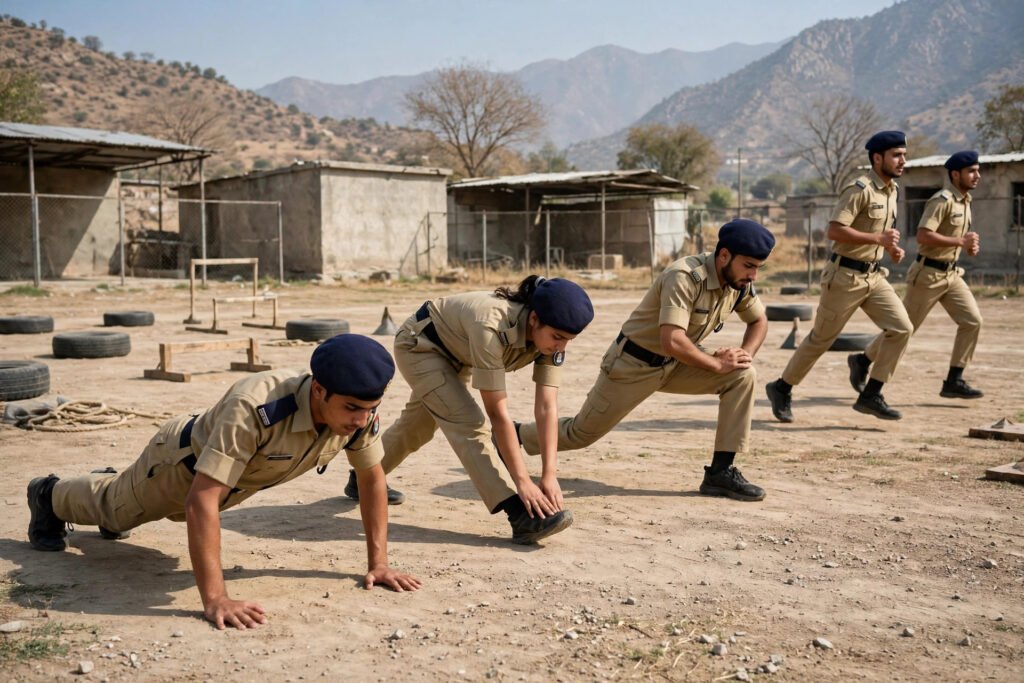
The physical test itself usually includes a timed run, commonly 1.6 kilometres, along with push-ups, sit-ups and sometimes a long jump. The exact standards are written in the advertisement, and they differ between forces, so do not train for a standard you guessed. Start preparing weeks before the test, not days. Run regularly, build up your stamina gradually, and practise the run at the distance in the advertisement. Many candidates fail the physical test simply because they started preparing too late, not because they were unfit.
After the physical test comes a written test, usually set by a testing service such as the Punjab Public Service Commission, the Sindh Public Service Commission, the Educational Testing and Evaluation Agency in Khyber Pakhtunkhwa, or the National Police Foundation’s testing service for Islamabad Police. The written paper generally covers English, Urdu, general knowledge, Pakistan studies, Islamiat, basic mathematics and current affairs. Past papers and sample papers are widely available, and working through them is the most effective preparation there is.
Candidates who pass the written test are called for an interview, and then a medical examination and a background check. The whole process, from advertisement to final selection, often takes several months, so patience is part of the job.
How to Apply for Police Jobs in Pakistan
The application process follows the same broad pattern everywhere, but the details change with each advertisement, so treat the advertisement as your only reliable source.
First, find the real advertisement. Provincial police departments publish their vacancies in newspapers and on their official websites. For Punjab, the starting point is the official portal of the department, where advertisements and application instructions are posted: Punjab Police official website. The same principle applies everywhere else: Sindh Police, KP Police, Balochistan Police and Islamabad Police each publish on their own official sites, and the Motorway Police advertises through the National Job Portal and its own channels.
Second, read the advertisement from start to finish before you do anything else. Note the posts, the number of vacancies, the required education and age limit, the domicile requirement, the physical standards, the application fee if any, and the last date. Note whether the application is online or on a printed form, and which testing service is conducting the test.
Third, prepare your documents: CNIC, domicile, educational certificates, and photographs, all attested where required. Keep scanned copies ready for online applications. Fill in the form carefully, because a wrong CNIC number or a wrong domicile district can disqualify an otherwise eligible candidate.
Fourth, submit before the last date, and keep the receipt or tracking number. Do not wait for the last day, because online portals slow down or crash under the load, and post offices get crowded. After submission, check the testing service’s website regularly for the roll number slip and the test date. Nobody will call you to remind you.
For a broader picture of how government hiring works across departments, our guide to government work is a useful companion read: Government Jobs in Pakistan 2026, which explains the provincial commissions, the testing services and the application routine that applies to police recruitment as well.
Salary, Allowances and Career Growth
A police constable’s starting pay in Pakistan is usually around PKR 35,000 to 45,000 a month including allowances, though the exact figure varies by province, by posting and by the allowances attached to the role. Higher ranks in police jobs in Pakistan earn more, and officers posted in specialist units or on special duties often receive additional allowances. The pay is not lavish, but it is regular, and it comes with a package that private jobs rarely match: medical facilities, a pension after retirement, and job security that does not depend on a company’s profits.
The career path is also real. A constable can be promoted to head constable, then to ASI, then to Sub Inspector, through departmental examinations and seniority. Officers who join as Sub Inspector can rise to Inspector and beyond. And for graduates with ambition, the police service can also be entered at officer level through the Central Superior Services examination, which leads to the Police Service of Pakistan and postings as Assistant Superintendent of Police.
None of this happens quickly. Promotion in the police takes years of service, clean records and passing departmental exams. But for a young person from an ordinary family, it is one of the few careers in Pakistan where the ladder from constable to officer is genuinely open to anyone who puts in the years.
Women in the Police
Women now make up a real and growing part of police forces across Pakistan, and recruitment for lady constables is announced alongside male recruitment in every province. Women serve in police stations, in women police stations, in traffic units, in the Special Protection Unit, and in investigation and victim support roles. The physical standards for women are different from those for men, and the advertisement always lists them separately.
For a young woman considering this career, the honest picture is that it is demanding — shift work, field duty and public dealing are part of the job — but it is also one of the most respected government careers open to women in Pakistan, with the same pay scales, allowances and promotion path as male colleagues. If you meet the standards, apply. Do not let anyone tell you it is not a job for women, because the advertisements themselves say otherwise.
How to Spot Fake Police Job Ads
Police recruitment attracts more fake advertisements than almost any other kind of job in Pakistan, and the reason is simple: the demand is enormous, and desperate candidates are easy to fool. The pattern is almost always the same. A message on WhatsApp or Facebook promises a police job — sometimes with a specific rank and a specific district — and then asks for money: a registration fee, a test fee, a uniform fee, or a payment to an “agent” who claims to have influence.
No genuine police department charges you money to apply through an agent, and no serving officer can sell you a post. Application fees, where they exist, are paid only through the official channel named in the advertisement — a bank challan or the testing service’s official payment method — and the amount is always written in the advertisement itself. Anyone who asks you to send money to a personal mobile account is running a scam.
Other warning signs: an advertisement with no official source, a job offer that arrives without you ever applying, a promise of selection without a physical or written test, and pressure to pay immediately. Verify every advertisement against the official police website or the newspaper it claims to come from before you pay anything or share your documents. If you are unsure, call the district police office on a number you find independently. Losing a few days to verification is far better than losing your money and your CNIC copies to a stranger.
Final Word
Police jobs in Pakistan in 2026 are there for people who prepare properly and apply through the right channels. The process is competitive — thousands of candidates apply for every batch of constable posts — but it is also transparent. The standards are published, the tests are conducted by named testing services, and the merit lists are announced publicly. That is genuinely good news for an honest candidate.
Start now if you are serious. Get your documents in order, check your height and fitness against the standards, start running, and work through past papers for the written test. Keep an eye on the official police websites and the newspapers, not on WhatsApp forwards. And apply for every post you are genuinely eligible for, in your own province, rather than waiting years for one perfect vacancy. That is how most police officers in Pakistan actually got their start.
FAQs
What is the minimum education for police jobs in Pakistan?
For a constable, Matric (10th class) is usually enough. For an ASI, Intermediate is required, and for a Sub Inspector, a bachelor’s degree is required. Specialist posts may ask for a specific degree, and the advertisement always states the requirement.
What is the age limit for police jobs in Pakistan?
The usual age limit for most police jobs is between 18 and 25 years, though it varies by province and by post, and some relaxation may apply under government rules. Always check the age limit in the advertisement itself before applying.
How can I apply for police jobs in Pakistan?
Find the genuine advertisement in a newspaper or on the official police department website, read it fully, prepare your documents, and apply through the channel it names — usually an online portal or a form submitted to the testing service conducting the recruitment. Never apply through an agent or pay anyone outside the official channel.
What is the physical test for police jobs?
The physical test usually includes height and chest measurement, a timed run of about 1.6 kilometres, and exercises such as push-ups and sit-ups. Exact standards are written in the advertisement and differ between forces, so prepare against the standard in your own advertisement.
What is the salary of a police constable in Pakistan?
A constable’s starting pay in police jobs in Pakistan is usually around PKR 35,000 to 45,000 a month including allowances, varying by province and posting. The job also includes medical facilities, a pension, and allowances for specialist duties, which private jobs rarely match.
Can women join the police in Pakistan?
Yes. Every provincial police force recruits lady constables, and women serve in police stations, traffic units, investigation roles and specialist units, with the same pay scales and promotion path as male colleagues. Physical standards for women are listed separately in the advertisement.
One Response