
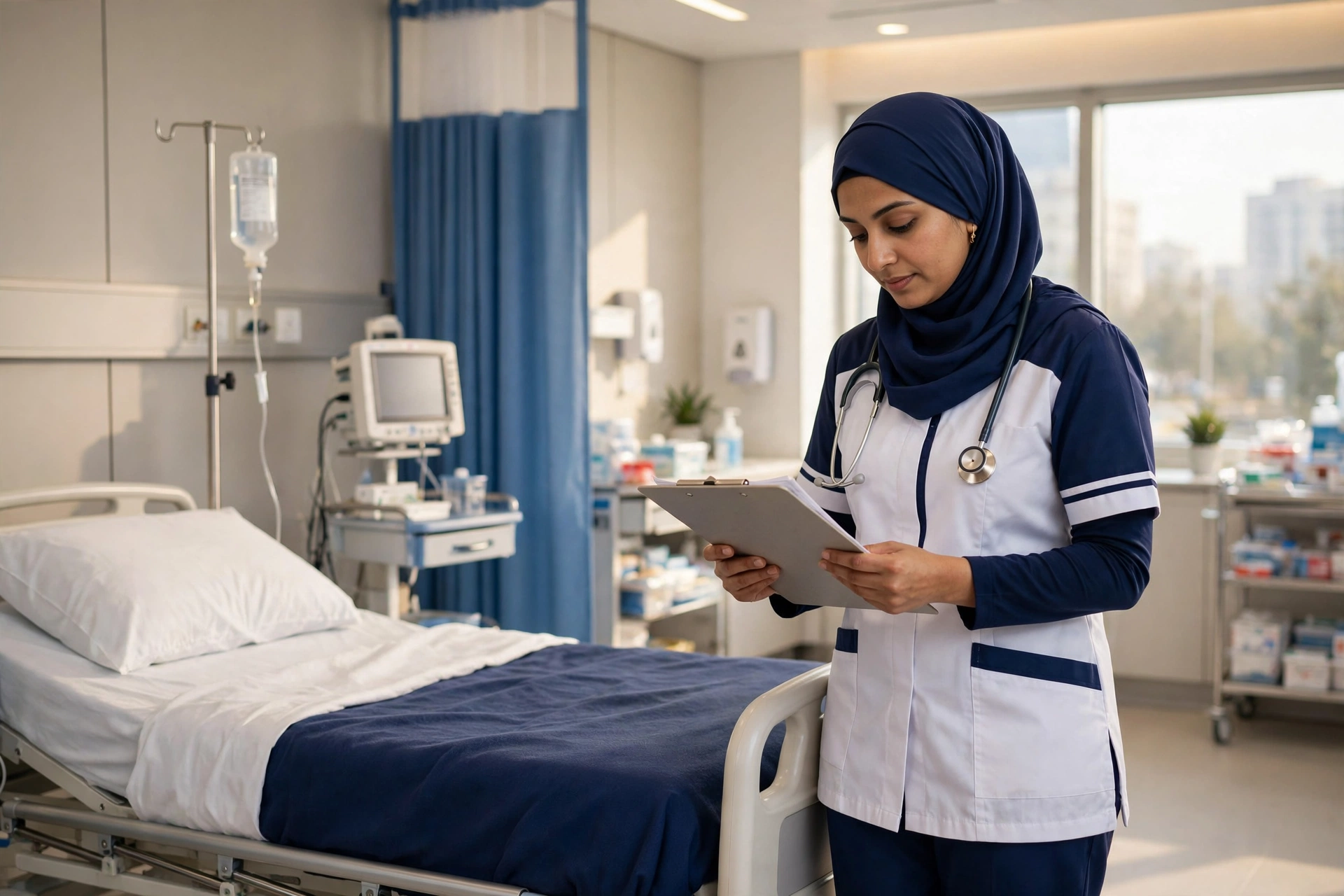
If you are thinking about a career in healthcare but medical college is out of reach, nursing is honestly one of the smartest choices you can make in Pakistan right now. It is not glamorous work — nobody is going to tell you that. Long shifts, real responsibility, and patients who depend on you. But in 2026, nursing is one of the few fields in this country where jobs are genuinely available, salaries are stable, and there is a real path to working abroad if you want it.
This guide covers what nursing jobs in Pakistan actually look like this year: the qualifications you need, where the jobs are, what you can expect to earn, and how to get hired without wasting months on the wrong moves.

Why Nursing Is in High Demand in Pakistan Right Now
Pakistan has never had enough nurses, and everyone in healthcare knows it. New hospitals and medical centres keep opening in Lahore, Karachi, and Islamabad, while the government keeps expanding rural health facilities and basic health units. On top of that, a growing home-healthcare industry — companies that send nurses and caregivers to people’s homes — has created a whole new category of jobs that did not really exist ten years ago.
The numbers tell the story plainly. Hospitals are constantly hiring for staff nurses, nursing supervisors, and midwives. Home-care companies are hiring for 12-hour shift nurses in Islamabad, Lahore, and Karachi. NGOs like MSF and health organisations like the Aga Khan Health Services regularly post nursing positions for Gilgit, Chitral, Quetta, and Karachi.
And then there is the international route. The Gulf countries — Saudi Arabia, the UAE, Qatar, Oman — hire thousands of Pakistani nurses every year, and the pay is several times what hospitals pay here. The UK and Australia have their own pathways too. Nursing is one of the few Pakistani qualifications that transfers cleanly abroad, as long as you plan for it from the start.
What Qualifications You Actually Need
Let us be clear about this because a lot of students get confused. In Pakistan, there are two main routes into registered nursing:
1. BS Nursing (4-year degree): This is the full professional route. You do a four-year bachelor’s degree from a recognised nursing college, and then you register with the Pakistan Nursing Council (PNC). Hospitals — especially good private ones like Aga Khan University Hospital, Shaukat Khanum, and the large private hospitals in Lahore and Karachi — prefer BS Nursing graduates. If you plan to go abroad, this is the qualification you want.
2. Three-year Diploma in Nursing: This is the traditional route through a school of nursing attached to a hospital. It still gets you registered with the PNC, and you can absolutely work as a staff nurse with it. Many currently working senior nurses in Pakistan came through this route. It is a shorter path, but the BS degree is gradually becoming the expected standard, especially for international jobs.
There are also shorter courses for related roles — midwifery, lady health visitor (LHV) training, and various caregiver certificates. These lead to real jobs, especially in home care and community health, but they are not registered nursing. Be honest with yourself about which track you are on.
PNC registration is non-negotiable. Every serious nursing job posting in Pakistan — from Fatimid Foundation to the big private hospitals — lists a valid PNC license as a requirement. If your college is not recognised by the PNC, your degree will not get you a job. Check this before you enrol, not after you graduate.
Where the Nursing Jobs Are in Pakistan
Nursing work in 2026 does not just mean standing in a hospital ward, though that is still the biggest employer. Here is where the jobs actually are:
Private hospitals: The biggest and best-paying local employers. Aga Khan University Hospital, Shaukat Khanum, Fatimid Foundation centres, and the large private hospitals in Karachi, Lahore, and Islamabad hire nurses year-round. They pay more, train you better, and the experience looks much stronger on your CV — especially if you plan to go to the Gulf later.
Government hospitals: Lower starting pay, but government nursing jobs come with job security, pensions, and benefits that private hospitals do not offer. Recruitment is usually through provincial public service commissions or the health department. The process is slow and competitive, but for many nurses this is the dream job because it is permanent.
Home healthcare companies: This is the fastest-growing segment. Companies in Islamabad and Lahore are hiring nurses for home-based patient care — elderly patients, post-surgery recovery, chronic illness management. Typical arrangements are 12-hour shifts on rotation. It pays competitively and some nurses prefer it to ward duty because you deal with one patient at a time.
NGOs and international organisations: MSF, various welfare trusts, and health foundations hire nurses for their hospitals and field programs in places like Quetta, Gilgit, and rural Sindh. These jobs often come with good pay and genuinely meaningful work, though the postings can be remote.
Specialist centres: Blood banks (Fatimid Foundation runs major ones), dialysis centres, maternity clinics, and children’s hospitals all need nurses. Specialisation in areas like ICU, emergency, neonatal care, or midwifery makes you much more hireable and opens up better pay.
Abroad: The Gulf remains the biggest destination. Saudi Arabia, UAE, Qatar, Kuwait, and Oman recruit Pakistani nurses continuously. Salaries are typically three to five times Pakistani hospital pay, plus accommodation and benefits. You will need your PNC license, good documentation, and usually a dataflow verification plus a licensing exam like the Prometric for Saudi Arabia. Start preparing your documents early — the paperwork takes months.
What Nurses Earn in Pakistan in 2026
Let us talk real numbers, because this is where most online guides get vague. Nursing pay in Pakistan varies a lot depending on where you work and your qualification:
- Fresh staff nurse, private hospital: Roughly Rs. 45,000 to 70,000 per month. The big-name hospitals in Karachi and Lahore sit at the higher end; smaller city hospitals at the lower end.
- Experienced nurse (3–5 years): Rs. 70,000 to 110,000 in good private hospitals. Specialised ICU, ER, or neonatal nurses earn at the top of this range.
- Nursing supervisors and head nurses: Rs. 120,000 to 180,000 in major hospitals.
- Government nurses: Lower starting salary but steady increments, allowances, and pension. A mid-career government staff nurse with allowances can cross Rs. 100,000 monthly, with full job security behind it.
- Home-care nurses: Competitive — many companies pay Rs. 60,000 to 90,000 for 12-hour shift rotations, and some charge per-visit rates that work out higher.
- Gulf countries: This is the big jump — SAR 3,500 to 6,000+ per month in Saudi Arabia (roughly Rs. 250,000 to 430,000), with housing and medical covered. UAE and Qatar are in a similar range.
The honest truth: nursing pay inside Pakistan is modest at the start. That is why so many nurses work two to three years locally for experience, then move to the Gulf. There is nothing wrong with that plan — in fact, it is the most common and sensible career path in this field.
How to Actually Get Hired as a Nurse in 2026
Here is a practical, step-by-step approach that works:
Step 1 — Get your registration sorted. Finish your BS Nursing or diploma, get your PNC license, and keep your documents organised — degree, transcripts, internship completion, PNC card. Gulf recruiters will ask for all of these eventually, so keep attested copies ready from the start.
Step 2 — Do a proper internship or house job. The clinical experience from your nursing program matters enormously to employers. Do your ward rotations seriously. The references and confidence you build in your final year and internship will carry you into your first job.
Step 3 — Apply where the jobs are posted. Check rozee.pk, hospital career pages, and the job boards regularly — nursing positions from organisations like Fatimid Foundation, Aga Khan Health Services, and home-care companies appear there constantly. For government jobs, watch the provincial health department and public service commission announcements. Do not just apply online — walk into hospitals with your CV too, especially in smaller cities. It still works.
Step 4 — Build one specialisation early. General ward nursing is fine, but nurses with ICU, emergency, neonatal, dialysis, or midwifery experience get hired faster and paid more. Volunteer for rotations in these units during your training. A midwife who can also handle neonatal care, for instance, is valuable everywhere.
Step 5 — Prepare for the interview like a professional. Nursing interviews in Pakistan test both knowledge and composure. Review common clinical scenarios — emergency response, medication administration, patient safety protocols. Hospitals want nurses who stay calm and follow protocol under pressure. Show them that.
Step 6 — If you want the Gulf, start the paperwork early. PNC verification, dataflow, Prometric exams — this process takes three to six months. Many nurses waste a year because they only start after getting frustrated with local pay. Start your file while you are still working your first local job.
Mistakes That Cost Nurses Real Opportunities
Enrolling in an unrecognised college. This is the costliest mistake in nursing education in Pakistan. If the college is not recognised by the PNC, your degree is paper. Verify recognition before paying a single fee.
Ignoring English. For Gulf jobs, and even for promotions in good private hospitals, professional English matters. You do not need to be fluent — you need to communicate clearly with doctors, write proper patient notes, and handle documentation. Work on it during your studies.
Staying in one unit for years. Nurses who spend five years in the same general ward without picking up specialised skills end up stagnant. Rotate through ICU, emergency, and specialised units when you can. Each one adds to your market value.
Not keeping documents updated. PNC licenses need renewal. Attested copies go missing. When a Gulf recruiter calls with a deadline, you need your file ready, not a scavenger hunt.
Treating nursing as a fallback. The nurses who do best — locally and abroad — are the ones who take the profession seriously from day one. Employers can tell the difference between someone who chose nursing and someone who settled for it.
Can You Work Part-Time or From Home as a Nurse?
Nursing is shift work by nature, so it is not remote-friendly in the way office jobs are. But there is real flexibility in the field. Home-care nursing lets you take assignments on your own schedule — many companies offer 12-hour shifts you can plan around your life. Some nurses combine a part-time hospital position with private home-care visits, which can pay surprisingly well. If you are exploring flexible work options alongside a healthcare career, it is worth looking at how part-time work is structured across different fields in Pakistan — our guide on part-time jobs in Pakistan covers the practical side of balancing shift work with extra income. Just be realistic: nursing pays for your time and presence, not for tasks you can do from a laptop.
Frequently Asked Questions
Is nursing a good career for males in Pakistan?
Yes, and the demand is growing. Male nurses are needed in emergency departments, ICUs, psychiatric units, and for male patient wards. The old idea that nursing is only for women is fading fast — hospitals actively recruit male nurses now, and the Gulf hires them in large numbers.
How long does it take to become a registered nurse in Pakistan?
Four years for a BS Nursing degree, or three years for the diploma route, plus your PNC registration process. Factor in another few months for documentation and your first job search.
Can I get a nursing job in Pakistan without experience?
Yes. Hospitals hire fresh graduates regularly — especially large private hospitals that run their own training. Home-care companies also hire fresh nurses. Your clinical rotations and internship count as your starting experience, so take them seriously.
What is the age limit for nursing jobs in Pakistan?
Private hospitals generally do not have a strict age limit. Government nursing jobs recruited through public service commissions usually have age limits (often 21–28 with relaxations), so check each advertisement. Gulf recruiters typically prefer nurses under 45.
Which nursing specialisation pays the most in Pakistan?
ICU/critical care, emergency, neonatal, and dialysis nursing pay the most locally because the skills are scarce. Midwifery is consistently in demand everywhere, including rural postings with good allowances.
Is it better to work in Pakistan or go to the Gulf as a nurse?
It depends on your stage. Two to three years of Pakistani hospital experience makes you far more hireable abroad and leads to better Gulf offers. Going abroad with zero experience usually means lower offers and harder licensing. The common winning path: build experience locally, then move with a strong file.
The Bottom Line
Nursing in Pakistan in 2026 is not a glamorous career, but it is a real one. The jobs exist, the demand is genuine, and the path — from PNC registration to hospital experience to a Gulf position — is well-travelled and well-understood. Thousands of Pakistani nurses walk it every year.
If you are choosing between nursing and sitting at home waiting for a government clerical job that may never come, nursing wins on every practical measure: faster entry, real skills, and options that extend far beyond Pakistan’s borders. Pick a recognised college, take your training seriously, get your PNC license, and build your experience deliberately. The career takes care of itself after that.
And if you want to see what is actually being advertised right now, browse the current nurse and midwife openings on rozee.pk — the listings from organisations like Fatimid Foundation show exactly what employers are asking for in 2026.
3 Responses