
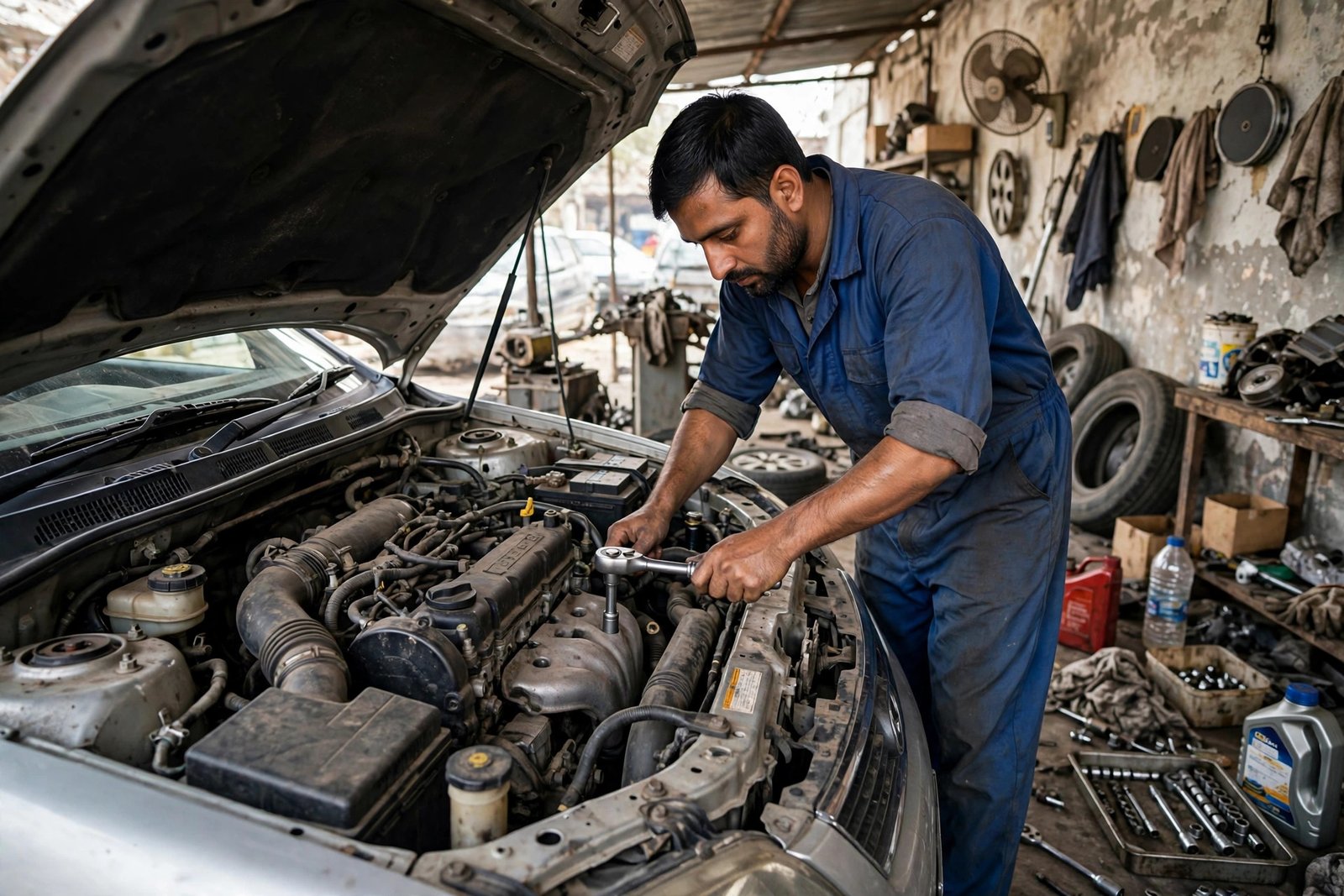
If you can hear a fault in an engine before a computer can find it, you already have a skill Pakistan will pay for in 2026. Cars, bikes, buses, trucks, generators, air conditioners, and factory machines all need people who can fix them, and that demand does not slow down when offices cut hiring. Every city has workshops that are short of reliable mechanics, dealerships that need trained technicians, and transport companies that cannot afford to keep a vehicle standing idle for days.
This guide is for anyone thinking about mechanic jobs in Pakistan in 2026, whether you are a school leaver, a helper in a workshop who wants to become a proper ustad, a DAE student, or an experienced mechanic thinking about the Gulf. It covers the main career paths, the training that actually matters, the tools you need, realistic salary ranges in rupees, the difference between workshops, dealerships, and Gulf jobs, and a practical way to apply without falling for scams.
What a Mechanic Actually Does in 2026
The old image of a mechanic is someone covered in grease with only a spanner in hand. That work still exists, but modern mechanic jobs in Pakistan now mix hands-on repair with diagnosis. A good mechanic inspects the vehicle or machine, listens to the customer, finds the real fault instead of guessing, repairs or replaces the faulty part, tests the work, and explains what was done in simple words.
In 2026, even a small workshop in Lahore, Karachi, Rawalpindi, or Faisalabad is likely to use an OBD scanner for cars, a multimeter for electrical faults, and a phone to order parts and check service manuals. You do not need to be a computer expert, but you do need to be comfortable learning new systems. Hybrid cars, fuel injection, ABS brakes, airbags, and automatic gearboxes are no longer rare. The mechanics who keep learning earn more and get steadier work than those who only repeat what they learned ten years ago.
Soft skills matter just as much. Customers return to the mechanic who is honest about cost, calls before replacing an expensive part, keeps the vehicle clean, and finishes on time. Workshop owners remember the mechanic who does not leave a job half done and who treats helpers with respect. In a trade built on trust, your reputation travels faster than any advertisement.
Auto Mechanic Jobs: Cars, SUVs, and Pickups
Auto mechanic work is the most common route, and it is a good place to start. In cities, demand is driven by the sheer number of private cars, ride-hailing vehicles, and company fleets. Daily work includes engine tuning, oil and filter changes, brake and suspension repair, clutch work, steering faults, cooling system problems, and electrical issues such as dead batteries, faulty sensors, and starting problems.
A beginner usually starts as a helper or apprentice, learning how to use tools safely, remove and refit parts, and follow a senior mechanic. Within one to two years of steady work, a helper who pays attention can handle routine services on his own. Within three to five years, with proper training, he can diagnose engine and electrical faults and handle more complex jobs.
Specialisation helps you stand out. Some auto mechanics focus on Japanese cars, others on local models, and some on European cars or SUVs. Others specialise in automatic transmissions, engine overhauling, or car electrical and wiring work. The more specific your skill, the easier it is for a workshop or dealership to justify paying you more, because customers with that exact problem will seek you out.
Diesel and Fleet Mechanic Jobs: Trucks, Buses, and Heavy Vehicles
Diesel and fleet mechanics work on trucks, buses, pickups used for goods transport, tractors, and construction machinery. This is physically harder work, but it is often steadier and better paid than small car work, because a transport company loses money every hour a truck is off the road.
Fleet work teaches you to think in terms of preventive maintenance. Instead of waiting for a breakdown, you follow a service schedule, check brakes, tyres, lights, oil, coolant, and air filters, and fix small problems before they become expensive failures. Companies value mechanics who keep records, report problems early, and can work under time pressure when a vehicle must leave on schedule.
If you enjoy bigger machines and do not mind getting your hands dirty, diesel work is worth considering. Experience with diesel engines, turbo systems, fuel pumps, and air brake systems is in demand in transport hubs, logistics companies, bus companies, and construction firms across Pakistan. It also transfers well to Gulf jobs, where heavy vehicle and fleet experience is highly valued.
Bike Mechanic Jobs: Motorcycles and Scooters
Pakistan runs on motorcycles. From students and delivery riders to office workers and small business owners, millions of people depend on a bike every day, which means bike mechanic jobs are available in almost every town and neighbourhood.
Bike work is faster than car work. A typical day includes tuning, oil changes, chain and brake adjustment, clutch plates, electrical faults, and tyre work. Because jobs are smaller and quicker, a bike mechanic can serve many customers in a day, and a good reputation spreads quickly in a local area.
Many successful bike mechanics eventually open their own small shop. The start-up cost is lower than a car workshop, and if you are in a busy area near a market, college, or housing colony, regular customers can keep you busy. Learning about newer fuel-injected bikes and electric scooters will become more important in 2026, so do not limit yourself to older carburettor models only.
AC and Refrigeration Mechanic Jobs
Air conditioning and refrigeration is a separate but closely related trade, and in Pakistan’s hot summers it is one of the most in-demand skills. AC mechanics install, service, and repair split air conditioners, window units, car air conditioning systems, chillers, and commercial refrigeration for shops, restaurants, and cold storage.
This work needs a mix of mechanical skill and electrical knowledge. You must understand gas pressure, compressors, condensers, wiring, and safe handling of refrigerant gas. Mistakes can damage expensive equipment, so proper training matters more here than in some other mechanic paths.
Seasonal demand is a real factor. Summer is extremely busy, while winter is slower. Smart AC mechanics use the slow season for training, maintenance contracts with offices and shops, and learning about inverter ACs and commercial systems. Those who also learn refrigerator and deep freezer repair can smooth out their income across the year.
Industrial Mechanic Jobs: Factories and Plants
Industrial mechanics, sometimes called maintenance technicians or fitters, work in factories, textile mills, food plants, cement plants, and power stations. Their job is to keep production machines running. When a machine stops, production stops, so this role carries real responsibility.
Industrial work is different from workshop work. You follow maintenance schedules, read technical drawings, work with motors, pumps, conveyors, compressors, and hydraulic systems, and often work in shifts. Safety rules are strict, and you will be expected to wear protective equipment and follow lockout procedures.
For a mechanic who prefers a fixed salary, regular hours, and long-term stability over daily customer dealing, industrial work is attractive. Large employers often provide training, overtime, and promotion to supervisor roles. Experience in a factory also looks strong on a CV for Gulf industrial jobs.
Training That Actually Matters: DAE, NAVTTC, and Short Courses
You can learn mechanics by working in a workshop, and many excellent mechanics did exactly that. But in 2026, a certificate makes hiring easier, especially for dealerships, companies, and Gulf employers who cannot judge your skill from a short interview alone.
A Diploma of Associate Engineering in mechanical or automobile technology is a solid foundation. It teaches engineering drawing, workshop practice, engines, and basic electrical work. It takes longer than a short course, but it opens doors to supervisor and technician roles later.
NAVTTC and technical training institutes offer shorter, practical courses in auto mechanics, diesel mechanics, refrigeration and air conditioning, and related trades. These courses are useful because they combine classroom learning with workshop practice, and many include a certificate that employers recognise. When choosing a course, ask what practical hours are included, whether you will work on real vehicles or machines, and whether the institute helps with placement.
Private dealership training is another strong route. Car companies run training for their own technicians, and completing that training can lead directly to a dealership job. Even if you start in a small workshop, short courses in diagnostics, auto electrical work, hybrid systems, or AC repair can raise your value quickly.
Whatever route you choose, keep learning on the job. Watch how senior mechanics diagnose faults, ask questions, and practise explaining problems to customers. A certificate gets you an interview. Your hands and your honesty get you the job and keep it.
Tools, Safety, and Work Habits
A mechanic is only as good as his tools and habits. Beginners should learn the correct use of spanners, sockets, screwdrivers, pliers, torque wrenches, jacks and stands, multimeters, and diagnostic scanners. Using the wrong tool, or forcing a bolt, damages parts and wastes the customer’s money.
Safety is not optional. Never work under a vehicle supported only by a jack. Wear eye protection when grinding or working under a vehicle. Keep hands away from moving belts and fans. Handle fuel, batteries, and refrigerant gas carefully. Good workshops notice who works safely, because accidents cost time, money, and trust.
Organisation also sets professionals apart. Keep your workspace clean, return tools after use, label removed parts, and write down what you checked. Customers notice a clean workshop, and workshop owners notice a mechanic who does not lose parts or leave jobs unfinished. These small habits are often what turn a helper into a trusted senior mechanic.
Salary Ranges for Mechanic Jobs in Pakistan in 2026
Salaries vary by city, experience, specialisation, and employer, so treat the ranges below as a realistic guide for 2026, not a promise. A beginner helper in a small workshop may start around PKR 25,000 to PKR 40,000 per month. A bike mechanic with one to three years of experience often earns PKR 40,000 to PKR 70,000 per month, depending on the area and whether the work is on salary or commission.
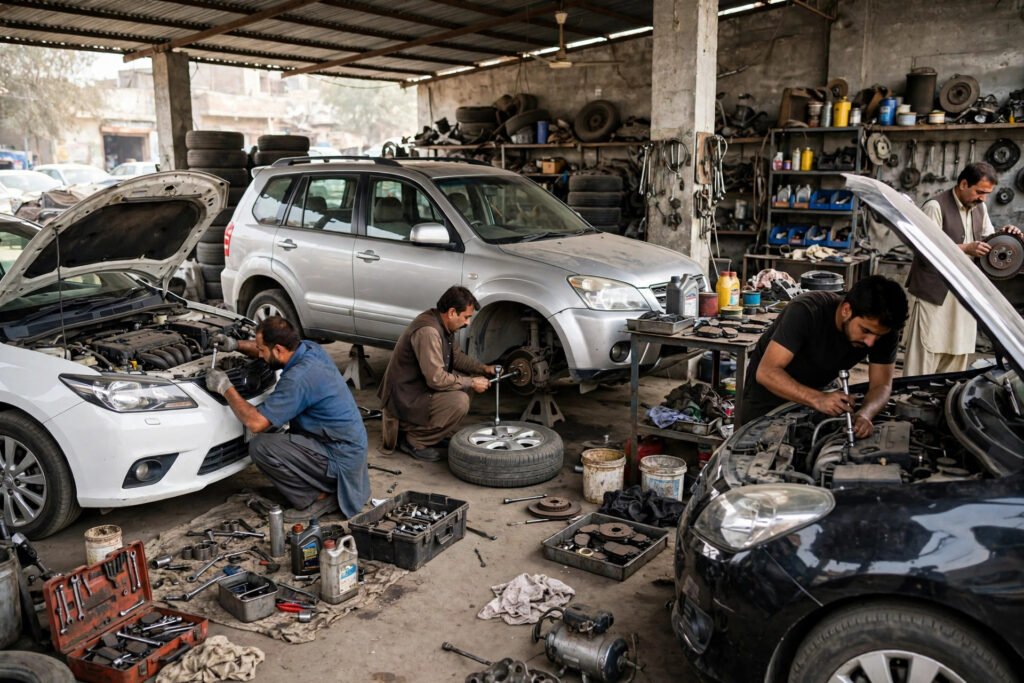
A car mechanic with three to five years of experience commonly earns PKR 60,000 to PKR 120,000 per month in a busy city workshop, and more in a dealership or with a specialisation such as auto electrical, automatic transmission, or engine work. Diesel and fleet mechanics with solid experience often earn PKR 80,000 to PKR 150,000 per month, especially in transport and logistics companies where reliability is critical.
AC and refrigeration mechanics can earn PKR 60,000 to PKR 130,000 per month, with higher summer income for those who also take private calls. Industrial maintenance technicians in factories often earn PKR 70,000 to PKR 150,000 per month, with shift allowances and overtime adding to the total. Senior technicians, workshop supervisors, and dealership master technicians can earn PKR 150,000 to PKR 250,000 or more per month.
Self-employed mechanics earn differently. A small shop owner may earn less in the first months and much more once regular customers build up, but income is less predictable and depends on rent, parts costs, and reputation. When comparing offers, look at the full picture: basic salary, overtime, commission, accommodation or transport, training, and job security, not just the headline monthly figure.
Workshops, Dealerships, or the Gulf: Which Path Fits You
Small workshops offer fast learning and variety. You will touch many types of vehicles and problems, and a good ustad can teach you a great deal. Pay may be lower at first, and working conditions vary, but you learn quickly and build practical confidence.
Dealerships and authorised service centres offer structured training, better tools, cleaner working conditions, and a clearer promotion path from technician to senior technician to supervisor. The work is more standardised, and you will specialise in one brand, which can be a strength or a limitation depending on your goals.
Company and fleet jobs offer fixed salaries, regular hours, and benefits, but less variety. Industrial jobs are similar, with the added benefit of long-term stability. These roles suit mechanics who want predictable income and are comfortable with shift work and safety procedures.
Gulf jobs attract many Pakistani mechanics because salaries are higher and often include accommodation and transport. Employers in Saudi Arabia, the UAE, Qatar, and Oman commonly look for mechanics with three or more years of experience, a trade certificate, and the ability to pass a practical trade test. Before accepting a Gulf offer, check the employer, the contract, the salary in the offer letter, and the visa type. A genuine employer will not ask you to pay a large upfront fee for a job, and the terms in the offer should match what the agent promised.
For readers exploring work in other Pakistani cities, the range of opportunities is wide, and city guides can help you compare employers and local demand. For example, if you are considering a move for work, this guide to jobs in Sialkot shows how a smaller industrial city can still offer steady skilled work.
How to Apply for Mechanic Jobs in Pakistan
Start with a simple, honest CV. List your training, the types of vehicles or machines you have worked on, the tools and diagnostic equipment you can use, and your years of experience. Mention any specialisation clearly, such as diesel engines, auto electrical, AC repair, or bike tuning. Do not exaggerate. A practical test in an interview will reveal the truth quickly, and honesty builds trust.
Apply through multiple channels. Visit workshops and dealerships in person with your CV, because many workshop jobs are filled by personal visits rather than online adverts. Ask senior mechanics and teachers for referrals. Check reputable job portals for technician and mechanic openings, and filter for employers that give clear job descriptions and contact details. You can browse current automotive openings on a trusted portal such as Bayt Pakistan automotive mechanic jobs to compare roles, employers, and requirements before applying.
Prepare for a practical test. Employers often ask you to diagnose a fault, change a part, or explain a repair step by step. Practise explaining your thinking out loud, because employers want to see how you diagnose, not just how fast your hands move. Dress neatly, arrive on time, and bring your certificates and CNIC copies.
If you are aiming for a dealership or company job, highlight safety habits, record keeping, and customer dealing. If you are aiming for a small workshop, highlight speed, versatility, and willingness to learn. Tailor your approach to the employer, and follow up politely after a visit or interview.
Scam Warnings: Protect Yourself Before You Pay or Travel
Unfortunately, job scams target skilled workers, including mechanics. Be careful if someone promises a Gulf job with a very high salary but refuses to show a written offer, asks for a large advance payment, or pressures you to decide the same day. Genuine recruitment involves documents, a medical test where required, and a visa process you can verify.
Never hand over your original passport or certificates to an unknown agent without a proper receipt and a written agreement. Check the agency’s licence where applicable, speak to people who have gone through the same agency, and verify the employer’s name and offer details independently. If an offer sounds too good to be true, slow down and check it before paying anything.
The same caution applies to local jobs. Avoid workshops that refuse to agree on salary in writing, or that expect you to work unpaid for months as a so-called trial. A short trial of a few days to test skill is normal. Months of unpaid work is exploitation, not training.
Practical Advice to Grow Faster as a Mechanic
First, master the basics before chasing advanced work. A mechanic who can do routine service perfectly, diagnose common faults correctly, and communicate clearly is more valuable than one who attempts complex jobs badly.
Second, specialise gradually. After two or three years of general work, pick one area to deepen, such as auto electrical, diesel engines, AC systems, or automatic gearboxes. Specialisation raises your pay and makes you harder to replace.
Third, build a small record of your work. Keep photos of completed jobs where the customer agrees, note the faults you solved, and keep copies of training certificates. This portfolio helps in interviews and Gulf trade tests.
Fourth, learn customer service. Explain the fault, the cost, and the time needed before starting work. Call the customer if the cost changes. These habits create repeat customers, and repeat customers create steady income, whether you work for someone else or run your own shop.
Fifth, think long term. A mechanic who saves, learns management skills, and builds a reputation can move from technician to supervisor, to workshop manager, or to shop owner. The trade rewards patience and honesty more than shortcuts.
Frequently Asked Questions
How long does it take to become a mechanic in Pakistan?
A basic helper can learn routine work within six months to one year in a busy workshop. Becoming a confident, independent mechanic usually takes two to four years of steady work, and becoming a senior or specialist technician takes five years or more, especially if you add formal training along the way.
Is a DAE necessary to get a mechanic job?
No, it is not strictly necessary, and many skilled mechanics learned entirely in workshops. However, a DAE or a recognised trade certificate helps a great deal for dealership jobs, company roles, and Gulf employment, where employers need proof of training before a practical test.
Which mechanic field pays the most in Pakistan in 2026?
In general, diesel and fleet mechanics, dealership master technicians, and experienced AC and industrial technicians are among the better paid. Pay depends more on experience, specialisation, city, and employer than on the field alone, so focus on becoming excellent in one area rather than chasing a headline salary.
Can a bike mechanic switch to car mechanic work?
Yes, with training and practice. Many core skills transfer, such as tools, engines, brakes, and electrical basics. You will need time to learn car-specific systems, diagnostics, and safety procedures, and a short auto mechanic course plus workshop experience can make the switch smoother.
Are Gulf mechanic jobs worth it for Pakistani mechanics?
For many experienced mechanics, yes, because salaries and benefits are often better than local offers. They are worth it when the employer is verified, the contract is clear, and you have at least a few years of experience. They are risky when an agent demands large upfront payments or cannot provide a written offer.
What should I check before joining a workshop?
Check the salary and payment date, working hours, weekly off, overtime rules, tools provided, training opportunities, and whether the owner is honest with customers. Talk to existing workers if you can, and trust your judgement about the workshop’s reputation in the area.
How can I open my own mechanic shop?
Start by gaining at least three to five years of experience, building a customer base, and saving for tools, rent, and initial stock. Choose a busy, accessible location, keep your pricing honest, and focus on quality work and repeat customers rather than quick, low-quality jobs. A small, well-run shop often beats a large, poorly managed one.
Final Thoughts
Mechanic jobs in Pakistan in 2026 offer a practical, respected, and durable career for people who like working with their hands and solving real problems. Whether you choose cars, bikes, diesel vehicles, air conditioning, or industrial machines, the path is similar: learn properly, practise honestly, specialise over time, and protect your reputation.
Start where you are, with the training and workshop access you have today. Build skill steadily, keep your certificates and work record in order, and compare employers carefully before you commit. With patience and honest work, a mechanic’s career in Pakistan can grow from helper to senior technician, supervisor, or successful shop owner, and can open doors far beyond your home city.