
If you’re looking for jobs in Sargodha, here’s something most job guides won’t tell you: Sargodha is one of those cities where the work is hiding in plain sight. Nobody talks about it on the career podcasts. It’s not Lahore or Karachi. But it feeds a good chunk of Pakistan’s citrus export industry, it manufactures the electrical fittings lighting up half the country’s buildings, and it hosts one of Punjab’s biggest public universities. The jobs are there — they just don’t advertise themselves the way big-city jobs do.
Sargodha’s nickname, the City of Eagles, comes from the Pakistan Air Force base nearby — and that tells you something about the place. This is a city built on steady, grounded industries: agriculture, small-scale manufacturing, and a large public sector. In this guide, I’ll walk you through where the real work is in 2026, what it pays, where to look, and how to actually get hired — without the sugar-coating.
Jobs in Sargodha: What’s Actually Available in 2026
Let’s be honest about what Sargodha is and isn’t. It isn’t a corporate hub. You won’t find dozens of multinational head offices here. What you will find is a mid-sized Punjabi city with a surprisingly diverse job market: citrus packing and processing in season, year-round electrical fittings manufacturing, a university that employs hundreds and feeds thousands of graduates into the local economy, divisional government offices, a retail and services sector growing along the University Road corridor, and — increasingly — young people earning remotely from home.
The main employment sectors break down like this:
- Citrus and kinnow industry: Sargodha is the heart of Pakistan’s kinnow belt. Packing houses, waxing plants, cold storage units, and export companies hire seasonally (roughly November to February) and keep core staff year-round.
- Electrical fittings manufacturing: Sargodha is famous across Pakistan for making electrical fittings — switches, sockets, wiring accessories. Hundreds of small units and workshops employ machinists, assemblers, packers, and salespeople.
- Education: The University of Sargodha is one of Punjab’s largest public universities, plus dozens of private colleges, academies, and schools. Teaching is one of the most accessible white-collar jobs in the city.
- Government and public sector: As a divisional headquarters, Sargodha has the full set — district courts, revenue offices, health department, police, and the PAF presence nearby. Punjab Public Service Commission (PPSC) posts keep this pipeline moving.
- Sales, agency and consultancy: Distribution networks for FMCG companies, mobile networks, and building materials all run through Sargodha’s wholesale markets.
- Retail and services: University Road, Trust Plaza, and the main bazaars keep growing — shops, restaurants, clinics, and service businesses that all need staff.
- Remote and freelance work: A growing number of Sargodha’s graduates earn in dollars from their bedrooms. More on that below.
The unemployment picture in Sargodha mirrors the rest of Punjab: the jobs exist, but competition is real, and the people who struggle most are the ones who only look in one direction — usually government posts — while ignoring everything else.
Kinnow and Citrus: Sargodha’s Seasonal Employment Engine
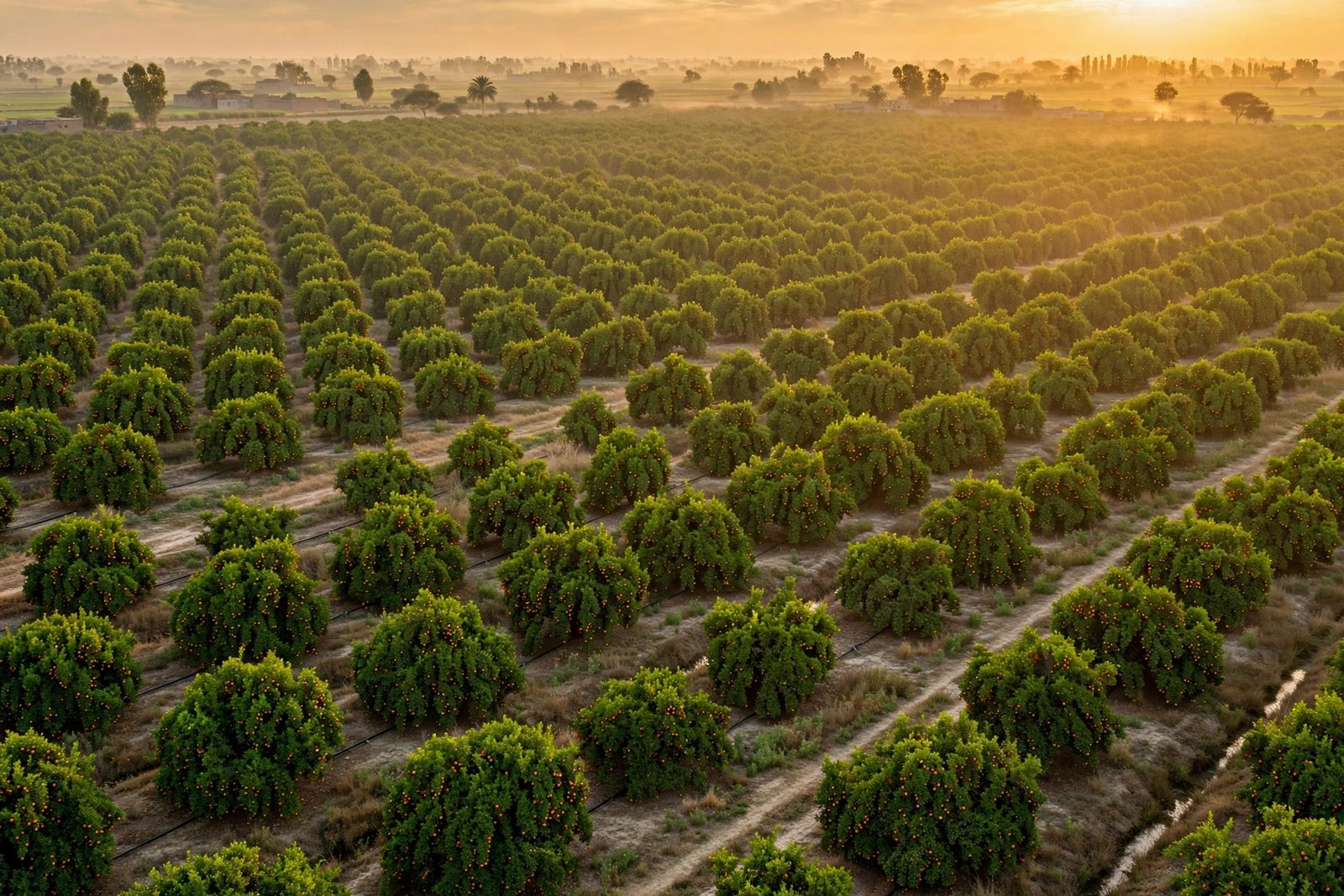
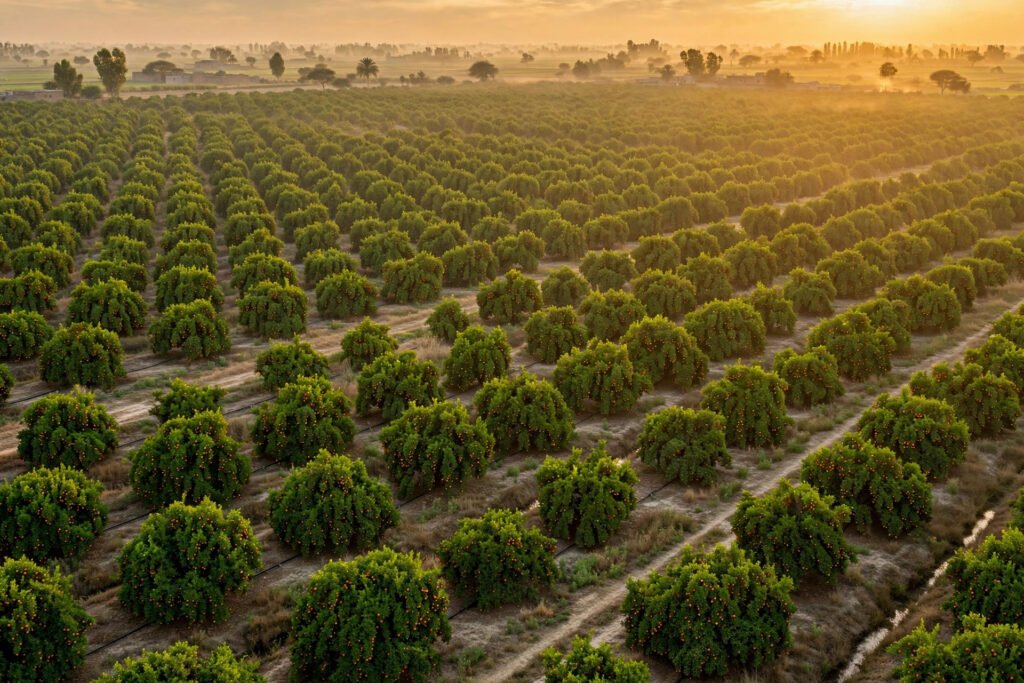
You can’t talk about jobs in Sargodha without talking about kinnow. The Sargodha region — particularly around Bhalwal, Kot Momin, and Silanwali — produces the bulk of Pakistan’s kinnow mandarins, and during the picking and packing season the whole local economy lights up. Packing houses need graders, sorters, packers, loaders, quality checkers, and supervisors. Transporters need drivers and helpers. Cold storage facilities need operators and maintenance staff. Export companies based in Sargodha need documentation staff, logistics coordinators, and salespeople dealing with buyers in the Middle East and Central Asia.
The catch, and I won’t hide it: most of the packing-house work is seasonal, running roughly from November through February or March. Pay is typically daily-wage or piece-rate at the lower end, though supervisors, quality managers, and logistics coordinators at the bigger exporters earn steady monthly salaries. If you’re a graduate with a business or agriculture background, the smarter play isn’t the packing floor — it’s the year-round roles: procurement officers who buy fruit from growers, export documentation staff, cold-chain logistics, and sales representatives for the export companies. Those pay meaningfully better and they’re permanent.
Practical tip: the kinnow businesses cluster along the Sargodha–Bhalwal and Sargodha–Kot Momin roads. During the season, packing houses post hiring notices on their gates and hire through local contractors. If you’re from the surrounding areas, your family probably already knows someone in this trade — ask. References are how a huge share of these jobs get filled. For the office and export roles, watch PaperPk.com for newspaper-advertised openings from the larger citrus companies, since they still advertise in print.
Electrical Fittings: The Industry That Lights Up Pakistan
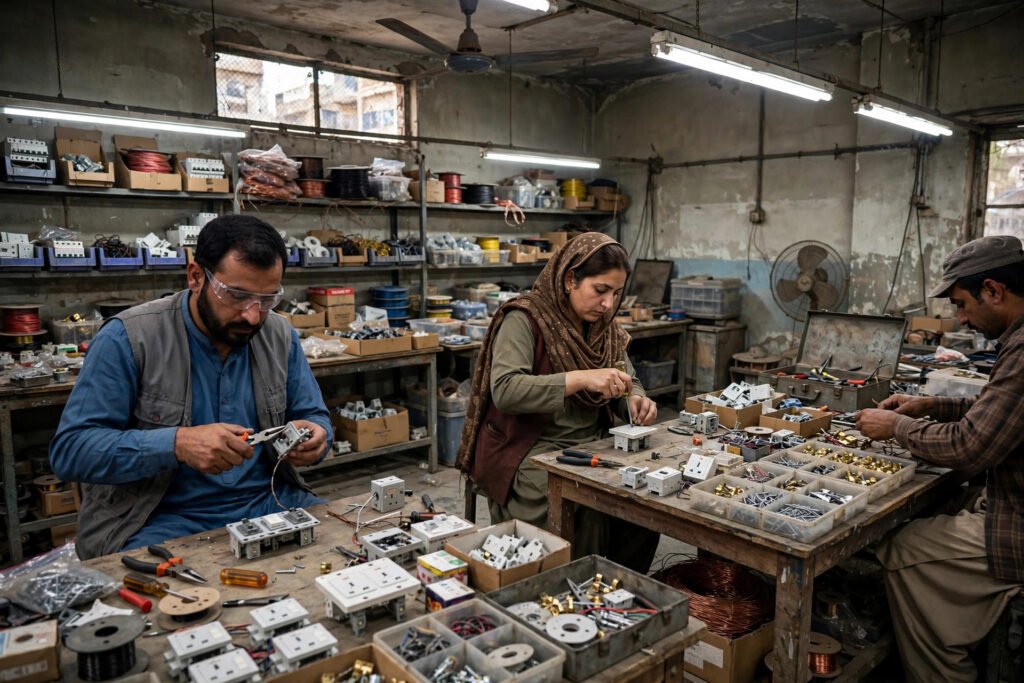
Sargodha’s claim to industrial fame is its electrical fittings industry. Switches, sockets, breakers, distribution boards, wiring accessories — the stuff inside every new building in Pakistan was very possibly made in a workshop in Sargodha. There are hundreds of small and mid-sized units, many of them family-run, and together they employ thousands of people: machine operators, mold makers, assemblers, quality checkers, packers, storekeepers, and drivers.
Unlike the citrus trade, this work is year-round. The manufacturing units run continuously, and they hire continuously too — mostly through walk-ins and references rather than online portals. An experienced mold maker or an assembly-line supervisor earns a solid working-class wage; entry-level packers and helpers start lower but the work is steady.
But here’s the angle most guides miss: the real money in this industry for educated job-seekers isn’t on the factory floor — it’s in sales and distribution. These manufacturers sell through dealer networks across Pakistan. They need sales representatives, area sales managers, and marketing staff. If you can sell, and you’re willing to travel, a sales job with a Sargodha fittings manufacturer can pay well above what you’d earn sitting in an office locally. The wholesale markets in Sargodha also employ commission agents and traders who live on this industry.
If you’re targeting this sector: visit the industrial clusters in person with your CV. The units on and around Lahore Road and in the small industrial areas hire through walk-ins far more than through websites. For skilled roles — electricians, mold makers, machine operators — having a real trade certificate (from TEVTA or a similar institute) makes an enormous difference in what you’re offered.
Government Jobs in Sargodha: PPSC, PAF and the Coveted Track
Let’s be honest: for a lot of families in and around Sargodha, a government job is the dream. And Sargodha, as a divisional headquarters, genuinely offers more public-sector opportunity than most cities its size. The Punjab Public Service Commission (PPSC) advertises posts for departments headquartered or represented in the division — revenue, health, education, agriculture, police, and the judiciary. The district courts, the DC office, and the health department are all steady employers.
The PAF base near Sargodha adds another dimension: PAF civilian jobs, plus the broader ecosystem of suppliers, contractors, and service businesses that serve the base and its personnel. PAF recruitment for airmen and civilian posts is announced through official channels and newspapers — and if you’re interested, prepare seriously, because the selection standards are real.
A few grounded tips for the government track:
- Watch PPSC announcements directly. The commission’s website and newspaper ads are your source of truth. Don’t rely on WhatsApp forwards — verify everything before you apply.
- Prepare for the screening tests. PPSC tests are competitive. Past papers and a few months of serious preparation separate the selected from the rejected.
- Don’t put all your eggs in this basket. Government hiring is slow and competitive. Have a private-sector or freelance backup plan running in parallel — the people who thrive are the ones with two tracks going at once.
University of Sargodha: Teaching Jobs and the Graduate Pipeline
The University of Sargodha is one of the biggest public universities in Punjab, and it’s a two-way employment story. First, the university itself employs hundreds of people: lecturers and professors, lab staff, admin officers, librarians, hostel wardens, drivers, and security staff. Lecturer and assistant professor posts go through PPSC; visiting and contractual teaching appointments are advertised by the university directly. If you have a master’s degree or MPhil, watch the university’s own announcements closely — contractual teaching is the most realistic entry point.
Second — and this is the bigger story — the university produces thousands of graduates every year, and they are the local talent pipeline. Private colleges, academies, and schools in Sargodha hire constantly: English and science teachers are always in demand, and a competent teacher with good results can move up quickly. The academies on University Road and in Satellite Town hire through walk-in interviews they often never advertise online. If you can teach, walk in with your CV and ask.
The honest caveat: private academy and school salaries in Sargodha start modest — often barely above minimum wage for fresh graduates. But an experienced teacher with a strong reputation, or one who runs evening tuition batches, earns comfortably. And the university graduate pipeline also feeds the remote-work economy: some of the best-earning young people in Sargodha are university graduates freelancing for foreign clients. Which brings us to…
Remote Work and Online Earning for Sargodha Residents
Here’s the part that changes everything: you don’t have to find your job in Sargodha anymore. Some of the best-earning young people in the city work for clients in Lahore, Karachi, Dubai, London, and New York — from a room in Satellite Town or Model Town with a UPS and a decent internet connection.
The realistic remote paths for someone in Sargodha in 2026:
- Freelancing: Graphic design, video editing, content writing, WordPress development, and social media management are the most accessible entry points. The learning curve is real but so is the earning.
- Remote customer support and sales: Pakistani and Gulf companies hire remote support staff. Good spoken English is the main requirement.
- Online teaching and tutoring: If you can teach, you can tutor students anywhere — including the academies down your own street, which now also run online batches. University of Sargodha graduates have a built-in advantage here.
- E-commerce: Running a Daraz store or selling through Instagram and TikTok Shop from Sargodha works. The city’s wholesale markets give you a sourcing advantage most cities don’t have — you can buy electrical fittings, garments, or citrus-adjacent products at wholesale and sell retail online.
The honest caveat: remote work requires discipline, a skill, and usually three to six months of building before the money becomes steady. It’s not a lottery ticket. But for a city where local salaries are modest, it’s the single biggest lever available to you — and the cost of living here is low enough that even a modest dollar income goes a long way.
Sales, Retail and Services Along the University Road Corridor
Sargodha’s commercial life has grown up around University Road and the main bazaars — Trust Plaza, the wholesale markets, the food streets. This corridor is where the city’s service economy lives, and it employs more people than any single factory or office: shop assistants, cashiers, delivery riders, clinic receptionists, restaurant staff, mobile-shop salespeople, salon workers, and bank and microfinance front-office staff.
FMCG companies, mobile networks, and building-material brands all run distribution through Sargodha, and they hire sales officers and merchandisers on salary-plus-commission structures. These jobs are demanding — targets, travel, pressure — but they pay better than most desk jobs in the city and they build a skill (selling) that transfers everywhere.
If you’re job-hunting in this sector: walk the markets. Seriously. Shops, restaurants, and clinics in Sargodha hire through walk-ins and references far more than through portals. Dress well, carry a simple one-page CV, and ask. Bank branches and microfinance institutions advertise more formally, so watch the classifieds and job aggregators regularly for those. And if you’re comparing Sargodha’s market with the bigger Punjab cities, our guide to Jobs in Lahore breaks down what’s actually available two hours down the motorway — including the commute-versus-remote question.
Practical Tips: Where to Apply, What Salaries Look Like, and the Lahore Question
Let’s get practical. Here’s how to actually run your job search in Sargodha in 2026:
Where to apply. Newspapers still matter in Sargodha more than in the big metros — government posts, university appointments, and bank jobs are advertised in print, so check the classifieds and aggregators regularly. Walk-ins matter even more: packing houses in season, electrical fittings units year-round, schools and academies, shops on University Road. Tell everyone you know you’re looking — in Sargodha, the network is the job board. Set up city-filtered alerts on the major job portals too, but treat them as one channel among several, not the whole strategy.
What salaries look like in 2026. Be realistic so you can plan. Entry-level factory, packing-house, and retail jobs typically sit around the minimum-wage band; skilled technicians, experienced teachers, and sales staff with commissions earn meaningfully more; government posts, once secured, come with the security and benefits that make them so coveted. Remote and freelance income varies wildly — from pocket money to several times a local salary — depending entirely on your skill and consistency. Sargodha’s real advantage is that the cost of living is low, so a moderate income here stretches further than the same money in Lahore.
The Lahore question. A lot of Sargodha graduates ask whether they should just move to Lahore. It’s a fair question — Lahore has more corporate jobs, more startups, and higher salaries. But it also has much higher rent and living costs. The smarter play for many is the hybrid: live in Sargodha (cheap), work remotely for Lahore- or Karachi-based companies (better pay). Do the math on rent, transport, and food before deciding — the salary gap has to be big enough to cover the cost gap.
CV and interview basics. Keep your CV to one page unless you have serious experience. For factory, packing-house, and retail jobs, a simple CV plus showing up well-dressed and on time beats a fancy resume. For teaching jobs, prepare for the actual subject — schools test what you can teach, not what you claim. And for government posts, the screening test matters more than the CV.
FAQs
Is Sargodha a good city for jobs in 2026?
It’s a good city for certain kinds of jobs: citrus and kinnow (seasonal and export roles), electrical fittings manufacturing and sales, teaching, government posts, retail, and remote work. It’s not a corporate or tech city — but its low cost of living means moderate incomes go further here than in Lahore or Karachi.
What is Sargodha famous for in terms of industry?
Two things above all: kinnow citrus (the Sargodha region produces the bulk of Pakistan’s kinnow exports) and electrical fittings manufacturing (switches, sockets, and wiring accessories sold across Pakistan). Both are major local employers.
How do I find government jobs in Sargodha?
Through the Punjab Public Service Commission (PPSC) for officer-level posts, and through departmental and newspaper advertisements for teaching, health, clerical, and police posts. Always verify announcements from official sources, prepare seriously for screening tests, and keep a backup plan — the process is slow and competitive.
When is the kinnow season, and can I get work in it?
The main season runs roughly November through February or March. Packing houses, cold storage units, and transporters hire in large numbers — mostly through walk-ins and local contractors. Year-round roles in procurement, export documentation, and logistics pay better and are permanent.
Can I get a remote job while living in Sargodha?
Yes, and many people do. Freelancing in design, writing, video editing, and development, plus remote support and tutoring roles, are all realistic. You need a marketable skill, reliable internet with backup power (load-shedding is still a fact of life), and a few months of runway while you build clients.
Should I move to Lahore instead of job-hunting in Sargodha?
Not necessarily. Lahore has more corporate jobs, but Sargodha has far lower living costs. Many people get the best of both: Sargodha’s cost of living with Lahore-level income through remote work. Run the numbers on rent, transport, and food before deciding.
Conclusion
Jobs in Sargodha won’t fall into your lap — but they’re there if you look in the right places and with the right expectations. The kinnow packing houses and export companies, the electrical fittings workshops and their dealer networks, the University of Sargodha and the teaching economy around it, the government offices, the markets of University Road, and the growing world of remote work: that’s your map. Pick the lane that fits your skills, prepare properly, use both the newspapers and the old-fashioned walk-in, and give it time. Sargodha has been a working city for a long time. In 2026, it’s still working — and there’s room in it for you.
One Response