
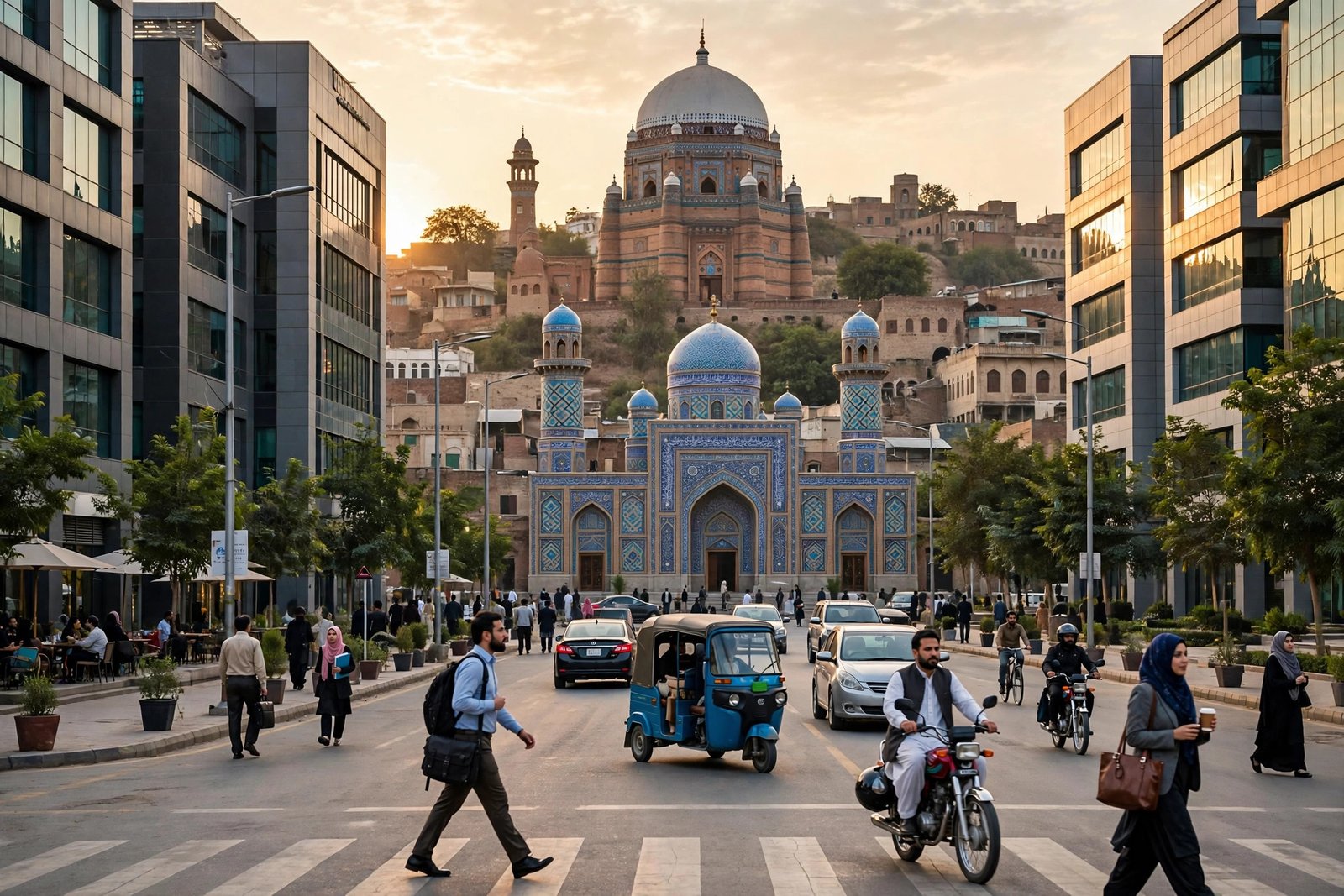
When people talk about jobs in Multan, the conversation usually starts with mangoes and shrines — and then stalls, as if a historic city cannot also be a working city. That sells Multan short. In 2026, Multan is South Punjab’s commercial capital: a trade and distribution hub for the entire southern belt, an agricultural powerhouse, a growing healthcare and education centre, and a city where the cost of living is low enough that an average salary buys a genuinely comfortable life.
Multan does not shout about its job market the way Lahore does. Vacancies here travel through distributor networks, hospital corridors, university notice boards and WhatsApp groups as much as through job portals. This guide translates that quieter market into plain language: which sectors actually hire, where the real listings appear, what salaries look like in 2026, how to relocate or commute, and the scams to avoid. If you are from South Punjab — or thinking of moving where your money goes further — start your search for jobs in Multan here.
Table of Contents
Why Jobs in Multan Are Worth Your Attention in 2026
Three under-appreciated facts about Multan’s economy.
First, it is the commercial gateway to South Punjab. Everything that moves through Bahawalpur, Dera Ghazi Khan, Rahim Yar Khan, Muzaffargarh and Lodhran — FMCG, pharma, fertiliser, tractors, cement, textiles — is distributed, warehoused or financed through Multan. Distributors and regional offices cluster along the Northern Bypass, Bosan Road and in the industrial estate. That makes Multan one of Pakistan’s steadiest markets for sales, supply-chain, accounts and branch-management jobs: the kind of roles that hire in every economic season because goods always need to move.
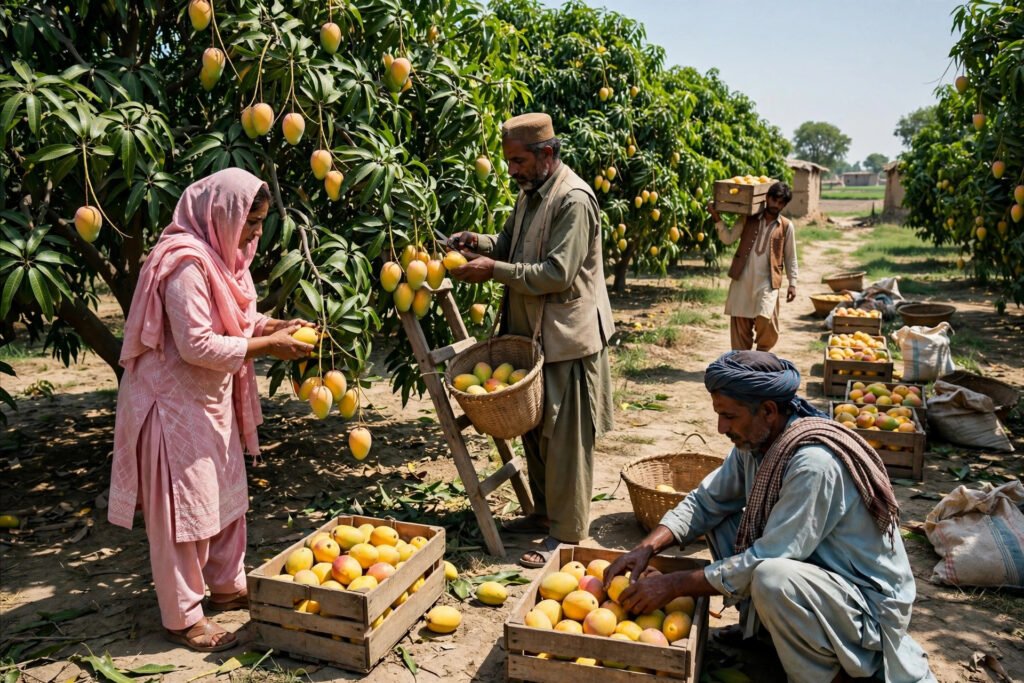
Second, agriculture here is industry, not backdrop. Multan sits in the middle of Pakistan’s cotton and mango belts, and around that grows a whole economy: ginning factories, oil mills, cold storage, food processing, pesticide and seed companies, and agri-finance. The MNS University of Agriculture has deepened the talent pipeline, and agri-tech — soil testing, drip irrigation, farm advisory services — is adding modern roles to a traditional sector.
Third, the affordability equation is unbeatable. Multan is among the cheapest major cities in Pakistan for housing: respectable family accommodation in Gulgasht, Bosan Road societies or DHA Multan costs far less than equivalent space in any other big city. A salary that would mean flat-sharing in Karachi means a comfortable independent life here. For young families and early-career professionals, that math changes everything — and it is the single biggest reason to take jobs in Multan seriously.
Industries That Actually Hire in Multan
The honest sector map:
- Trade, distribution and FMCG — Multan’s core. Regional distribution for national FMCG, pharma, fertiliser and consumer-durables companies; wholesale markets in Hussain Agahi, Bohar Gate and the old city. Roles: area sales managers, territory sales officers, merchandisers, warehouse and logistics staff, credit controllers. This sector hires constantly and promotes from within.
- Agriculture and food processing — cotton ginning, oil extraction, flour mills, mango orchards and exporters, cold chains, dairy collection. Agronomists, field officers, quality staff, procurement officers and agri-sales roles. Seasonal peaks around harvest (mango: May–August; cotton: September–November) create surges of short-term and contract hiring too.
- Healthcare — Nishtar Hospital and Nishtar Medical University anchor one of Punjab’s largest public health complexes; Bakhtawar Amin, City Hospital and a growing private sector add capacity every year. Doctors, nurses, paramedics, lab technologists, pharmacists, administrators and billing staff. Multan’s hospitals serve all of South Punjab, so patient volumes — and staffing needs — stay high.
- Banking and microfinance — full branch networks plus heavy microfinance and agri-lending presence (ZTBL, Khushhali, Mobilink Microfinance and others). Agri-credit officers are a Multan specialty: banks need people who understand crop cycles and can lend against them. Branch operations, SME lending and relationship management hire steadily.
- Education — Bahauddin Zakariya University, MNS University of Agriculture, Emerson University, NFC-IET, plus private medical colleges and a large school sector. Lecturers, teachers, admin and admissions staff. Hiring peaks with the admission cycle (August–September).
- Textiles (southern cluster) — spinning and weaving units in and around Multan and the nearby industrial areas employ production staff, QA officers and commercial teams. Smaller than Faisalabad’s cluster but real, and less competitive to enter.
- Solar and energy services — South Punjab’s sunshine has made Multan a hotspot for solar installation companies. Sales engineers, installation technicians and after-sales staff are a genuinely new job category here, and demand keeps growing as grid electricity stays expensive.
- Real estate and construction — DHA Multan, Gulgasht and Bosan Road developments, plus commercial plazas. Dealers, marketers, site engineers and architects. Cyclical, but active in 2026.
- NGOs and development sector — South Punjab’s development indicators draw national and international NGOs with Multan regional offices: project staff, M&E, finance and admin roles that pay well above local private-sector averages.
Where to Find Jobs in Multan in 2026
Multan’s vacancies are split between the internet and the city’s own grapevine. Work both.
- Rozee.pk — the best single online source for Multan listings across banking, FMCG, healthcare and education. Set city alerts; new postings in Multan get fewer applicants than Lahore equivalents, so speed matters less but completeness matters more.
- LinkedIn — growing in importance for Multan’s banking, pharma and NGO roles. Follow South Punjab–based recruiters and company pages; several distributors post openings only here.
- Distributor and company offices, in person — this is the Multan-specific channel. FMCG and pharma distributors along the Northern Bypass and in the industrial estate hire territory staff through walk-ins and referrals far more than through portals. A neat CV, a confident introduction and knowledge of their product range still open doors here.
- Hospital and university notice boards — Nishtar, BZU and the private institutions post vacancies on physical boards and their websites before (or instead of) portals. If you are targeting healthcare or education, check these directly every week.
- Newspaper classifieds — Sunday Express and Nawa-i-Waqt carry Multan ads for schools, hospitals, banks and government-linked posts that never go online.
- WhatsApp and Facebook job groups — Multan has active city job groups, and real openings circulate in them — alongside the scams. Treat every group posting as unverified until the company checks out (real website, real address, real phone number).
If your ambitions also stretch toward the upper Punjab market, our guide to jobs in Rawalpindi covers the twin-city side — several Multan professionals build careers that span both regions, especially in FMCG and pharma where companies rotate staff across territories.
What Multan Salaries Look Like in 2026
Jobs in Multan pay the least in nominal terms of any major Punjab city — and deliver among the highest real living standards, because costs are so low. Keep both facts in your head during negotiations.
- Entry-level (fresh graduate, sales/admin/support): 30,000–50,000 PKR/month. FMCG territory sales often starts around 40,000–50,000 plus fuel and incentives; banks similar; schools lower.
- Mid-level (area sales manager, branch officer, hospital admin, 3–6 years): 60,000–120,000 PKR/month. Pharma and FMCG area managers with good territory numbers earn at the top end plus quarterly incentives that can add 20–30%.
- Agri specialists (agronomists, agri-credit officers): 60,000–130,000 PKR/month; experienced agri-credit staff are in genuine demand and can negotiate well.
- Doctors and lecturers: 80,000–250,000 PKR/month depending on institution; Nishtar specialists and private-sector consultants at the top.
- NGO/development roles: 90,000–220,000 PKR/month, project-based but the best-paying salaried work in the city outside medicine.
The Multan negotiation rule: never accept the first number, and always price the full package. Fuel allowances, sales incentives, medical coverage and annual bonuses are standard in distribution and banking here — the headline salary is only part of the deal. And benchmark against the role, not the city: an area sales manager’s job is the same job in Multan and Lahore, so anchor your ask to the national range.
Relocating to Multan — or Working It From Nearby
Multan draws professionals from across South Punjab, and the relocation math is friendly:
Housing first. Gulgasht Colony, New Multan, and the societies along Bosan Road offer the best balance of comfort, commute and cost for professionals. DHA Multan suits senior executives. Rents are low enough that most relocating professionals upgrade their living standard on arrival — budget one reconnaissance trip to view areas before signing anything.
The commute option is real. If you are from Muzaffargarh, Lodhran, Khanewal or Shujabad, many Multan jobs are commutable daily — the Metro (BRT) covers the main city corridor, and the surrounding towns are 30–60 minutes out. Plenty of professionals live in their hometowns and work in Multan, keeping family costs near zero.
Remote work from Multan is the arbitrage play. Fibre internet is widely available, living costs are minimal, and a remote salary — whether from a Lahore company or a foreign client — buys a lifestyle here that the same salary cannot buy anywhere else in Pakistan. For developers, designers, writers and support staff, this is arguably Multan’s best “job market”: the global one, lived at Multan prices.
Language and culture. Multan is Saraiki-speaking at heart, Urdu-speaking in business, and famously hospitable. Learning basic Saraiki greetings earns enormous goodwill in field-sales and distribution roles across South Punjab — it signals respect, and respect closes deals.
Job Scams Targeting Multan Seekers: Red Flags
- Advance-fee “placement” agents — anyone charging you to place you in a distributor, bank or mill is suspect. Real employers in Multan hire directly or through advertised posts; they do not sell jobs.
- Fake overseas recruiters — South Punjab sends many workers abroad, and fraudsters exploit those dreams. Verify every recruiter’s licence with the Bureau of Emigration and Overseas Employment. Never pay a visa fee to an individual.
- Work-from-home “typing/data entry” frauds — the eternal scam: pay to register, do “tasks,” never get paid. Employers pay employees. Full stop.
- Pyramid schemes dressed as “marketing jobs” — Multan sees waves of “network marketing” outfits recruiting unemployed graduates with promises of cars and foreign trips. If the job is recruiting other recruits rather than selling a real product to real customers, it is not a job.
- Unverified WhatsApp job posts — because so much Multan hiring happens in groups, scammers blend in easily. Before engaging, verify the company independently: website, physical address, landline number. A Gmail address and a Jazz number is not a company.
FAQs About Jobs in Multan
Are salaries in Multan too low to be worth it?
Nominal salaries are lower than Lahore or Karachi — that is true. But Multan’s cost of living is dramatically lower too: housing, transport, food and schooling cost a fraction of big-city prices. Compare disposable income after expenses, not headline salaries, and Multan frequently wins — especially for families.
Which sector is strongest for fresh graduates in Multan?
FMCG and pharma distribution (territory sales), banking (branch operations and agri-credit), and teaching. These three hire fresh graduates every year in real numbers, train them properly, and promote from within. They are the most reliable first-job ladders in the city.
How is the job market for women in Multan?
Growing steadily. Banks, schools, hospitals, universities and NGOs all employ large numbers of women; several run women-focused hiring. Field-sales roles remain male-dominated, but branch banking, teaching, healthcare, HR and admin offer strong, respectable career paths with improving workplace norms.
Can I find IT or remote work while living in Multan?
Yes. Multan has a small but real software-house presence, a growing freelance community, and good fibre coverage. Many Multan-based developers and designers work remotely for Lahore, Karachi or foreign clients. For digital skills, your market is global — Multan just makes it cheap to live while you earn.
When should I start applying?
FMCG and pharma hire on quarterly cycles; education peaks August–September; agri roles surge around planting and harvest seasons; banks hire year-round with January and July peaks. But honestly — in a market this relationship-driven, the best time is now, through direct applications and walk-ins, not waiting for a season.
Conclusion
Jobs in Multan in 2026 are a quiet opportunity in a loud country. The city will not hand you a career on a portal — it rewards the people who work its networks: the distributors on the Northern Bypass, the hospital corridors, the university boards, the WhatsApp groups checked with a sceptical eye. In exchange, it offers something Pakistan’s bigger cities increasingly cannot: a professional life your salary can actually afford, in a city with thirteen centuries of practice at making strangers feel at home.
Start this week. Set your jobs in Multan alerts on Rozee.pk, walk into two distributor offices with your CV, check the Nishtar and BZU boards, and run every WhatsApp lead through the verification test. Multan hires people who show up — so show up.