

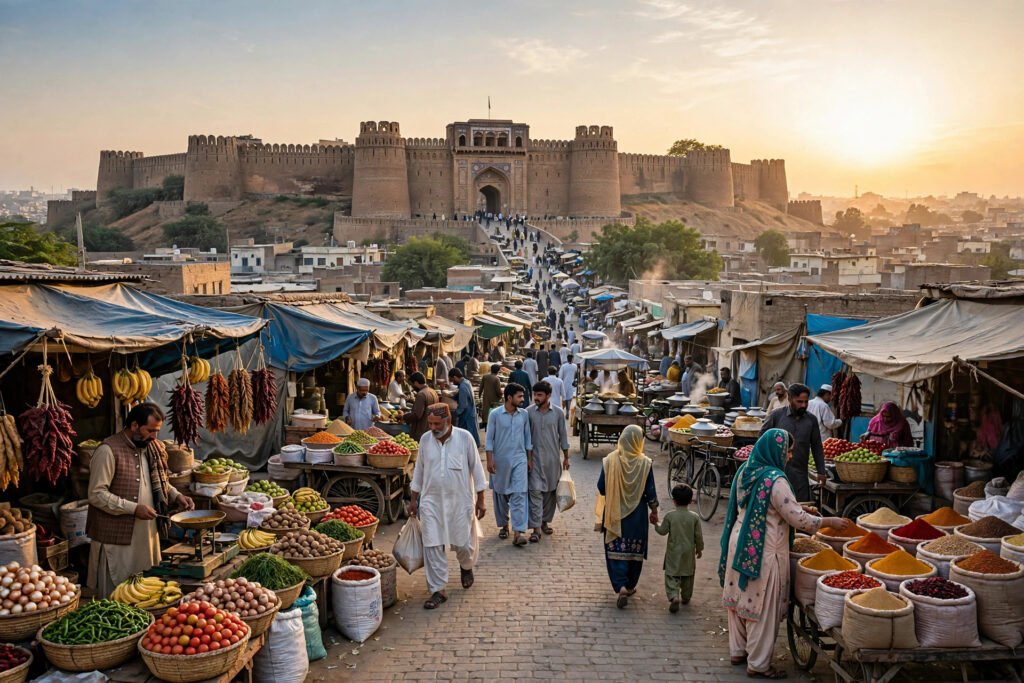
If you’re looking for jobs in Hyderabad, you’re looking in the right city — just make sure it’s the right country. This guide is about Hyderabad, Sindh, Pakistan, not Hyderabad in India. It’s a distinction that matters, because Google mixes the two up all the time, and half the job boards that pop up when you search are for a city in Telangana you’ll never visit. So let’s talk about our Hyderabad: Sindh’s second city, sitting on the Indus, roughly two hours from Karachi, with a character completely its own.
Here’s the honest truth most people won’t tell you: Hyderabad doesn’t get the same buzz as Karachi or Lahore when it comes to careers. Nobody’s making Instagram reels about “the Hyderabad startup scene.” But that doesn’t mean there isn’t work here. There is — plenty of it — it’s just a different kind of work than what you’d find in a big metro. Factory floors, government offices, classrooms, agri-mandis, and increasingly, laptops and Wi-Fi connections. In this guide, I’ll walk you through where the real jobs are in 2026, what they pay, where to look, and how to actually land one.
Table of Contents
Jobs in Hyderabad: What’s Actually Available in 2026
Let’s start with a realistic picture of jobs in Hyderabad right now. Hyderabad is fundamentally an industrial and agricultural trading city, not a corporate headquarters town. You won’t find dozens of multinational HQs here — those are mostly in Karachi. But you will find hundreds of manufacturing units, a massive public sector presence, thousands of schools and colleges that always need teachers, and a trading economy that has been running since long before Pakistan existed.
The biggest employment sectors in the city break down roughly like this:
- Manufacturing: The SITE (Sindh Industrial Trading Estate) area hosts everything from textile units and pharmaceutical plants to glass and bangle factories. These employ thousands of skilled and semi-skilled workers.
- Government and public sector: Hyderabad is a divisional headquarters, which means district offices, courts, universities, and hospitals — all of them steady employers.
- Education: Private schools, colleges, academies, and universities are everywhere in Latifabad and Qasimabad. Teaching is one of the most accessible jobs in the city.
- Trade and retail: Hyderabad’s markets — from the old city bazaars to the newer commercial areas — run on wholesale and retail employment.
- Agriculture and agri-trading: The surrounding district is prime farmland, and the city’s mandis employ traders, commission agents, transporters, and logistics workers.
- Remote and freelance work: A growing number of Hyderabad’s young people earn in dollars from their bedrooms. More on that below.
The unemployment picture here is the same as the rest of Pakistan: real, but not hopeless. The people who struggle most are those who only look in one direction — usually government jobs — and ignore everything else.
The SITE Industrial Area and Hyderabad’s Manufacturing Jobs
The SITE industrial area is the beating heart of private-sector jobs in Hyderabad. If you need a factory job — as a machine operator, technician, quality checker, supervisor, storekeeper, or even in accounts and admin — SITE is where you start.
What kinds of units operate here? Textile processing and garment units, plastic and PVC manufacturers, food processing plants, packaging companies, and engineering workshops. The pharmaceutical manufacturing units deserve special mention: Hyderabad has a cluster of pharma plants that produce medicines for the domestic market, and these are among the better-paying factory employers in the city. A production supervisor or QC officer at a pharma unit can earn a respectable middle-class salary, and the work is steadier than in most other industries.
Practical advice if you’re targeting SITE jobs: don’t just sit at home scrolling. The hiring here still runs heavily on references and walk-ins. Industrial units put up notices on their gates, and contractors hire in groups. If you have a relative or contact working in SITE, talk to them — that’s genuinely how a large share of these jobs get filled. For admin, HR, and accounts roles, units advertise on job portals too, so keep an eye on Rozee.pk for Hyderabad-listed positions from industrial employers.
Bangles, Glass and Pharma: Hyderabad’s Signature Industries

Hyderabad is famous across Pakistan for two things: its bangles and its glasswork. The churi (bangle) industry here isn’t a quaint heritage craft — it’s a real, large-scale manufacturing sector with factories, wholesalers, exporters, and thousands of workers, many of them women. Glass manufacturing feeds into it: the furnaces, the shaping, the coloring. If you grew up in Hyderabad, you probably know someone whose family income comes from this industry.
Jobs in the bangle and glass sector range from furnace workers and glass blowers to designers, packers, quality graders, salespeople, and export coordinators. It’s skilled manual work, and the experienced craftspeople are genuinely valued. Pay at the entry level is modest, but a master craftsman or a good export salesman earns well above the city average.
Then there’s pharma, which I mentioned above but is worth repeating because of how it hires: pharma plants in Hyderabad recruit medical representatives, production pharmacists, QC analysts, and warehouse staff year-round. If you have a science or pharmacy background and live in Hyderabad, these units are your single best bet for a stable, well-paying private job without leaving the city.
Government Jobs in Hyderabad: SPSC, Teaching and Public Sector
Let’s be honest: for a lot of families in Hyderabad, a government job is the dream. And the city does offer more public-sector opportunities than most people realize, because it’s a divisional headquarters. The Sindh Public Service Commission (SPSC) regularly advertises posts for departments headquartered or represented in Hyderabad — revenue, health, education, irrigation, and the judiciary.
Teaching is the biggest single government-job category in the city. Between the public schools, the colleges, and institutions like the University of Sindh (technically in Jamshoro, but functionally part of the Hyderabad job market), education employment is enormous. SPSC advertises lecturer and subject-specialist posts; the education department hires school teachers; and every year there are contract and regular appointments.
A few grounded tips for the government track:
- Watch SPSC announcements religiously. The commission’s website and newspaper ads are your source of truth. Don’t rely on WhatsApp forwards — verify everything.
- Prepare for the tests. SPSC screening tests are competitive. Past papers and a few months of serious preparation separate the selected from the rejected.
- Don’t put all your eggs in this basket. Government hiring is slow and political. Have a private-sector or freelance backup plan running in parallel.
Agriculture, Agri-Trading and the Latifabad–Qasimabad Corridor
Hyderabad sits in the middle of some of the richest farmland in Sindh. The city’s grain, cotton, and vegetable mandis are serious business, and agri-trading employs far more people than the statistics suggest. Commission agents (arthis), weighmen, loaders, transporters, cold-storage operators, fertilizer and seed dealers, tractor mechanics — the whole supply chain runs through Hyderabad.
If you come from an agricultural family in the surrounding areas — Tando Allahyar, Tando Muhammad Khan, Matyari, Badin — you already understand this economy. The opportunity in 2026 is in the modernizing edges of it: agri-input companies hiring sales officers, cold-chain logistics, dairy collection centers, and food processing units that need procurement staff.
Latifabad and Qasimabad, the two big townships, are where much of the city’s commercial life now happens. Latifabad in particular is a dense mix of markets, schools, clinics, and small businesses — and small businesses mean jobs: shop assistants, cashiers, delivery riders, clinic receptionists, academy teachers. Qasimabad has grown into a residential and commercial hub of its own, with its own hiring ecosystem of schools, hospitals, restaurants, and retail. If you live in either township, your job search can start within a few kilometers of your home.
Remote Work and Online Earning for Hyderabad Residents
Here’s the part that changes everything: you don’t have to find jobs in Hyderabad anymore. Some of the best-earning young people in the city work for clients in Karachi, Dubai, London, and New York — from a room in Latifabad with a UPS and a decent internet connection.
The realistic remote paths for someone in Hyderabad in 2026:
- Freelancing: Graphic design, video editing, content writing, WordPress development, and social media management are the most accessible entry points. The learning curve is real but so is the earning.
- Remote customer support and sales: Pakistani and Gulf companies hire remote support staff. Good spoken English is the main requirement.
- Online teaching and tutoring: If you can teach, you can tutor students anywhere — including the academies down your own street, which now also run online batches.
- E-commerce: Running a Daraz store or selling through Instagram from Hyderabad works. The city’s wholesale markets give you a sourcing advantage most cities don’t have.
The honest caveat: remote work requires discipline, a skill, and usually three to six months of building before the money becomes steady. It’s not a lottery ticket. But for a city where local salaries are modest, it’s the single biggest lever available to you.
Small Businesses and the Startup Scene in Hyderabad
Hyderabad won’t be called a startup hub anytime soon, and that’s fine — its small-business economy is the real story. Food businesses (Hyderabadis love their food, and the restaurant scene in Latifabad and Qasimabad keeps growing), clothing retail, mobile phone shops, beauty salons, tuition academies, clinics, and transport services: these are the businesses that actually employ people here.
If you’re thinking of starting something rather than finding a job, Hyderabad has real advantages: lower rents than Karachi, a large student population (thanks to the universities), and wholesale markets that make sourcing cheap. The businesses that do well here solve local problems: affordable food near universities, reliable home services, quality schooling, healthcare. You don’t need venture capital — you need a shop, a skill, and consistency.
Practical Tips: Where to Apply, What Salaries Look Like, and the Karachi Commute
Let’s get practical. Here’s how to actually run your search for jobs in Hyderabad in 2026:
Where to apply for jobs in Hyderabad. Check Rozee.pk regularly for Hyderabad listings — filter by city and set up alerts so new posts reach you first. But don’t stop at portals: walk into SITE units with your CV, visit the schools and academies in Latifabad and Qasimabad in person (many hire through walk-in interviews they never advertise online), and tell everyone you know that you’re looking. In Hyderabad, the network is the job board.
What salaries look like in 2026. Be realistic so you can plan. Entry-level factory and retail jobs in Hyderabad typically pay around the minimum wage band; skilled technicians, experienced teachers, and pharma staff earn meaningfully more; and government posts, once secured, come with the security and benefits that make them so coveted. Remote and freelance income varies wildly — from pocket money to several times a local salary — depending entirely on your skill and consistency.
The Karachi commute option. A lot of Hyderabadis work in Karachi — it’s about a two-hour drive on the motorway, and plenty of people do it daily or weekly. If you’re considering it, weigh the transport cost and the exhaustion honestly against the salary difference. For many, the smarter play is living in Hyderabad (cheap) while working remotely for Karachi-based companies (better pay). And if you’re comparing the two cities’ job markets directly, our guide to Jobs in Karachi breaks down what’s actually available there.
CV and interview basics. Keep your CV to one page unless you have serious experience. For factory and retail jobs, a simple CV plus showing up well-dressed and on time beats a fancy resume. For office and teaching jobs, prepare for the actual subject — schools test what you can teach, not what you claim.
FAQs
Is Hyderabad, Pakistan a good city for jobs in 2026?
It’s a good city for certain kinds of jobs: manufacturing, teaching, government posts, agri-trading, and remote work. It’s not a corporate or tech-hub city, so if that’s your target, you’ll likely work remotely or commute to Karachi. Play to the city’s strengths instead of fighting them.
What is the biggest industry for employment in Hyderabad, Sindh?
Manufacturing — especially the SITE industrial area, the bangle and glass industry, and pharmaceutical plants — is the largest private-sector employer. The public sector (government offices, schools, hospitals, courts) is the other giant.
How do I find government jobs in Hyderabad?
Through the Sindh Public Service Commission (SPSC) for officer-level posts, and through departmental advertisements for school teachers, health workers, and clerical staff. Always verify announcements from official sources, prepare seriously for screening tests, and keep a backup plan — the process is slow.
Can I get a remote job while living in Hyderabad?
Yes, and many people do. Freelancing in design, writing, video editing, and development, plus remote support and tutoring roles, are all realistic. You need a marketable skill, reliable internet with backup power, and a few months of runway while you build clients.
Should I move to Karachi instead of job-hunting in Hyderabad?
Not necessarily. Karachi has more corporate jobs, but Hyderabad has far lower living costs. Many people get the best of both: Hyderabad’s cost of living with Karachi-level income through remote work or a weekly commute. Run the numbers on rent, transport, and food before deciding.
Conclusion
Jobs in Hyderabad won’t fall into your lap — but they’re there if you look in the right places and with the right expectations. The SITE industrial area, the bangle and glass factories, the pharma plants, the government offices, the schools of Latifabad and Qasimabad, the mandis, and the growing world of remote work: that’s your map. Pick the lane that fits your skills, prepare properly, use both the online portals and the old-fashioned walk-in, and give it time. Hyderabad has been a working city for centuries. In 2026, it’s still working — and there’s room in it for you.
One Response