
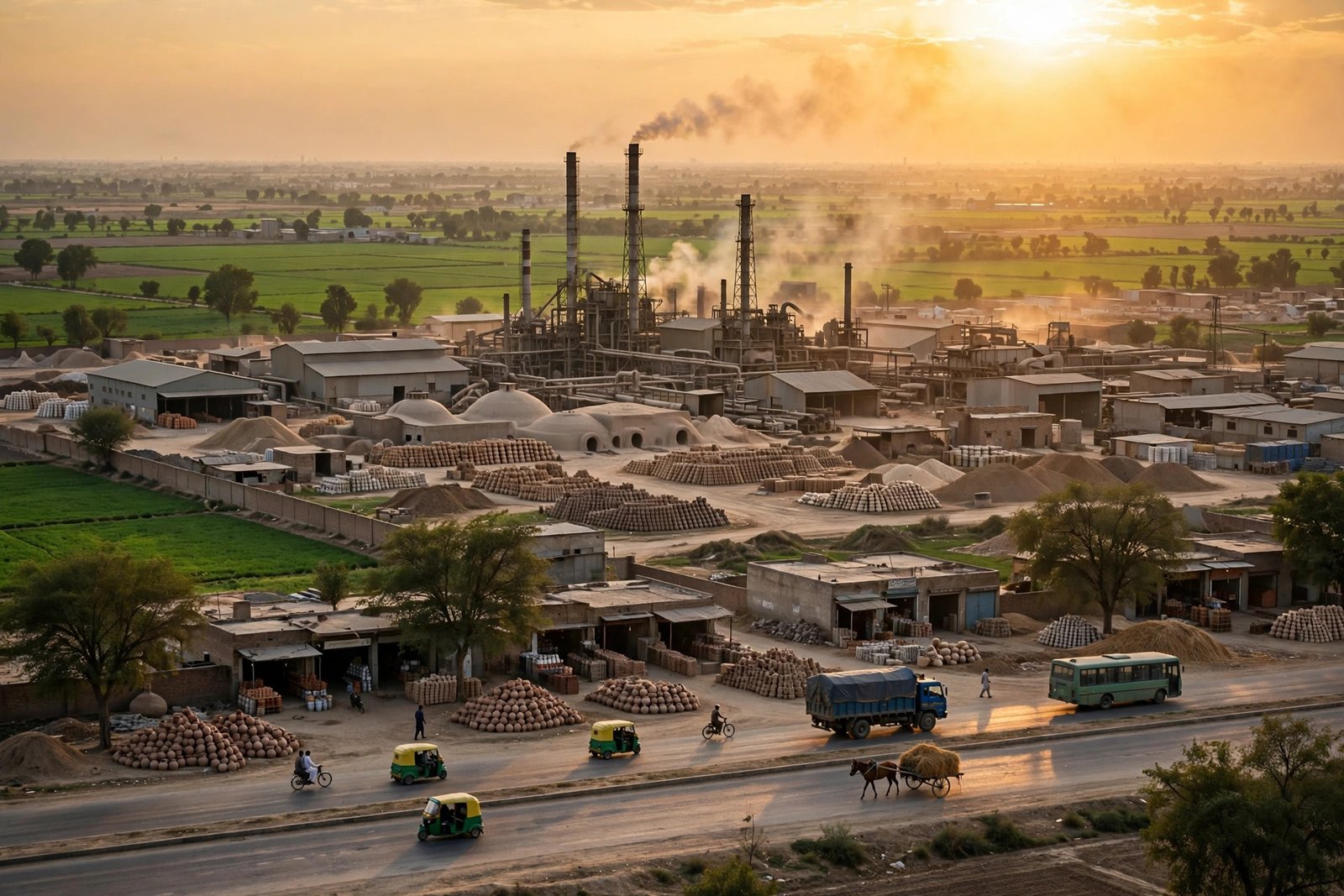
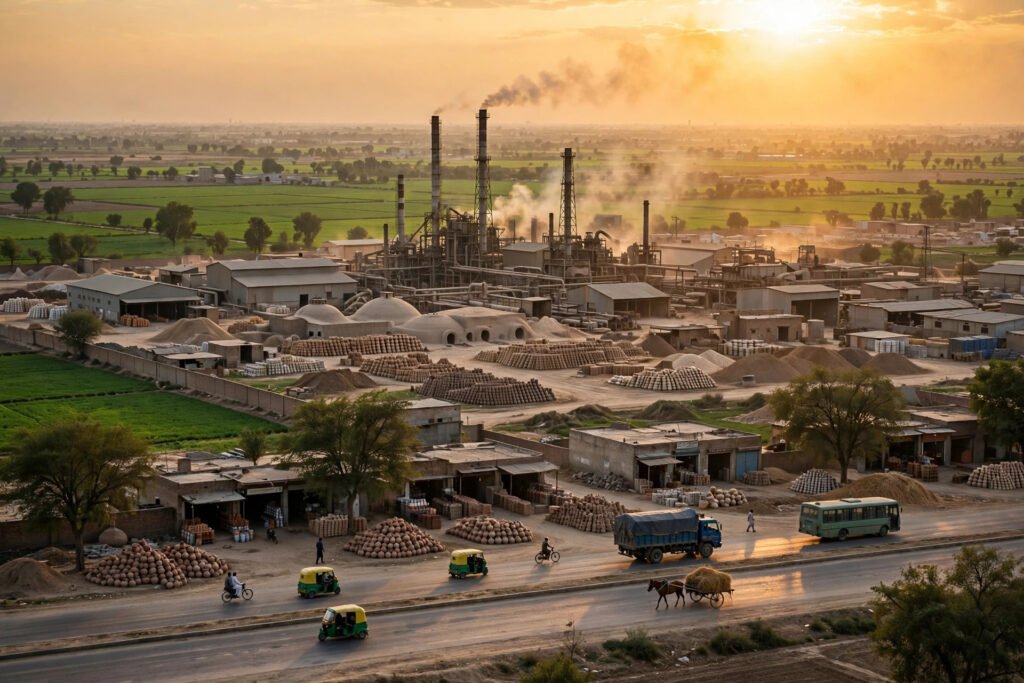
Ask anyone from Punjab to describe Gujranwala in one sentence and they’ll probably say one of two things: it’s the city that makes things, or it’s the city that eats well. Both are true, and both are reasons why jobs in Gujranwala are worth a proper look in 2026. This is not a city that runs on office jobs and LinkedIn posts.
It runs on foundries, ceramics plants, fan factories, steel mills, and a thousand small workshops that most of Pakistan has never heard of — but which keep the country’s fans spinning, its bathrooms tiled, and its steel frames standing. If you want honest work with a real skill at the end of it, start here.
The work here is honest, the cost of living is kinder than Lahore, and there is a genuine labour shortage in skilled trades — which means people who can actually do things have leverage. Let’s talk about the jobs in Gujranwala that are actually out there, what they pay, and how to get your foot in the door.
Table of Contents
Factory and Industry Jobs in Gujranwala: Steel, Ceramics and Electric Fans
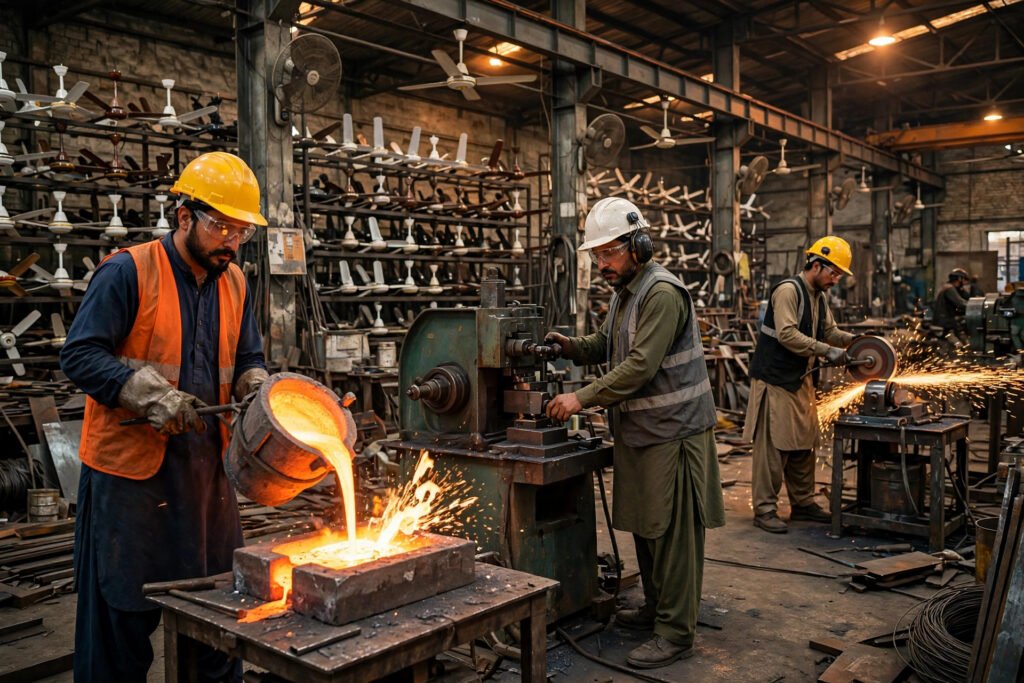
If you strip away everything else, Gujranwala is an industrial city first and everything else second. The Gujranwala–Sialkot corridor is one of the densest manufacturing belts in South Asia, and factories here are constantly hiring for jobs in Gujranwala — not just in hiring seasons, but year-round.
The catch is that a lot of this hiring never reaches the big job portals. It happens through labour contractors, gate notices, and word of mouth, which is exactly why most guides miss it.
Factory jobs in Gujranwala generally fall into a few clear tracks: production labour (helpers, machine operators, packers), skilled trades (welders, moulders, electricians, fitters), quality control and supervision (line supervisors, QC inspectors), and technical roles (diploma engineers, maintenance staff).
The entry bar is lower than white-collar work, but the ceiling is higher than people assume — a good CNC operator or a senior foundry supervisor in 2026 earns more than many junior office workers in Lahore.
Shift work is the norm in the big units: eight to ten hours, often six days a week, with overtime paid on top. It’s hard work, no sugar-coating that, but it’s steady, and in a year when freelance income is patchy for a lot of people, steady counts for a lot.
Steel, Iron and Ceramics: The City’s Backbone
Gujranwala’s steel and iron industry is the city’s beating heart. The foundries and re-rolling mills around the city produce everything from construction bars to agricultural implements, and this single sector provides tens of thousands of jobs in Gujranwala.
In 2026, the hiring pattern here is interesting: big mills still prefer hiring through contractors, but the better-run units — especially the ones exporting or supplying branded companies — are now advertising directly because contractor churn costs them too much.
The roles that are consistently open: furnace operators, moulders, grinders, crane operators, and maintenance electricians. If you have a DAE (Diploma of Associate Engineer) in mechanical or electrical, you are genuinely in demand — foundry maintenance technicians are one of the hardest roles for employers to fill, because the work is hot, loud, and not glamorous, which means most diploma holders chase office jobs instead and leave this field open for the smart ones.
Ceramics and sanitary ware are the quieter giant. Gujranwala produces a huge share of Pakistan’s bathroom fittings, tiles, and sanitary ware, and the ceramics plants hire differently from steel: more women on the finishing and packing lines, steadier shifts, and cleaner working conditions. Glazing, moulding, kiln operation, and quality inspection are the core roles. A ceramics QC inspector who can genuinely spot defects — and learn to, it’s trainable — is valuable because exporters can’t afford rejections.
Pay in ceramics runs a little higher than raw foundry work for comparable skill levels, simply because the units are more organised. Then there’s the plastics and rubber goods cluster that most people forget: thousands of small units making pipes, fittings, and moulded parts. These are small-employer jobs, which means less formal process but also more room to negotiate, and owners who notice good workers fast.
Electric Fans, Garments and Small Manufacturing
Here is a fun fact that surprises outsiders: Gujranwala is Pakistan’s ceiling-fan capital. The electric fan cluster — manufacturers, motor winders, blade makers, assemblers — employs an enormous number of people, and fan season creates a predictable annual hiring wave. From roughly February to June, factories ramp up production for summer demand and hire assembly-line workers, motor winders, painters, and packers in bulk. If you need work fast, this is your window for jobs in Gujranwala: show up at the factory gates in the industrial estates in March and April with your CNIC and references, and your odds are better than any online application.
Motor winding is the skilled trade inside this industry — a good winder is paid well and can also freelance for repair shops on the side, which is one of those Gujranwala realities nobody writes about but everyone knows.
Garments and hosiery round out the manufacturing mix. Gujranwala’s garment units mostly serve the domestic market, which means steadier demand than export-oriented Sialkot but thinner margins. Cutting masters, stitchers, pressmen, and finishing staff are the standard roles, and experienced stitchers in 2026 can earn surprisingly well because good hands are scarce.
The small-manufacturing story is the one that matters most, though: Gujranwala is famous for its small units — the “gali” factories making locks, cutlery, surgical-adjacent tools, and hardware. These tiny workshops rarely advertise at all. They hire the neighbour’s son, the regular customer’s nephew, the guy who walked in and asked. Which is frustrating if you’re an outsider, but it also means the barrier is just showing up. Walk into an industrial area, ask around, and be honest about what you can do. In Gujranwala, that still works.
Government Jobs in Gujranwala: PPSC, GEPCO, Police and Teaching
Not everyone wants factory work, and Gujranwala has a solid government-job pipeline too. The Punjab Public Service Commission (PPSC) is the main gate: lecturer posts, sub-inspector and ASI posts in the Punjab Police, junior clerks, data entry operators, and various BPS-11 to BPS-17 posts in district departments are announced through the year.
The realistic advice here: PPSC is a game of patience and preparation, not luck. Pick one track — teaching, police, or clerical — and prepare for that specific syllabus instead of applying to everything randomly. People who treat PPSC like a lottery lose; people who treat it like a part-time study routine for six to twelve months get through.
The Gujranwala district offices, the courts, and the municipal corporation also hire support staff periodically, and these postings are easy to miss if you’re not watching the PPSC website and the district administration notices.
GEPCO — the Gujranwala Electric Power Company — deserves its own mention because it’s one of the biggest single employers in the region. GEPCO hires linemen, meter readers, assistant linemen, junior engineers, and commercial staff, and utility jobs are prized because they’re permanent, pensionable, and transferable within the region. Lineman recruitment in particular is competitive, and it genuinely helps to have the relevant technical training plus physical fitness.
Beyond GEPCO, the Sui gas regional offices, the irrigation department (Gujranwala sits in prime canal country), and the health department’s district hospitals and BHUs all recruit support and technical staff. Teaching is the other big government track: government schools in Gujranwala district hire through the educator recruitment process when it’s announced, and private schools and colleges in the city — there are hundreds — hire teachers constantly, with far less process. A private-school teaching job won’t make you rich, but it’s one of the most accessible formal jobs in Gujranwala for graduates, especially women.
GT Road, Lahore Proximity and the Commuting Option
One of the biggest advantages of jobs in Gujranwala is geography. The city sits on GT Road, roughly 70 km north of Lahore — close enough that a daily commute is possible, and plenty of people do it.
If you can’t find the right role in Gujranwala itself, the Lahore option is a real fallback: an hour and a half by bus or car each way, or a move to Lahore with your Gujranwala family base still intact.
Some people reverse it: live in Lahore and work in Gujranwala’s factories as managers and engineers, because senior industrial roles here pay well and housing is cheap. The Gujranwala–Sialkot connection matters too: Sialkot’s export industries — surgical goods, sports goods, leather — are a short hop away, and workers with manufacturing skills move between the two cities all the time. If you’re thinking regionally rather than just about one city, the whole Gujranwala–Sialkot manufacturing belt functions as one labour market, and our guide to Jobs in Sialkot covers the Sialkot side of that corridor in detail.
What Factory Work Is Really Like in 2026
Let’s be honest about the part most guides skip. Factory work in Gujranwala in 2026 is better than it was a decade ago but still not easy.
The good units — the exporters, the branded companies, the big mills — now mostly follow EOBI and social security registration, pay on time, and run proper safety setups. The small workshops vary wildly: some are family-run places where the owner knows every worker’s name and treats people well; others will stretch your hours and delay your pay.
How do you tell the difference before you join? Ask the workers at the gate, not the contractor. Ask how often salary is late. Ask whether EOBI cards are issued. A unit that registers you for EOBI and social security is a unit that plans to keep you — that’s the single most reliable signal in 2026.
Safety has genuinely improved in the bigger foundries and ceramics plants, but foundry work remains hot and physically demanding, and if you have respiratory issues, ceramics kiln areas and dusty grinding shops are not for you — choose assembly, packing, QC, or electrical maintenance instead.
Women asking about factory work: the ceramics, fan assembly, packing, and garment lines employ plenty of women, and the better units have separate facilities and transport. It’s a legitimate and growing part of Gujranwala’s industrial workforce — don’t let anyone tell you otherwise.
Remote Work and Freelancing from Gujranwala
Here’s the 2026 plot twist: you don’t have to leave Gujranwala to earn a city salary anymore. The city’s internet infrastructure has improved enormously, co-working is no longer a Lahore-only concept, and a growing number of Gujranwala’s young graduates are freelancing full-time — graphic design, video editing, Amazon VA work, content writing, web development — from home. The maths is unbeatable: earn in dollars or at Lahore rates, spend at Gujranwala rates.
What makes Gujranwala specifically good for this is the low burn rate — you can survive the first lean six months of freelancing here on family support in a way that’s nearly impossible in Lahore or Karachi. The practical path: pick one skill, spend three to six months getting genuinely good at it (not “watched some YouTube tutorials” good — portfolio good), then start bidding.
Combine it with a part-time local job if you need cash flow. Plenty of Gujranwala freelancers started exactly this way: factory shift by day or tuition teaching in the evening, freelancing at night, until the freelance income overtook the day job.
There are also remote customer-support and back-office roles with Lahore and Karachi companies that hire remotely now — customer service, data entry, social media management — which pay less than freelancing at scale but give you a fixed monthly salary from your bedroom. Check both tracks.
How to Apply: Practical Tips That Actually Work in 2026
Right, the practical bit — because knowing the jobs exist is useless without a way in. For factory and industrial jobs in Gujranwala, the honest truth is that online applications are the weakest channel.
The strongest channels, in order: walk-ins at industrial estates (Small Industrial Estate, the GT Road industrial belt, and the ceramics clusters — mornings, weekdays, CNIC in hand, dressed ready to work); labour contractors and “thekedars” (legitimate ones who place workers in big mills — never pay upfront fees to a contractor, real ones take their cut from the employer); and referrals from anyone you know already working in industry.
For the bigger, organised units — the exporters and branded fan and ceramics companies — online does work: they post on the major job boards, and this is where you should browse live listings on Mustakbil.com, filtering by Gujranwala and your trade. Keep a simple one-page CV even for factory roles — name, CNIC number, contact, education, and a plain list of machines you can operate or trades you know.
For government jobs in Gujranwala, the process is formal: watch PPSC announcements, apply online within the deadline, and prepare from past papers — there is no shortcut and anyone selling you one is scamming you.
For teaching and private-sector office jobs, walk into schools and offices with your CV in March–April and August — the two hiring waves tied to the academic calendar. And for remote work: build the portfolio first, then apply. A portfolio with five solid pieces beats a CV with five adjectives.
Salaries in Gujranwala in 2026
Nobody talks numbers for jobs in Gujranwala honestly, so let’s do it — with the caveat that these are 2026 street ranges, not government tables, and they vary by unit size. Factory helpers and packers: roughly Rs. 37,000–45,000 a month, tracking the minimum wage plus a bit. Machine operators: Rs. 45,000–60,000. Skilled trades — welders, moulders, motor winders, kiln operators: Rs. 55,000–80,000, with the best ones crossing six figures with overtime.
DAE technicians in maintenance: Rs. 60,000–85,000. Line supervisors and QC inspectors: Rs. 55,000–75,000. Graduate engineers in industry: Rs. 80,000–130,000 depending on the company. Private school teachers: Rs. 30,000–55,000 (yes, it’s low — it’s the trade-off for accessibility). Government posts follow the BPS scales with the usual allowances, which is precisely why people queue for them.
Freelancers and remote workers: anywhere from zero to very comfortable, which is both the risk and the point. Two things to remember: overtime is where factory workers actually make their money — the base salary is the floor, not the ceiling — and Gujranwala’s cost of living means Rs. 60,000 here goes about as far as Rs. 90,000 in Lahore. Judge offers by what they let you save, not just the headline number.
FAQs
What is the minimum wage in Gujranwala in 2026?
Punjab’s minimum wage for unskilled workers sits around Rs. 37,000–40,000 a month in 2026, and most organised factories in Gujranwala pay at least this. Smaller workshops sometimes pay less — which is exactly why you should prefer units that register you for EOBI and social security, because those units are following the rules on pay too.
Are there government jobs in Gujranwala in 2026?
Yes — through PPSC (lecturers, police, clerks, district department posts), GEPCO (linemen, meter readers, engineers), the district courts and municipal offices, and the education and health departments. Government hiring runs on announced cycles, so the winning move is watching PPSC announcements and preparing from past papers rather than waiting to hear about posts by chance.
Can I commute from Gujranwala to Lahore for work daily?
Thousands of people do exactly this. Daily van and bus services run the GT Road route, and the trip takes about an hour to ninety minutes each way. It works best for office jobs with fixed hours; for factory shift work, living near the factory makes more sense. Many commuters say the higher Lahore salary more than covers the travel cost and time.
Is factory work in Gujranwala suitable for women?
In the right units, yes. Ceramics finishing and packing lines, fan assembly, garment stitching, and QC roles employ large numbers of women in Gujranwala, and the better-organised factories provide separate facilities and transport. Stick to established companies, visit the premises before joining, and talk to women already working there — that’s the most reliable safety check there is.
How do I get a factory job in Gujranwala without a degree?
Walk in. Seriously — for helper, packing, assembly, and labour roles, factories hire on the spot at the gate, especially during the fan industry’s February–June hiring wave and year-round at the big mills. Bring your CNIC, be ready to start immediately, and learn a trade on the job: the workers who pick up welding, winding, or machine operation on the factory floor are the ones whose pay doubles within two years.
Final Word
If you take one thing from this guide, let it be this: jobs in Gujranwala reward people who show up, learn a trade, and stay consistent — not people waiting for a perfect vacancy to appear on a screen. The city’s industries are hiring right now, the government pipeline is real if you’re patient enough to prepare for it, and the remote-work door is open wider than it’s ever been.
Whether you end up in a foundry, a ceramics plant, a government office, or freelancing from your bedroom, the opportunity is here — in your own city.
Whether you’re aiming for a foundry floor, a PPSC merit list, a GEPCO lineman post, or a freelance setup from your bedroom, jobs in Gujranwala reward the same thing they’ve always rewarded: people who are willing to work and learn. Start with one clear target, use the channels that actually work here — the gate, the contractor, the board listing, the PPSC form — and give it six honest months. The city of wrestlers respects effort. It always has.