

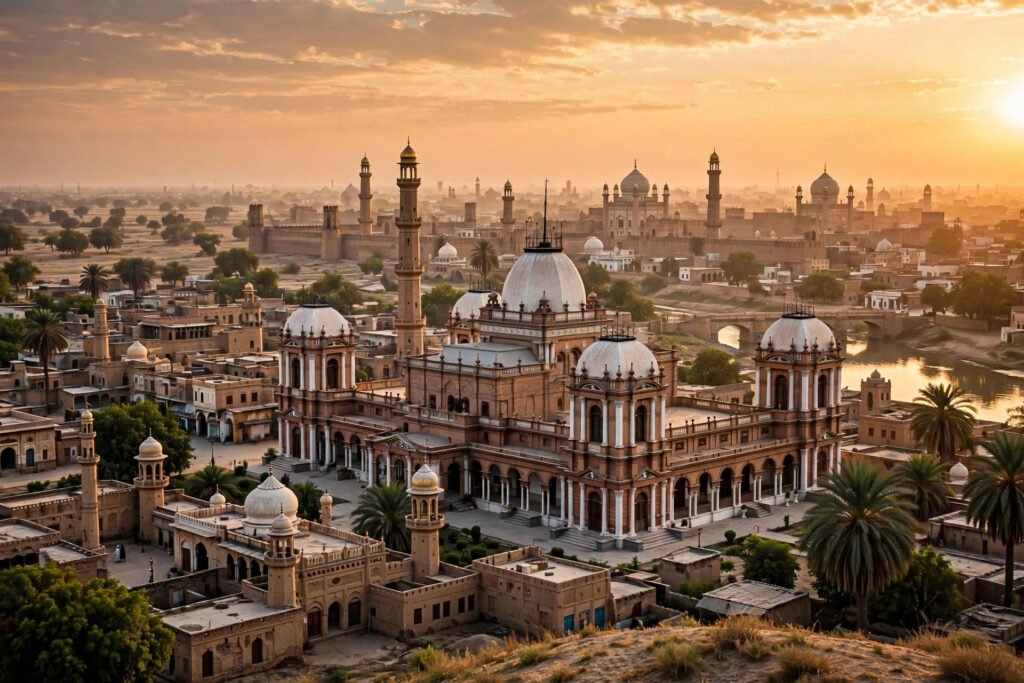
If you’re searching for jobs in Bahawalpur, you’re looking at a city most career guides skip entirely — which is exactly why this guide exists. Bahawalpur isn’t Lahore or Karachi. It’s the old princely capital of South Punjab, a city of palaces and wide colonial-era boulevards, sitting where the Cholistan desert meets some of the richest farmland in the province. And like most places the big job portals treat as an afterthought, it has a working economy that’s deeper than it looks from the outside.
Here’s the honest picture: Bahawalpur’s job market is smaller, slower, and more relationship-driven than anything in a big metro. Nobody here is going to hand you a career on a job portal alone. But there is real work — in agriculture and its processing industries, in one of Punjab’s biggest public universities, in the provincial government machinery, in an expanding banking sector, and increasingly, on laptops with Wi-Fi connections that don’t care which city you’re in. This guide walks you through where the actual jobs are in 2026, what they pay, and how people really get hired here.
Jobs in Bahawalpur: What’s Actually Available in 2026
Let’s set expectations before anything else, because jobs in Bahawalpur don’t behave like jobs in Lahore. This is not a corporate headquarters city. You won’t find multinational HQs, software houses on every corner, or a buzzing startup district. What you will find is an economy built on agriculture, public-sector employment, education, trade, and services — the kind of economy that has fed families here for generations and keeps doing it, just with new layers on top.
The main employment sectors break down like this:
- Agriculture and agro-processing: Cotton, sugarcane, and wheat are the backbone. Cotton ginning factories, oil mills, and sugar mills around Hasilpur, Yazman, and Ahmadpur East employ thousands — seasonally and year-round.
- Education: The Islamia University of Bahawalpur (IUB) is one of the largest employers in the region, and hundreds of private schools, colleges, and academies across Model Town, Satellite Town, and the city center constantly need teachers.
- Government and public sector: Bahawalpur is a divisional headquarters — commissioner and deputy commissioner offices, district courts, the health department, police, and dozens of provincial departments. Public-sector jobs are the most sought-after work in the city, full stop.
- Banking and microfinance: Branch networks have been expanding across South Punjab, and microfinance institutions serving the rural belt around Bahawalpur hire steadily.
- Trade and retail: The old city bazaars, the grain and cotton mandis, and the newer commercial stretches along University Road and Circular Road run on shop employment, wholesaling, and transport.
- Tourism and hospitality: A genuine niche — Noor Mahal, the Cholistan desert, Derawar Fort, and Lal Suhanra National Park draw domestic tourists, and that supports guides, drivers, guesthouses, and restaurants.
- Remote and freelance work: A growing number of Bahawalpur’s graduates earn from clients in Lahore, Karachi, Dubai, and beyond — from home, with a UPS and a decent connection.
The unemployment picture is the same as anywhere in Pakistan: real, but not hopeless. The people who get stuck are usually the ones chasing a single track — almost always government jobs — while the rest of the economy hires around them.
Cotton, Sugar and Ginning: Bahawalpur’s Agri-Industrial Engine
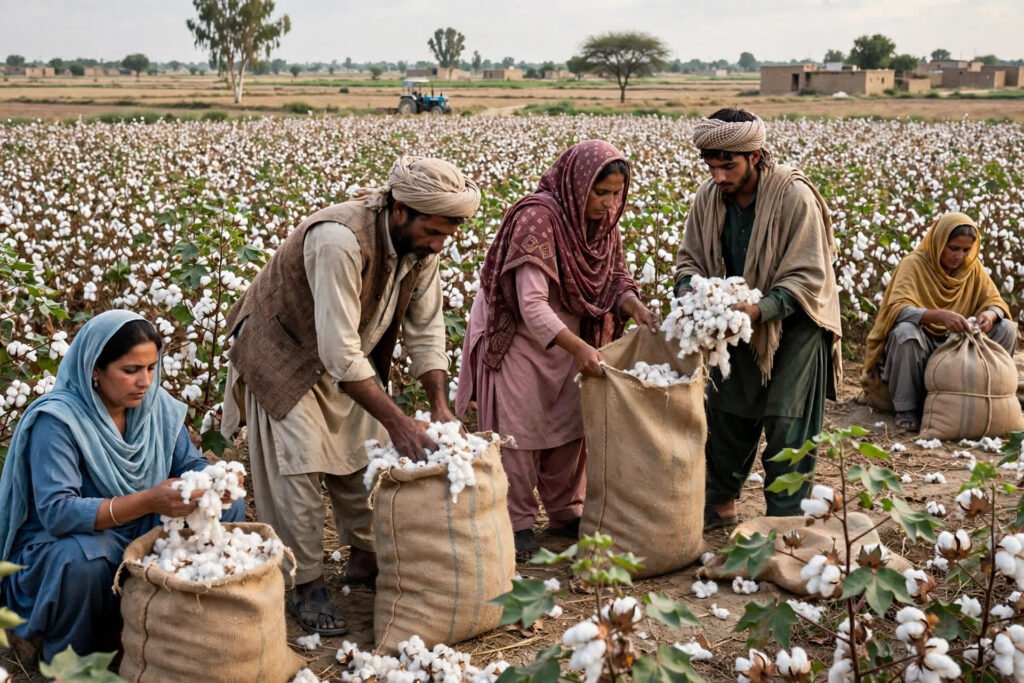
This is where most of the region’s private-sector paychecks actually come from, so let’s start here. The belt around Bahawalpur — Hasilpur, Yazman, Ahmadpur East, Khairpur Tamewali — is prime cotton and sugarcane country, and the processing chain that serves it is the closest thing Bahawalpur has to an industrial base.
Cotton ginning factories are everywhere in this belt. During the cotton season (roughly August through February, peaking around October–December), ginning units run hard and hire in volume: machine operators, press operators, weighmen, loaders, bale packers, storekeepers, and supervisors. Much of this work is seasonal and physically demanding, and the pay reflects it — daily-wage laborers earn in the range of Rs 1,000 to Rs 1,500 a day during peak season, while experienced supervisors and mechanics at year-round units earn proper monthly salaries in the Rs 50,000–70,000 range.
Sugar mills clustered around Hasilpur and the wider district run on a similar rhythm — the crushing season (roughly November to March) is when hiring peaks. Mills need cane procurement staff, weighbridge operators, lab technicians, boiler and turbine technicians, electricians, and accounts staff. A skilled technician at a sugar mill can earn Rs 60,000–90,000 a month, and the work is more stable than people assume — the good mills retain their core technical staff year-round.
The honest catch: this sector still hires largely through references, contractors, and walk-ins. Mills and ginning factories put notices on their gates and hire through people they trust. If your family is from the area, use that network shamelessly — that’s genuinely how most of these jobs get filled. For the white-collar side (accounts, HR, procurement, lab work), the mills do advertise, so keep an eye on job portals for Bahawalpur listings and apply directly. And if you’re technically inclined, a diploma from a polytechnic institute plus a crushing season or two of experience is a credential that travels across every mill in South Punjab.
The Islamia University Pipeline: Teaching, Research and Graduate Jobs
The Islamia University of Bahawalpur is the single most important institution in the city’s job market — not just as an employer, but as the engine that produces the city’s job seekers. IUB has tens of thousands of students across its campuses, and every year it releases a fresh wave of graduates into a local market that can’t absorb all of them. Understanding this pipeline is understanding Bahawalpur.
As an employer, the university hires lecturers, assistant professors, lab staff, librarians, IT staff, and a large administrative workforce. Academic posts go through proper competitive processes, and competition is stiff — a lectureship at IUB is one of the most coveted jobs in South Punjab. Beyond the university itself, the graduate pipeline feeds the city’s huge private education sector. Schools and colleges in Model Town, Satellite Town, and around University Chowk are always hiring: school teachers (Rs 25,000–45,000 a month at decent private schools), academy tutors, and subject specialists for FSc, matric, and entry-test preparation.
Here’s the practical advice nobody gives IUB graduates: don’t treat your degree as the finish line. The graduates who do well in Bahawalpur are the ones who pair the degree with something the market actually pays for — a teaching skill plus strong English, an agriculture degree plus experience at a mill, a CS degree plus freelance clients. The degree gets you in the room; the skill gets you the job. And if teaching is your lane, the private academies preparing students for MDCAT, ECAT, and CSS exams pay noticeably better than regular schools — a good academy teacher in Bahawalpur can earn Rs 60,000–100,000 a month.
Government Jobs in Bahawalpur: PPSC, Quotas and the Public Sector
Let’s be direct: for a large share of families in Bahawalpur, a government job is the goal. The prestige, the security, the pension — nothing else in the local market competes. And Bahawalpur, as a divisional headquarters, genuinely offers more public-sector opportunity than a smaller town would. The commissioner and DC offices, district courts, the health department (Bahawal Victoria Hospital is a major employer), the police, irrigation, revenue, and education departments — the provincial government is everywhere here.
The Punjab Public Service Commission (PPSC) is the main gate for officer-level posts: lecturers, assistant commissioners’ office staff, medical officers, subject specialists, and dozens of departmental posts advertised through the year. For clerical, teaching, health-worker, and support roles, departments advertise directly, often with quotas that favor candidates from the Bahawalpur division and South Punjab.
Grounded advice for the government track:
- Treat PPSC announcements as your job. The commission’s website and the newspaper ads are the source of truth. WhatsApp forwards about “upcoming vacancies” are mostly noise — verify everything against the official advertisement before you spend a rupee on preparation.
- Prepare like it’s competitive, because it is. PPSC screening tests draw thousands of candidates per post. Past papers, a standard general-knowledge and subject preparation routine, and several months of serious study are what separate the selected from the rejected.
- Watch the South Punjab angle. Provincial governments keep announcing special development and employment packages for South Punjab, and posts earmarked for the region do appear. They don’t appear often, and they’re competitive — but they’re real, and missing an announcement is the most common way people lose out.
- Don’t bet your whole twenties on this. Government hiring is slow, sometimes political, and occasionally frozen for years. Run a parallel track — teaching, a skill, freelance work — so a delayed result doesn’t cost you years of income.
Banking and Microfinance: The Quiet Growth Story
Nobody writes headlines about it, but banking has been one of the steadiest sources of new white-collar jobs in Bahawalpur. Every major commercial bank has branches across the city and in the surrounding tehsils, and the real growth has been in microfinance — institutions lending to the farmers, small traders, and rural entrepreneurs of the Bahawalpur belt hire loan officers, branch staff, and recovery officers continuously.
A bank teller or customer service officer at a commercial bank branch in Bahawalpur typically starts around Rs 45,000–60,000 a month, with the benefits and career ladder that make banking attractive. Microfinance loan officers often start lower — Rs 40,000–55,000 — but the field-based nature of the work means fast learning and, for the good ones, quick promotion into branch management. The honest trade-off: microfinance fieldwork means motorcycles, villages, and long days in the Cholistan heat. It’s not desk work, and you should know that before you apply.
How to get in: banks recruit management trainees and branch staff through their own career pages and through job portals — this is one sector where online applications genuinely work. A BBA or commerce degree from IUB plus decent communication skills is the standard ticket. For microfinance, field experience and local language fluency (Saraiki and Punjabi both matter here) count for as much as the degree. Walk into branches with your CV too — branch managers in smaller cities still remember the people who show up in person.
Heritage, Tourism and Lal Suhanra: A Niche That Pays
Bahawalpur’s palaces aren’t just scenery — they’re an economy, small but real. Noor Mahal, Darbar Mahal, Gulzar Mahal, the crumbling magnificence of Sadiq Garh Palace, the Derawar Fort rising out of the Cholistan desert, and Lal Suhanra National Park with its blackbuck and desert wildlife draw a steady stream of domestic tourists, school trips, and photography groups. Where tourists go, jobs follow.
What does this niche actually employ? Tour guides and drivers for Cholistan and Derawar trips, guesthouse and hotel staff in the city, restaurant workers along the tourist routes, photographers and event organizers, and the small army of vendors around the heritage sites. The pay is modest at the entry level — a jeep driver or guide might earn Rs 40,000–70,000 a month in a good season — but the ceiling rises for people who build a reputation: a well-reviewed tour operator running Derawar Fort trips can do genuinely well.
The 2026 angle: domestic tourism in Pakistan keeps growing, and South Punjab’s heritage circuit is still underdeveloped compared to the north — which means early movers have room. If you have a vehicle, local knowledge, and basic hospitality sense, packaging day trips to Noor Mahal, Lal Suhanra, and Derawar Fort is a viable small business, not just a job. Market it on Instagram and TikTok, where the Cholistan desert photographs beautifully, and the customers find you. The honest caveat: tourism here is seasonal (winters are the season; summers are brutal) and sensitive to the security and economic mood — keep it as one income stream among several, not your only bet.
Remote Work and Online Earning for Bahawalpur Residents
Here’s the part that changes the math completely: you don’t have to find your salary in Bahawalpur anymore. Some of the best-earning young people in the city work for clients in Lahore, Karachi, Dubai, London, and New York — from a room in Satellite Town with a UPS and a fiber connection.
Why this matters more in Bahawalpur than in a big city: local salaries are modest, but your costs are low. A freelancer earning even a few hundred dollars a month lives comfortably here. That arbitrage — Bahawalpur’s cost of living with outside income — is the single biggest economic opportunity available to the city’s graduates in 2026.
The realistic remote paths:
- Freelancing: Graphic design, video editing, content writing, WordPress development, and social media management are the most accessible entry points. IUB’s CS and media graduates are already doing this — the learning curve is real, but so is the earning.
- Remote customer support and sales: Pakistani and Gulf companies hire remote support staff. Good spoken English is the main requirement, and Bahawalpur’s graduates compete fine here.
- Online teaching and tutoring: If you can teach, you can tutor students anywhere — and the academies on University Road now run online batches too.
- E-commerce: Running a Daraz store or selling through Instagram and TikTok from Bahawalpur works. The city’s wholesale markets and the cotton/textile belt give you sourcing options most cities don’t have.
If you’re starting from zero, our guide to Online Earning in Pakistan lays out the realistic paths, the skills worth learning first, and the timelines to expect. The honest caveat, same as everywhere: remote work needs a real skill, reliable internet with backup power (load-shedding hasn’t gone away), and usually three to six months of building before income steadies. It’s not a lottery ticket. But for a city where a good local salary is Rs 60,000, it’s the highest-leverage move on the board.
Practical Tips: Where to Apply, What Salaries Look Like, and Staying Sharp
Time to get concrete. Here’s how to actually run a job search in Bahawalpur in 2026:
Where to apply. Check Rozee.pk regularly and filter for Bahawalpur listings — set up alerts so new posts reach you the day they’re published. But don’t stop at portals: in this city, the network is the job board. Walk into mills and ginning factories with your CV during hiring season, visit schools and academies in person (many hire through walk-in interviews they never advertise), tell every relative and family friend you’re looking, and check the PPSC website on a fixed weekly schedule. For government posts, the newspaper classifieds on Sundays still matter here — don’t ignore them.
What salaries look like in 2026. Plan with real numbers. Daily-wage and entry-level work sits around the Rs 40,000–45,000 monthly minimum-wage band; private school teachers Rs 25,000–45,000; bank and microfinance staff Rs 40,000–60,000; skilled mill technicians Rs 60,000–90,000; academy teachers and lecturers Rs 60,000–100,000+; government posts (BPS-16/17) Rs 80,000–120,000+ with benefits and security. Remote and freelance income varies wildly — from pocket money to several times a local salary — depending entirely on skill and consistency.
The Multan and Lahore question. A lot of Bahawalpuris end up working in Multan (about three hours) or Lahore — and plenty of families treat Bahawalpur as home base while someone earns elsewhere. If you’re weighing it, run the numbers honestly: higher salary minus rent, food, and transport in the bigger city, versus staying home with near-zero living costs. For many graduates, the winning formula is Bahawalpur’s cost of living with outside income — remote work, not relocation.
Skills that travel. Whatever lane you pick, three things multiply your value in this market: strong English (spoken and written), basic computer and internet fluency, and one marketable skill — teaching a subject well, a trade, design, accounting, driving a jeep tourists trust. Degrees open doors in Bahawalpur; skills decide what happens after you walk through.
FAQs
Is Bahawalpur a good city for jobs in 2026?
It’s a good city for certain kinds of jobs: agro-processing, teaching, government posts, banking and microfinance, and remote work. It’s not a corporate or tech city, so play to its strengths — the university pipeline, the agricultural belt, the public sector — instead of wishing it were Lahore.
What is the biggest industry for employment in Bahawalpur?
Agriculture and its processing chain — cotton ginning, sugar mills, and oil mills around Hasilpur, Yazman, and Ahmadpur East — is the largest private-sector employer. The public sector (government offices, IUB, Bahawal Victoria Hospital, schools) is the other giant, and the most coveted.
How do I find government jobs in Bahawalpur?
Through the Punjab Public Service Commission (PPSC) for officer-level posts, and through departmental advertisements — often with South Punjab/divisional quotas — for teaching, health, clerical, and police roles. Verify every announcement against the official source, prepare seriously for screening tests, and keep a parallel income track running.
What jobs are available at the Islamia University of Bahawalpur?
The university hires lecturers, assistant professors, researchers, lab technicians, librarians, IT staff, and administrative officers through competitive processes. Around it, the private schools, colleges, and test-preparation academies of the city hire teachers and tutors year-round — the more accessible end of the education job market.
Can I do online earning while living in Bahawalpur?
Yes — and the economics favor you. Freelancing (design, writing, video editing, development), remote support roles, online tutoring, and e-commerce are all realistic with a marketable skill, reliable internet plus backup power, and a few months of runway. Low local living costs mean outside income goes further here than in any big city.
Should I move to Lahore or Multan for better job opportunities?
Not automatically. Bigger cities have more corporate jobs but much higher living costs. Many Bahawalpuris do best staying home — near-zero living expenses — while earning remotely or commuting for seasonal work. Compare the full monthly math (rent, food, transport) before deciding; the salary gap often shrinks once costs are counted.
Conclusion
Jobs in Bahawalpur reward the people who understand the city instead of fighting it. The cotton gins and sugar mills of the Hasilpur–Yazman belt, the classrooms and lecture halls of IUB, the government offices that anchor the divisional headquarters, the expanding bank branches, the palaces and desert drawing tourists south — that’s your map. Add the newest layer, the laptop economy that lets a graduate in Model Town earn from clients who’ve never heard of Bahawalpur, and the picture gets genuinely optimistic. Pick the lane that fits your skills, prepare properly, work the networks this city actually hires through, and give it time. Bahawalpur has been a working city since the Nawabs. In 2026, it’s still working — and there’s room in it for you.