

If you know how to fix a wiring fault, install a ceiling fan without a second thought, or wire up a whole house from scratch, you already hold a skill that Pakistan badly needs in 2026. Every new housing society, every solar panel going up on a rooftop, and every factory running extra shifts means one thing: more work for electricians, and not enough trained people to do it.
The days when an electrician was just the person you called when the lights went out are long gone. Today, an electrician in Pakistan can work on home wiring, industrial machines, solar installations, or even take a contract in Saudi Arabia or the UAE. The pay gap between a skilled, certified electrician and an untrained helper has never been wider. This guide breaks down, in plain words, what electrician jobs in Pakistan actually pay in 2026, which courses are worth your time, and how to turn the skill into steady income.
Why Electricians Are in Such Demand in 2026
Pakistan is building fast. New housing schemes are opening in Lahore, Karachi, Islamabad, Faisalabad, and Multan, and every single plot needs wiring before a family can move in. On top of that, electricity prices have pushed thousands of homes and businesses toward solar power, which has created a whole new kind of electrical work that barely existed a few years ago.
Factories and commercial plazas are another big source of work. Industrial electricians who understand motors, panels, and three-phase systems are in short supply, and employers complain that they cannot find enough people who can read a wiring diagram properly. Add in the maintenance work on older buildings, and you get a trade where a good electrician rarely sits idle for long.
The other shift is attitude. Families now want proper, safe wiring instead of the cheapest jugaad job, because a bad connection can burn out expensive appliances or even start a fire. That means customers are willing to pay more for someone who does the job right, uses proper breakers and earthing, and can explain what they did.
Electrician Salary in Pakistan in 2026
Pay depends heavily on your skill level, your city, and whether you work for a company or on your own. Here is a realistic picture of what electricians are earning right now.
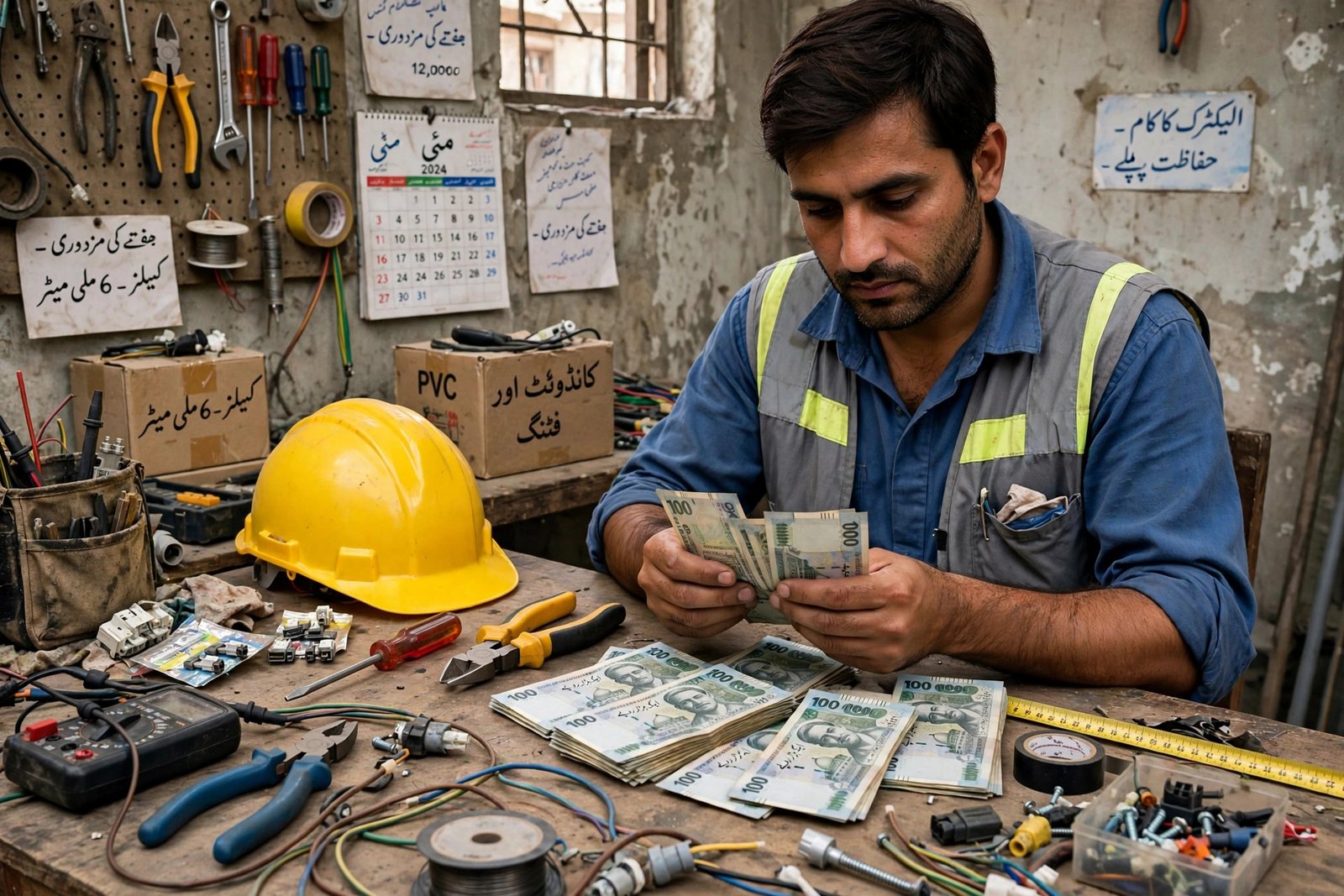
A fresh helper or apprentice, someone still learning the trade under a senior electrician, usually earns between Rs 25,000 and Rs 40,000 per month. It is not a lot, but this stage is really about learning, and most apprentices move up within a year or two if they stick with it.
A house wiring electrician with two to five years of experience typically earns between Rs 50,000 and Rs 90,000 per month when working for a contractor or construction company. Freelance electricians in busy cities can earn more than this in good months, especially when they get regular work from housing societies, but their income goes up and down with the season.
Industrial electricians earn more. Someone who can handle factory panels, motors, and maintenance work can expect Rs 80,000 to Rs 150,000 per month, and senior technicians in large plants sometimes cross Rs 150,000. Solar installers are also doing well: a solar electrician with proper installation experience can earn Rs 70,000 to Rs 130,000 per month, and those who lead installation teams earn even more.
Your city matters too. Karachi, Lahore, and Islamabad generally pay the highest rates because there is more construction and more commercial work. Smaller cities pay less, but the cost of living is lower and competition for jobs is often lighter.
DAE and Diploma Routes: Which Course Is Actually Worth It
If you are starting from zero, a proper course is the fastest way to move from helper to skilled electrician. Here are the routes that employers actually respect.
The Diploma of Associate Engineering (DAE) in Electrical Technology is the most recognised qualification in this field. It is a three-year programme offered by technical colleges across Pakistan, and it covers wiring, machines, circuits, and industrial systems in depth. DAE holders are the first choice for factory jobs, WAPDA-related work, and government technical posts, and the diploma also opens doors abroad because employers in the Gulf recognise it.
If three years feels too long, shorter options still carry weight. A one-year electrician trade course from a government technical training institute or a NAVTTC-affiliated centre teaches house wiring, safety, and basic industrial work, and it gives you a certificate you can show employers. Six-month courses in solar installation or building electrician work are also popular now, and they pair well with a few months of practical experience.
The honest advice is this: do not judge a course only by its fee or its brochure. Ask where their last batch of students is working now. A course with a workshop where you actually wire boards, install breakers, and test circuits is worth far more than a classroom where you only read about it. Theory matters, but in this trade, employers hire hands, not certificates alone.
How to Get Certified as an Electrician in Pakistan
A certificate is what separates you from the crowd when you apply for company jobs or Gulf visas. In Pakistan, the main routes are the trade testing boards and NAVTTC-recognised certificates, which confirm that you have passed a practical test in your trade. Many technical institutes also issue their own diplomas, and DAE graduates already hold a recognised qualification.
The practical process is straightforward. First, complete a course or gather documented work experience. Then apply for a trade test, where you will be asked to demonstrate real tasks like wiring a board, testing a circuit, and identifying faults safely. Pass that, and you get a certificate that employers and overseas recruiters take seriously.
If you plan to work abroad, get your certificates attested and keep copies of your experience letters from every employer. Gulf recruiters often ask for proof of three to five years of experience, and a proper file of certificates and letters can be the difference between getting shortlisted and getting ignored.
Safety training is also worth adding. A short course in electrical safety, or basic first aid, costs little but makes you look professional, and on industrial sites it is often a requirement before you are allowed on the floor.
Solar Electrician Jobs: The Fastest-Growing Corner of the Trade
Solar is the biggest new opportunity for electricians in Pakistan in 2026. With electricity bills climbing, homes, shops, mosques, schools, and factories are all installing solar systems, and every installation needs an electrician who understands panels, inverters, batteries, and net metering connections.
A solar electrician does more than put panels on a roof. The job includes checking the roof structure, wiring panels in the right series and parallel combinations, installing the inverter, connecting the battery bank where needed, and testing the whole system before handing it over. Mistakes here are expensive, so companies pay a premium for installers who get it right the first time.
If you already work as a house electrician, adding a solar installation course is one of the smartest moves you can make this year. It builds directly on what you know, and solar companies are actively hiring because demand is outpacing the number of trained installers. Many solar installers also pick up maintenance contracts, visiting the same customers every few months to clean panels and check connections, which turns into repeat income.
Gulf Opportunities for Pakistani Electricians
For many Pakistani electricians, the Gulf is where the big money is. Saudi Arabia, the UAE, Qatar, and Oman are all running large construction and infrastructure projects, and they hire Pakistani electricians in large numbers every year.
Salaries in the Gulf vary by country and employer, but an experienced electrician can typically earn between 1,500 and 3,000 Saudi Riyals or UAE Dirhams per month, often with free accommodation and transport included. That converts to a significant multiple of what the same work pays at home, which is why so many skilled electricians aim for a Gulf contract after a few years of local experience.
To stand a good chance, you need three things: a recognised certificate or diploma, at least two to three years of documented experience, and the ability to pass a practical trade test or interview, which is often conducted by the recruiting agency. Keep your passport ready, be wary of agents who demand large upfront fees without a proper job offer, and always verify the employer and contract terms before paying anything.
Even if you never go abroad, Gulf experience changes your value at home. Electricians who return from the Gulf often get hired as supervisors or start their own contracting work, because customers trust someone who has worked on large international projects.
Freelancing vs Company Jobs: Which One Suits You
This is the question every electrician faces sooner or later, and there is no single right answer. It depends on your personality, your stage of life, and how much risk you can handle.
A company job gives you a fixed monthly salary, regular hours, and benefits like EOBI or medical cover in some firms. You learn from senior technicians, you work on bigger projects, and you do not have to chase customers. For someone starting out, or someone who needs a steady income for family expenses, a company job is the safer choice, and it builds the experience record you need for Gulf applications later.
Freelancing gives you freedom and, in good months, higher earnings. You set your own rates, choose your jobs, and keep everything you earn. But you also carry the dry months, you pay for your own tools and transport, and you have to find customers yourself. Successful freelance electricians usually build their customer base slowly, through word of mouth, a WhatsApp business profile, and repeat work in a few housing societies where residents recommend them to neighbours.
A practical middle path works for many: start with a company job for two or three years to learn the trade properly and build a reputation, then move into freelancing part-time on weekends, and go full-time only when your own work brings in more than your salary. If you want to compare flexible work options alongside your trade, see how part-time work fits around a skilled trade in this guide to part-time jobs in Pakistan.
Whichever path you choose, invest in your tools. A good multimeter, proper insulated screwdrivers, a drill, and safety gloves are not expenses, they are the instruments of your trade, and customers notice when an electrician turns up with proper equipment.
How to Apply for Electrician Jobs in 2026
Finding work is a skill of its own. Here is a simple, practical plan that actually works.
First, write a simple one-page CV. List your course or diploma, your years of experience, the kinds of work you can do, and two references, ideally previous employers or contractors. Keep it honest. If you can do house wiring but not industrial panels, say so. Employers would rather hire an honest beginner than discover an exaggeration on the first day.
Second, register on job portals and check them regularly. Listings for electricians, helpers, and solar installers appear daily, and the early applicants often get the call first. You can browse current openings for electricians and related trades on Indeed Pakistan to see what employers in your city are asking for right now.
Third, visit contractors and solar companies in person. Many electrician jobs are never posted online. A contractor who has met you, seen your certificate, and watched you handle a tool is far more likely to call you when a project starts. Drop by construction sites and electrical shops, leave your number, and follow up politely after a week.
Fourth, prepare for the practical test. Many employers will ask you to wire a small board or find a fault in a test circuit before offering the job. Practise the basics until they feel automatic, because confidence with your hands is what gets you hired.
Finally, keep learning. Every year brings new equipment, new inverter models, and new safety standards. The electrician who learns solar today, or industrial automation tomorrow, is the one who keeps getting promoted while others stay at the same rate.
Common Mistakes That Hold Electricians Back
One common mistake is skipping safety. Working on live wires without switching off the supply, or skipping earthing to save time, is how accidents happen, and one serious accident can end a career. Professionals switch off, test, and then work.
Another mistake is staying a helper for too long. If you have been assisting for more than two years without learning to wire independently, ask your senior to teach you, or join a short course. Time passes either way, and it is better spent moving up.
A third mistake is ignoring the paperwork. Keep your certificates, experience letters, and CNIC copies in one file. When a good job or a Gulf opportunity appears, you need to apply quickly, and hunting for documents at the last minute can cost you the chance.
The last mistake is underpricing yourself. Doing work for very low rates might win a few jobs, but it trains customers to expect cheap work and leaves you unable to afford proper tools. Charge a fair rate, do clean work, and let your reputation bring the next customer.
Final Words
Electrician jobs in Pakistan in 2026 offer something rare: a skill you can learn in months, a trade that is genuinely in demand, and a path that can take you from a helper’s wage to a Gulf salary or your own business. The work is physical and sometimes tough, but it is honest, respected, and increasingly well paid for those who take it seriously.
Start where you are. If you are a beginner, join a course and find an ustad to learn under. If you already have experience, add a solar certificate or apply for a company role that stretches you. And if you are already skilled, consider whether freelancing or the Gulf is your next step. The demand is there. The only question is whether you will be ready when the next opportunity comes.
Frequently Asked Questions
What is the salary of an electrician in Pakistan in 2026?
A beginner or helper earns around Rs 25,000 to Rs 40,000 per month. An experienced house electrician earns Rs 50,000 to Rs 90,000, while industrial electricians and solar installers can earn Rs 80,000 to Rs 150,000 per month depending on skill and city.
Which course is best for becoming an electrician in Pakistan?
The DAE in Electrical Technology is the strongest long-term qualification. If you want a faster route, a one-year electrician trade course or a six-month solar installation course from a recognised technical institute is a solid start, especially when combined with practical experience.
How long does it take to become a skilled electrician?
Most people become competent at house wiring within one to two years of combined training and practical work. Reaching industrial or solar specialist level usually takes three to five years, but you can earn while you learn throughout that time.
Are solar electrician jobs in demand in Pakistan?
Yes, very much so. Rising electricity prices have driven a boom in rooftop solar installations for homes and businesses, and companies are actively hiring installers who understand panels, inverters, and batteries.
Can Pakistani electricians work in Saudi Arabia or the UAE?
Yes. Gulf employers regularly hire Pakistani electricians, especially those with a DAE or trade certificate and two to three years of documented experience. Always verify the job offer and employer before paying any recruitment fees.
Is freelancing better than a company job for electricians?
It depends. A company job offers a steady salary and structured learning, which suits beginners. Freelancing offers higher earning potential and freedom but comes with irregular income. Many electricians start with a company job and move into freelancing once they have a steady customer base.