
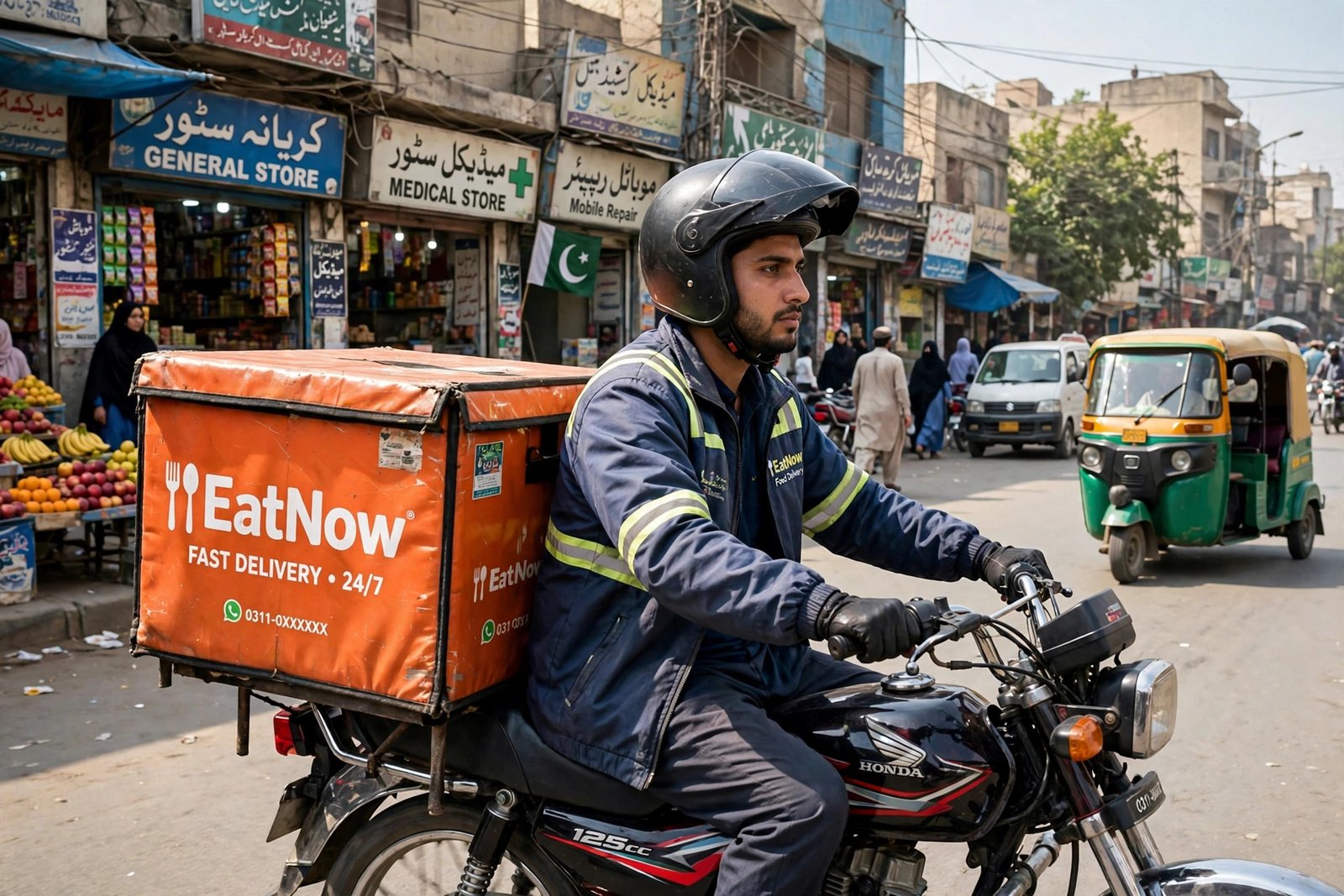
Walk through any market in Lahore, Karachi, or Islamabad at lunchtime and count how many red, pink, and yellow bikes are zipping past you. That’s not a coincidence — it’s a whole economy on two wheels.
In 2026, delivery rider jobs are one of the easiest doors into earning a steady income in Pakistan. You don’t need a degree. You don’t need references or sifarish. You need a motorcycle, a valid license, a smartphone, and the willingness to ride. That’s honestly it.
Right now there are over 650 rider vacancies advertised across Pakistan, with foodpanda, Daraz, Bykea, Yango, and hundreds of restaurants and couriers hiring on an almost daily basis. If you’re a student needing evening income, someone between jobs, or just want a flexible way to earn without sitting behind a desk — this is worth your attention.
Let’s break it down the way it actually works on the ground, not the way the posters make it sound.
What Delivery Rider Jobs Actually Look Like in Pakistan
There are really three kinds of rider work here, and it helps to know the difference before you apply:
App-based riders (foodpanda, Yango, Bykea): You sign up on the app, get approved, and take orders that ping your phone. You’re paid per delivery, and your earnings rise and fall with how many orders you complete and how busy the area is. This is the most flexible option — you log in when you want, log out when you’re done.
Logistics riders (Daraz via HRSI, courier companies): You’re typically delivering parcels rather than food, often paid per parcel (reported rates of Rs 12 to Rs 26 per parcel). Work is steadier and more predictable than food delivery, though usually less flexible in hours.
Restaurant riders (in-house): Restaurants hire their own riders on monthly salary, usually with fixed shifts. Some, like EATT OUTT in Lahore and ADS Pizza in Islamabad, even offer accommodation and meals with the job — which can be a genuine deal if you’re coming from another city.
All three are real, all three pay, and all three have trade-offs. The rest of this guide walks through each.
How Much Can You Really Earn as a Delivery Rider in 2026?
Let’s talk numbers, because this is where most articles lie to you. Real reported earnings for delivery riders in Pakistan range from Rs 10,000 to Rs 50,000 per month. That’s a wide range, and where you land depends on four things: how many hours you ride, which city and zone you’re in, which platform you work for, and frankly, how fast you get the job done.
Here’s a realistic picture:
- Part-time riders (evenings only, 3–4 hours): Rs 10,000–20,000/month on top of whatever else you do. This is students, people with day jobs, people testing the waters.
- Full-time food delivery riders (8–10 hours, six days a week): Rs 30,000–45,000/month in busy zones of Lahore, Karachi, and Islamabad. Quieter cities and zones pay less.
- Courier/logistics riders (Daraz, HRSI, courier companies): More predictable income because parcel volumes are steadier. Per-parcel pay of Rs 12–26 means your day depends on volume — a rider moving 40–60 parcels a day is in the same range as a busy food rider, sometimes better, without the dinner-rush chaos.
A few honest caveats. Earnings aren’t salary — nobody hands you a fixed paycheck on the app platforms. Rain, load-shedding days, and slow weeks affect your orders. And the top of the range (Rs 45,000–50,000) is people riding long hours in prime zones who know their city inside out. New riders should expect the lower half for the first month or two while they learn the routes and timing.
One more thing nobody tells you: tips exist. Good delivery riders in decent neighborhoods get tipped regularly — Rs 20, 50, sometimes more per order. It won’t make you rich, but over a month of busy days it adds up to a noticeable bump.
What You Need to Get Started (The Honest Requirements)
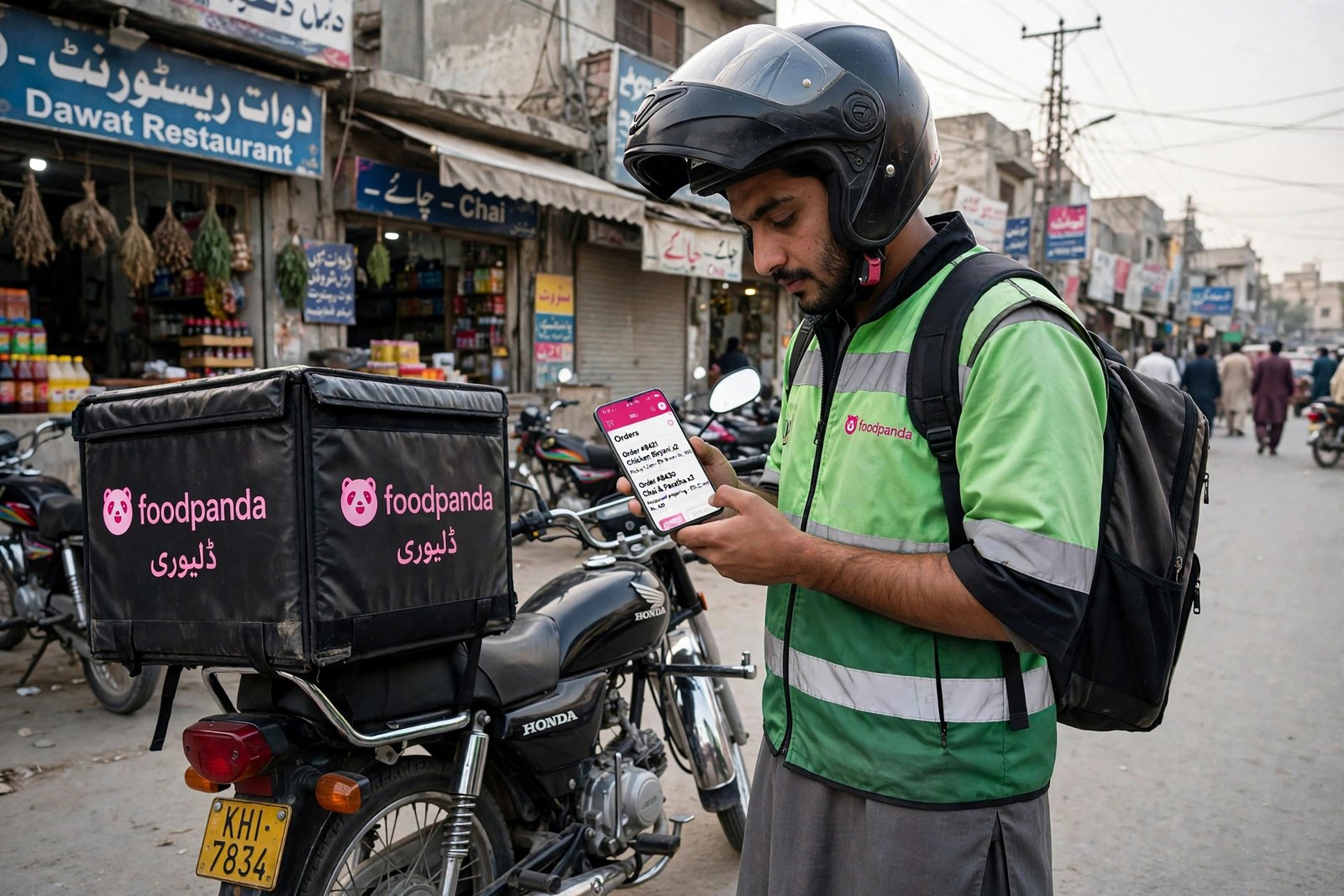
Job posts list requirements, but here’s what actually matters:
- Your own motorcycle. This is non-negotiable for most roles. A 70cc bike (Honda CD70 or similar) is the standard workhorse — cheap to run, cheap to fix, parts available everywhere. It doesn’t need to be new. It needs to run reliably.
- A valid motorcycle driving license. Platforms check this during onboarding. Riding without a license will eventually get you in trouble with traffic police, and fines eat your earnings.
- A smartphone with data. The rider apps run on it, customers call you on it, and navigation runs on it. Any reasonably modern phone works.
- Basic route knowledge of your area. You don’t need to memorise the whole city on day one, but knowing your zone’s main roads, markets, and housing societies saves you enormous time. Google Maps helps, but a rider who knows the shortcuts beats a rider following the blue line.
- CNIC. You’ll need it for registration everywhere.
That’s genuinely the full list. No CV, no interview in the traditional sense, no degree. This is why rider work is one of the most accessible flexible, part-time style earning options available right now — the barrier to entry is a bike and a license, not a university.
How to Join foodpanda as a Rider
foodpanda is the biggest name in food delivery here, and their rider onboarding is straightforward:
- Apply online through the foodpanda rider registration page or the foodpanda rider app (downloadable from the Play Store).
- Submit your documents — CNIC, driving license, a photo of yourself, and details of your bike.
- Complete the verification. foodpanda checks your documents and may call you in for a short session or briefing at a local hub.
- Get your gear and go live. You’ll receive the rider bag and any branded gear, then you can start accepting orders.
Tips that matter: apply for a zone close to where you live — dead kilometres riding to your zone cost you fuel before you’ve earned anything. And keep your acceptance rate healthy in the early days; the algorithm favours reliable riders.
How to Join Daraz (and HRSI) as a Rider
Daraz’s logistics runs largely through HRSI (Human Resource Solution International) and regional courier partners. This is parcel work — clothes, electronics, groceries — rather than food, which means steadier daily volume and less of the lunch/dinner rush pressure.
- Watch for HRSI and Daraz rider ads — they post regularly on job boards and their own pages. This is where live delivery rider listings are genuinely useful: hundreds of current rider vacancies, including logistics roles, in one place.
- Apply with your CNIC, license, and bike details. The process is similar to foodpanda — documents first, verification next.
- Expect a defined route or zone. Parcel riders usually get assigned areas rather than ping-based orders, so your day is more structured.
The per-parcel pay model (Rs 12–26 per parcel) rewards speed and route efficiency. Riders who learn their area well and batch their drops smartly earn noticeably more than those who don’t.
How to Join Bykea and Yango as a Rider
Bykea has been around for years and is well established in Karachi, Lahore, and Islamabad. They do both passenger rides and deliveries — which is an advantage, because when food orders are slow, you can pick up ride-hailing fares on the same app. Sign up through the Bykea driver/rider app, submit your documents, and you’re in.
Yango is the newer aggressive player, and they’re hiring riders actively. New platforms tend to run bonuses and incentives to build their rider fleet, which can mean better early earnings for riders who join now. Same story: app, documents, verification, start riding.
The practical advice here is simple: don’t marry one app. Plenty of riders run two apps on one phone and take the best available order. It’s not officially encouraged, but it’s extremely common, and it’s how experienced riders smooth out the slow hours.
Restaurant Rider Jobs: Salary, Accommodation, and Meals
Not everyone wants app-based work, and restaurant in-house rider jobs are the quieter, steadier option. Typical setup: fixed monthly salary, fixed shift, and you deliver for one restaurant.
What makes some of these listings genuinely attractive is the package. Restaurants like EATT OUTT in Lahore and ADS Pizza in Islamabad have advertised rider roles with accommodation and meals included. For a young person coming from a smaller town to the big city, that package removes the two biggest costs — rent and food — which changes the math completely. A Rs 25,000–30,000 salary with free room and board beats a Rs 40,000 app-rider income with Rs 25,000 in living costs.
How to find these: restaurant rider ads appear constantly on job boards and in local WhatsApp and Facebook job groups. Walk-ins work too — restaurants in food streets and busy markets often put up “rider required” notices right on the door. Don’t underestimate just asking.
The Real Math: Fuel, Maintenance, and What You Actually Keep
This is the section most people skip, and it’s the one that matters most. Your earnings are not your income — your income is what’s left after costs.
A typical rider’s monthly costs on a 70cc bike:
- Fuel: A 70cc does roughly 50–60 km per litre. A full-time rider covering 80–100 km a day burns through a lot of petrol. Budget a serious chunk here — this is your biggest expense by far.
- Maintenance: Oil changes, brake pads, chain, tyres. Riding 8–10 hours daily wears a bike fast. Set aside a fixed amount monthly; ignoring maintenance costs you far more later.
- Mobile data and balance: Modest, but real.
- Traffic fines (hopefully zero): One challan wipes out a day’s earnings. Wear a helmet, keep documents on you, and don’t give the police a reason.
The practical takeaway: before you celebrate a Rs 40,000 month, subtract Rs 8,000–12,000 in running costs (more in some cities and zones) and see what’s left. It’s still decent money — just do the math honestly so you’re not surprised. Riders who track their daily fuel and earnings in a notebook or phone app consistently do better than those who wing it.
Safety Tips Every Rider Should Know
Nobody talks about this enough. You’re on a bike for 8+ hours in Pakistani traffic — treat safety as part of the job:
- Helmet, always. Not the decorative kind. A proper one. It’s also the law, and traffic police in every major city are actively fining riders without them.
- Night shifts pay better but are riskier. Many riders prefer night work because orders are dense and traffic is lighter — but visibility is worse. A reflective vest and working lights are non-negotiable if you ride after dark.
- Don’t race the app timer. Late deliveries cost you ratings; accidents cost you everything. Ride at a pace you control.
- Keep your phone charged and your bike serviced. A dead phone means no orders; a breakdown in a dead zone means a lost day. Carry a power bank.
- Know your limits. Exhaustion causes accidents. If you’ve been riding 10 hours and your focus is gone, log off. Tomorrow’s orders will be there.
Peak Hours: When the Orders Actually Come
If you only remember one section of this article, make it this one. Earnings are not spread evenly through the day:
- Lunch rush (12:30 PM – 2:30 PM): The biggest food-order window of the day. Office areas and commercial zones explode with orders.
- Dinner rush (7:30 PM – 10:30 PM): The second peak. Residential zones light up.
- Weekends: Friday through Sunday are consistently busier than weekdays. Friday evening and Sunday lunch are prime time.
- Rain and bad weather: Fewer riders log in, but hungry people still order. If you’re willing to ride in the rain (carefully, with rain gear), per-order earnings and tips spike.
Smart riders don’t ride 12 mediocre hours — they ride the 6–8 hours that matter and rest the rest. If you’re doing this part-time around a job or studies, the dinner rush is your golden window.
Mistakes New Riders Make (So You Don’t Have To)
- Riding far from home to a “better” zone and burning fuel getting there and back. Start near home, expand later.
- Ignoring maintenance until the bike dies mid-shift. The riders earning the most are usually the ones whose bikes never break down.
- Sticking to one app out of loyalty. The apps are not loyal to you. Run the numbers and use what pays.
- Not tracking money. If you don’t know your daily fuel cost and daily earnings, you can’t tell whether this is working for you.
- Skipping the license. It seems fine until the first checkpoint. Then it’s a fine, a lecture, and possibly your bike impounded.
The Bottom Line
Delivery rider work in 2026 is not a get-rich scheme and it’s not glamorous. It’s hot in summer, cold in winter, and the traffic is the traffic. But it is honest, available, and immediate: you can go from reading this article to earning your first rupee within days, with no degree and no connections required.
Whether you go the foodpanda route, parcel work with Daraz and HRSI, multi-app riding with Bykea and Yango, or a salaried restaurant job with room and board — the formula is the same. Good bike, valid license, know your zone, ride the peak hours, and do the fuel math. Do that consistently, and Rs 30,000–45,000 a month is a realistic target, not a fantasy.
The bikes aren’t going to stop zipping past. The only question is whether one of them is yours.
Frequently Asked Questions
Do I need my own bike to become a delivery rider in Pakistan?
For almost all rider jobs — yes. foodpanda, Daraz/HRSI, Bykea, Yango, and restaurant roles all require you to have your own motorcycle. A second-hand 70cc in running condition is the standard starting point and the cheapest to maintain.
How much can a delivery rider earn per month in Pakistan in 2026?
Reported earnings range from Rs 10,000 to Rs 50,000 per month. Part-time evening riders typically earn Rs 10,000–20,000, while full-time riders in busy zones of Lahore, Karachi, or Islamabad can reach Rs 30,000–45,000 after fuel and maintenance costs.
Which is better: foodpanda, Daraz, Bykea, or Yango?
It depends on what you want. foodpanda has the most food orders. Daraz/HRSI parcel work is steadier and more predictable. Bykea lets you mix deliveries with passenger rides. Yango is growing and may offer better early incentives. Many experienced riders run two apps at once.
Can I do delivery rider work part-time as a student?
Yes — this is one of the most common setups. The dinner rush (7:30–10:30 PM) fits around university hours, and part-time riders commonly earn Rs 10,000–20,000 per month working evenings.
Do restaurants really offer accommodation with rider jobs?
Some do. Restaurants in Lahore and Islamabad, including names like EATT OUTT and ADS Pizza, have advertised rider positions with accommodation and meals included. Always confirm the exact package in writing before relocating for a job.
What documents do I need to join as a rider?
CNIC, a valid motorcycle driving license, your bike’s details, and a smartphone. Platforms verify these during onboarding before you can start accepting orders.
Is delivery riding safe in Pakistan?
It’s as safe as you make it. Wear a proper helmet, keep your bike maintained, avoid riding exhausted, and be extra careful on night shifts. The job carries real road risk, so safety habits aren’t optional — they’re part of the work.