

If you can write clearly, this might be the best time in history to be a content writer in Pakistan. Seriously. In 2026, the demand for writers hasn’t died the way everyone predicted when AI tools exploded a couple of years ago — it has just changed shape. Companies in Lahore, Karachi, Islamabad, and even smaller cities like Multan and Faisalabad are actively hiring content writers, and the freelancing scene for Pakistani writers is as busy as it has ever been.
But let’s be honest: the game is different now. Employers want writers who understand SEO, know their way around WordPress, can show a portfolio of real published work, and — this surprises some people — are comfortable using AI tools as part of the writing process rather than competing with them.
This guide covers everything: where the content writer jobs in Pakistan actually are in 2026, what they pay, what skills you need, how to build a portfolio from zero, and how to actually land the job.
The 2026 Market: More Demand, Different Expectations
Scroll through any job board right now and you’ll see the proof. Indeed Pakistan alone carries 300+ content writer listings at any given time — a mix of full-time office roles, remote positions, and hybrid setups. Local boards like apnijobs.pk regularly post roles such as “Creative Content Writer” in Islamabad (asking for 1–2 years of experience), content writing positions in Multan offering Rs 30,000–40,000 per month, and remote e-commerce writing jobs paying Rs 35,000–45,000.
That’s the real market in 2026: plenty of openings, but employers have become pickier. They don’t just want someone who can “write good English.” They want writers who can publish on a deadline, rank articles on Google, and handle a CMS without hand-holding.
The other big shift: remote work is now normal for content writing. A huge chunk of listings are fully remote, which means you’re competing with writers across Pakistan — but it also means you can work for a Karachi-based company while sitting in Bahawalpur. Night-shift content roles are especially common in Karachi and Lahore, usually tied to international clients in different time zones, and they tend to pay a premium of 20–30% over day-shift roles.
Salary Ranges in 2026: What Content Writers Actually Earn in Pakistan
Let’s talk numbers, because that’s what you’re here for. These are the real ranges we see across listings and working writers in 2026:
- Freshers / interns (0–1 year): Rs 25,000–40,000 per month. Many startups hire interns at Rs 25,000–30,000 and convert them to full roles within 3–6 months.
- Junior writers (1–2 years): Rs 40,000–70,000 per month. This is where most Multan and Faisalabad listings sit, and where remote e-commerce writers land.
- Mid-level writers (2–4 years): Rs 70,000–120,000 per month. SEO writers with a proven track record of ranked articles command the upper end here.
- Senior writers / content strategists (4+ years): Rs 120,000–200,000+ per month. At this level you’re not just writing — you’re planning content calendars, managing junior writers, and owning the SEO strategy.
- Freelancers: The wild card. A decent freelance content writer on Upwork or Fiverr can earn anywhere from Rs 50,000 to Rs 300,000+ per month depending on clients, niche, and consistency. Technical niches (finance, health, SaaS) pay the most.
Night-shift roles in Karachi and Lahore often add Rs 15,000–25,000 on top of the base, which makes them worth considering if your sleep schedule can handle it.
Skills Employers Actually Ask For in 2026
Read fifty job ads and the pattern becomes obvious. Here’s what employers in Pakistan consistently want from content writers right now:
1. SEO knowledge (non-negotiable)
This is the number one requirement. Not a “nice to have” — almost every listing mentions SEO. You need to understand keywords, search intent, meta titles and descriptions, heading structure, and internal linking. You don’t need to be a full SEO specialist, but if you can write an article that has a real chance of ranking on Google, you’re ahead of most applicants. If you’ve been earning online through writing, you already know that traffic is money — the same logic applies inside companies.
2. WordPress familiarity
Employers love writers who can draft, format, and publish directly in WordPress. That means headings, image placement, alt text, categories and tags, and basic Gutenberg blocks. It’s not hard to learn — a weekend of practice on a free WordPress blog is enough to put “WordPress” on your CV with confidence.
3. A portfolio of published articles
“Nahi hoga to nahi milega.” Hiring managers want links, not promises. They want to click and read something you actually wrote and published. More on building one below.
4. AI-tool proficiency (expected, not feared)
Here’s the 2026 reality nobody should be scared of: employers EXPECT you to use AI writing tools. Listings now routinely mention “familiarity with AI writing assistants” or “ability to use AI tools to speed up research and drafting.” The writers who are struggling are not the ones using AI — they’re the ones submitting raw AI output without editing, fact-checking, or adding real insight. The winning skill is AI-assisted writing: research and draft faster with tools, then rewrite in a human voice, add original examples, and verify every fact.
5. Research and fact-checking
With misinformation everywhere, employers value writers who verify claims, link to credible sources, and don’t invent statistics. This one skill separates professionals from content-mill workers.
6. Adaptability across formats
Blog posts, product descriptions, social media captions, email newsletters, video scripts, website copy — modern content writers juggle all of these. You don’t need to master every format on day one, but showing range in your portfolio helps a lot.
How to Build a Portfolio From Zero
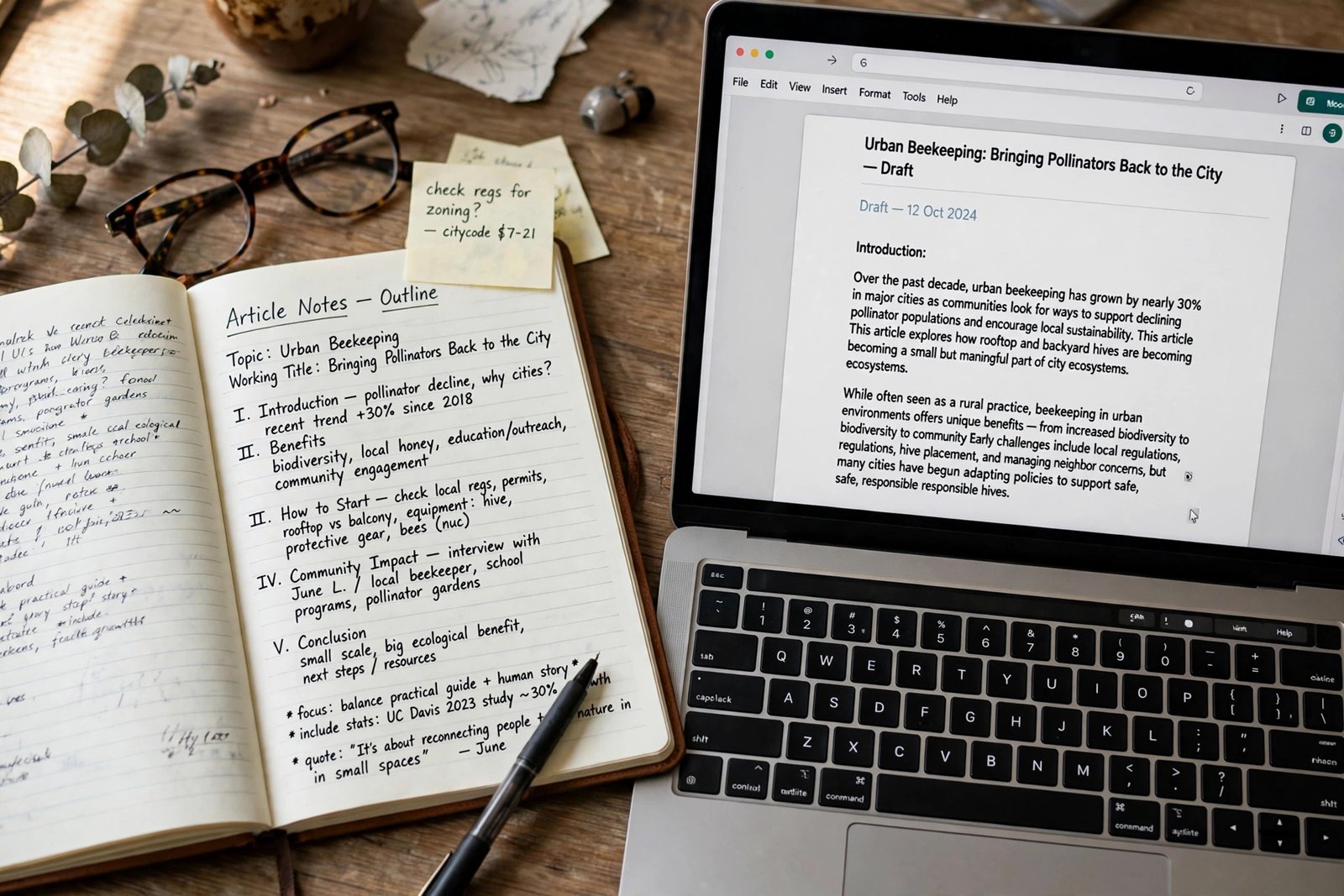
The classic catch-22: you need experience to get hired, but you need a job to get experience. Here’s how to break it, step by step:
Step 1: Pick one niche and start writing. Don’t be a “general writer.” Pick something you actually know or care about — tech, fashion, real estate, health, education, cricket, anything. Write 5–8 solid articles of 800–1,500 words each.
Step 2: Publish them somewhere real. Start a free Medium account or a WordPress.com blog. The key word is published — a Google Doc link doesn’t impress anyone. A Medium profile with real articles does.
Step 3: Guest post on Pakistani blogs. Many Pakistani blogs accept guest posts. Search for blogs in your niche, pitch them two or three article ideas, and write for them for free. One published guest post on someone else’s site is worth five on your own, because it proves someone else trusted your writing.
Step 4: Do two or three small paid gigs. Take a couple of low-paying orders on Fiverr or from Facebook writing groups just to have “client work” on your record. Charge little, over-deliver, get testimonials.
Step 5: Organize it all. Put your best 6–10 pieces on a simple portfolio page (a free Notion page, a Google Site, or a one-page WordPress site) with a short bio and your contact details. Link it at the top of your CV.
Within two to three months of consistent effort, you can go from zero to a portfolio that gets callbacks. It’s genuinely that straightforward — most people just never start.
Where to Find Content Writer Jobs in Pakistan
The jobs are spread across several channels, and smart writers check all of them:
- Indeed Pakistan: The biggest aggregator. A search for content writer jobs typically shows hundreds of active listings across cities and remote roles. Set up job alerts so new postings hit your inbox.
- Rozee.pk: Pakistan’s homegrown job portal, strong on local company listings.
- LinkedIn: Increasingly important, especially for remote and international roles. Keep your profile updated with “Content Writer” in the headline and post about your work occasionally — recruiters genuinely search LinkedIn for writers.
- Local boards like apnijobs.pk: Great for finding openings in smaller cities (Multan, Faisalabad, Gujranwala) that don’t always make it to the big portals.
- Facebook groups: There are active Pakistani content-writing and freelancing groups where clients post gigs daily. Quality varies, but it’s a real source of work, especially for beginners.
- Upwork and Fiverr: For freelance work. Competitive, but Pakistani writers have a strong reputation for value, and long-term clients are common.
- Direct outreach: Find Pakistani startups and digital agencies, read their blogs, and email them with two specific article ideas for their site. This works shockingly well because almost nobody does it.
How to Apply So You Actually Get Shortlisted
Most applications fail for boring, fixable reasons. Here’s what works:
- Tailor your CV to each job. If the ad says “SEO writer,” your CV should say SEO writer, with SEO-related samples at the top of your portfolio link. Generic CVs go in the bin.
- Write a short, specific cover note. Three to four lines: who you are, your niche, one relevant result (“I wrote 20 SEO articles for a real estate blog; three rank on page one”), and your portfolio link. Nobody reads long cover letters.
- Follow the ad’s instructions exactly. If they ask for samples on a specific topic, send samples on that topic. If they ask for a 300-word test piece, write 300 words, not 800. Following instructions is itself a test.
- Treat test assignments seriously. Many Pakistani companies ask for a short paid or unpaid test article. Do it well and on time — this is where most hiring decisions are actually made.
- Follow up once. If you haven’t heard back in a week, one polite follow-up message is fine. More than that is not.
The AI Question: Will Writers Be Replaced?
Let’s address the fear directly, because every aspiring writer in Pakistan has heard it: “AI likh lega, writers ki zaroorat nahi rahegi.”
Two years into the AI era, here’s what actually happened: companies tried replacing writers with pure AI content, discovered it reads like everyone else’s pure AI content, doesn’t rank well, doesn’t convert, and sometimes hallucinates embarrassing facts — and then they came back to hiring writers. The writers who survived and thrived are the ones who use AI as a tool: for research, outlining, first drafts, and repurposing — while keeping the human judgment, voice, original examples, and fact-checking that AI can’t do.
In 2026, “AI-proofing” your career means: develop a niche with real expertise, build a personal voice readers recognize, learn SEO deeply, and get comfortable directing AI tools rather than competing with them. The writers earning Rs 150,000+ in Pakistan right now aren’t anti-AI — they’re AI-fluent.
FAQs
Do I need a degree to become a content writer in Pakistan?
No. Almost no employer asks for a specific degree for content writing roles. They ask for samples, SEO knowledge, and sometimes a test article. A good portfolio beats a degree every single time in this field.
How long does it take to get your first content writing job?
With consistent effort — writing daily, building a portfolio, applying to 5–10 jobs a week — most people land their first paid role or steady freelance work within 2–4 months. The portfolio is the bottleneck; start it before you start applying.
Is content writing a good career in Pakistan in 2026?
Yes, with a caveat: it’s a good career for writers who adapt. Pure “write 500 words on any topic” work is shrinking and low-paid. But SEO writing, niche expertise (finance, health, tech, real estate), content strategy, and AI-assisted content production are growing and well-paid. The ceiling is high — senior writers and strategists earn Rs 150,000–200,000+ — but the floor for undifferentiated writing keeps dropping.
Should I work a job or freelance as a content writer?
Start with a job if you can get one. A full-time role teaches you SEO, deadlines, editing, and teamwork — skills that make you far more valuable as a freelancer later. Many successful Pakistani writers do both: a day job for stability and freelance clients for extra income. There’s no rule against it as long as you manage your time honestly.
What niches pay the most for content writers in Pakistan?
Finance and fintech, health and medical, SaaS and technology, real estate, and legal content pay the most because they require accuracy and expertise. Lifestyle, entertainment, and general blog writing pay the least because everyone can do them. Pick a high-value niche you can genuinely learn.
Can I do content writing part-time while studying?
Absolutely — it’s one of the most student-friendly ways to earn in Pakistan. Many university students write 2–3 articles a week for blogs or agencies and earn Rs 20,000–40,000 per month part-time. It’s flexible, remote-friendly, and builds a portfolio that helps after graduation.