
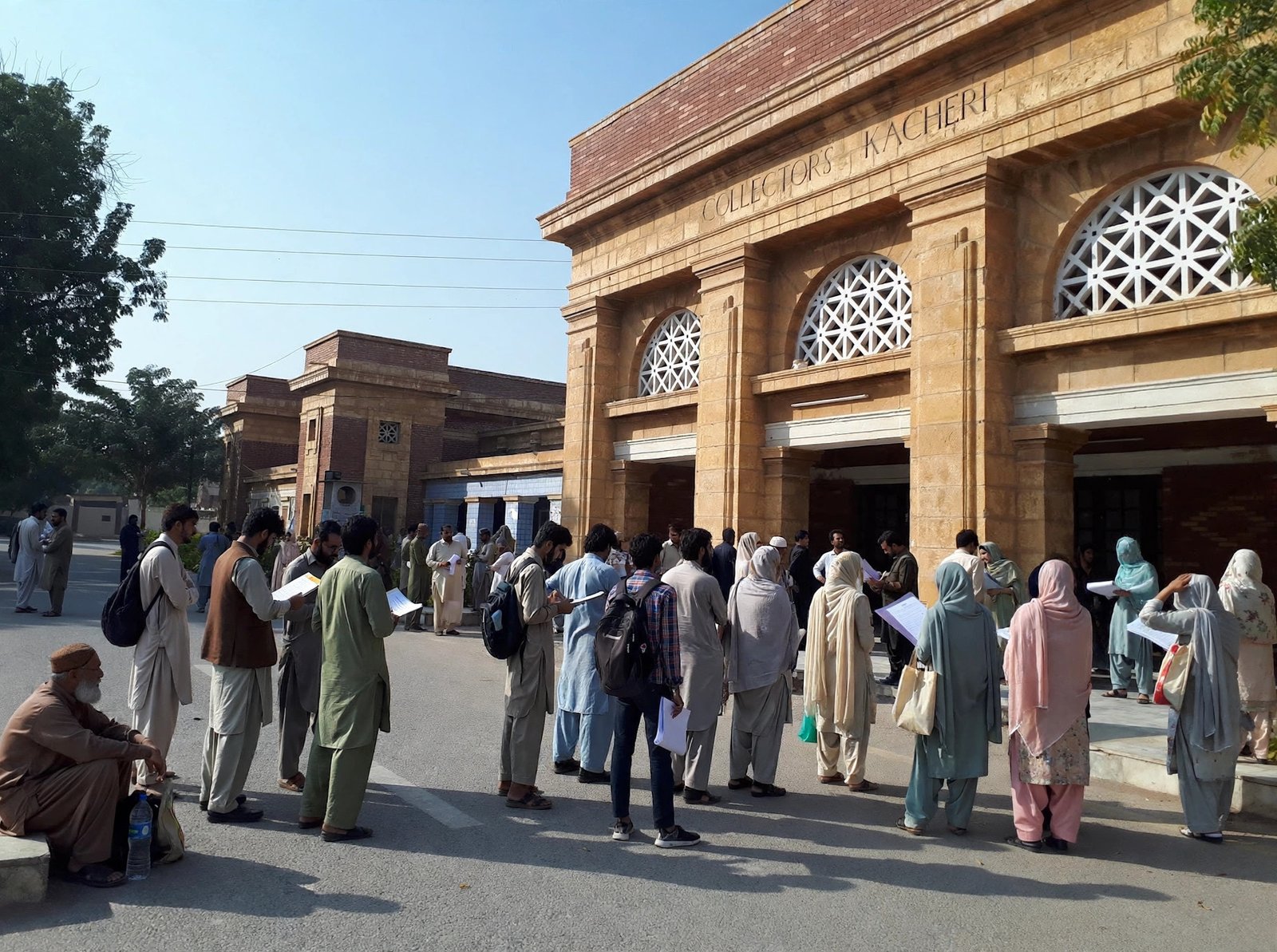
If you live in Nawabshah, you already know the job market here does not work like Karachi or Lahore. There are no sprawling office towers full of multinational companies, and nobody is handing out jobs at a career fair every weekend. What Nawabshah does have is a steady, honest mix of government posts, teaching work, health jobs, bank branches, and agriculture-linked businesses — and if you know where each kind of work actually comes from, you can build a perfectly good career without leaving your home district. This guide to jobs in Nawabshah in 2026 is written for exactly that purpose.
Nawabshah is officially called Shaheed Benazirabad, and you will see both names used in job advertisements, so do not let the two names confuse you. It is the divisional headquarters of Shaheed Benazirabad Division, which means the district administration, the courts, the police offices, the education and health departments, and several universities all sit in or around the city. That concentration of public institutions is the backbone of the local job market. Around it sits a farming economy — cotton, sugarcane, wheat and dates — which feeds the sugar mills, the ginning factories, the transport businesses and the trading firms that employ thousands of people in the district.
The honest truth is that finding work here takes patience and a routine. Vacancies come in waves, not every week, and the people who get hired are usually the ones who check regularly, keep their documents ready, and hear about an opening through a person they know. This guide walks through the sectors that actually hire in Nawabshah, where to look for genuine openings, how to prepare a CV that gets noticed, and how to tell a real advertisement from a fake one.
Government Jobs in Nawabshah
For most families in Nawabshah, a government job is still the first choice, and the reasons are easy to understand. The pay is regular, the job is comparatively secure, and the posting is usually close to home. As a divisional headquarters, the city hosts a large number of provincial government offices, and recruitment for clerks, junior clerks, computer operators, drivers, naib qasids, assistants and similar posts happens through the departments themselves or through the Sindh Public Service Commission for officer-level roles.
The important thing to understand is how these jobs in Nawabshah are announced. Officer-level posts generally go through SPSC, while district-level posts are advertised in newspapers and on departmental notice boards. If you only check one website, you will miss half of them. Make it a habit to read the newspapers that carry Sindh government advertisements, keep an eye on the notice boards at the Deputy Commissioner’s office and other district offices, and ask around in your own circle. In a city like Nawabshah, a relative or a former classmate working in a department often hears about an opening days before it reaches the internet.
When you apply, read the eligibility conditions properly before spending money on attested documents and postage. Age limits, domicile requirements and qualification levels are strict in government recruitment, and an application that misses one condition is rejected without a second look. Keep a ready folder with your CNIC, domicile, academic certificates and photographs, so that when an advertisement appears you can apply the same day instead of running around for paperwork. That single habit — documents ready in advance — is what separates the people who apply on time from the people who miss the last date.
Teaching and Education Jobs in Nawabshah
Teaching is one of the most reliable ways to earn a living in Nawabshah, and the city has more educational institutions than most people realise. The Quaid-e-Awam University of Engineering, Science and Technology, known as QUEST, is based here and employs lecturers, lab staff and administrative staff. The Shaheed Benazir Bhutto University, with its main campus in the city, is another significant employer for teaching and non-teaching roles. Then there is the Bakhtawar Cadet College for Girls, the first cadet college for girls in Pakistan, which advertises posts for lecturers, vice principal, bursar, librarian and staff nurses from time to time.
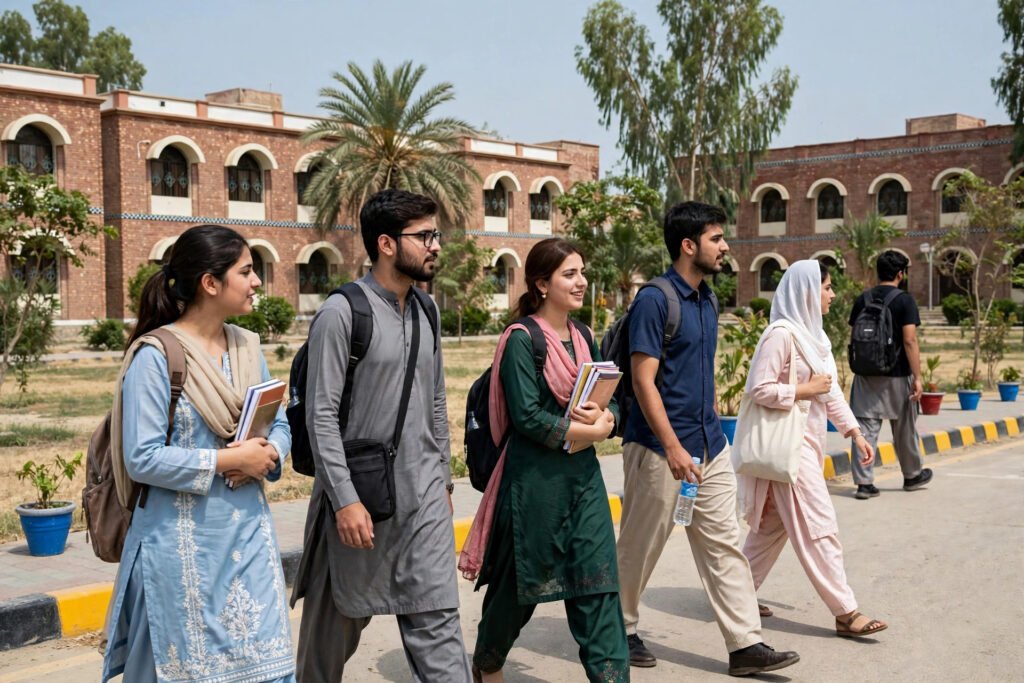
Beyond the universities, government schools and colleges across the district need teachers, and recruitment for school education posts in Sindh happens in waves announced by the education department. Private schools and academies in the city also hire regularly, especially before the start of the academic session, and they tend to move faster than the government process.
If you want to teach, your subject command matters more than a long CV. Schools in Nawabshah are always short of good English, mathematics and science teachers. A graduate who can genuinely teach one of these subjects, and can prove it in a demo lesson, will rarely stay unemployed for long. For college and university posts, a relevant master’s degree is usually the minimum, and research or teaching experience counts heavily. For school teaching, a practical tip: visit schools in person. Private school owners in a city like Nawabshah still hire on personal impression as much as on paper, and a polite visit with your CV and a willingness to take a demo class can open a door that an emailed CV never would.
Health Sector Jobs in Nawabshah
Health is another steady source of work in Nawabshah, and it is worth a section of its own. The Peoples University of Medical and Health Sciences for Women, PUMHS, is based in the city, along with its attached hospital, and it recruits doctors, nurses, lecturers, technicians and support staff. The Civil Hospital and the district health office also employ medical officers, lady health visitors, dispensers, lab technicians and vaccinators, and the Aga Khan University Hospital runs a phlebotomy and collection centre in the city that hires coordinators and lab staff.
Health jobs usually require specific qualifications, so this is not a sector where you can simply walk in and start. But if you already hold a nursing, pharmacy or medical technician qualification, Nawabshah offers a real chance to work close to home rather than relocating to Karachi or Hyderabad. Keep your council registration and certificates current, and do not wait for a big advertisement to start preparing. Smaller health vacancies are sometimes filled from walk-in interviews or short-notice announcements, and a short, honest CV that lists your qualification, your registration number where applicable, and any practical experience will get you further than a long CV full of vague claims.
For students still deciding on a field, health-related training is worth considering seriously. It takes time and effort, but it leads to work that is needed in every town and city, including your own.
Banks, Telecom and the Private Sector
Nawabshah’s private sector is smaller than that of Karachi or Hyderabad, but it is real, and it is growing in step with the city’s role as a commercial centre for central Sindh. Banks have branches across the city, and they recruit branch managers, cash officers, relationship officers and field staff. Microfinance institutions also operate in the district, and their field work suits applicants who know the local area well, because it depends on trust and local knowledge, not just a degree.
Telecom companies and their franchise networks provide steady work as well: sales staff, customer service representatives and field technicians. These jobs reward people who can talk to customers clearly in Urdu and Sindhi, and who are comfortable with basic smartphone and data services. If you are applying for a telecom role, do not hide your language skills. In Nawabshah, being able to switch between languages with a customer is a genuine qualification, and interviewers know it.
Beyond banks and telecom, there is a layer of private work that people often overlook: trading firms, transport businesses, private clinics, food companies and small offices that need accountants, storekeepers, drivers and computer operators. National food and agro companies hire territory sales staff for the Nawabshah region, because the city sits in the middle of Sindh’s cotton and sugarcane belt. These jobs are rarely advertised widely. They are filled through references and walk-in applications. If you have a skill — bookkeeping, basic computer work, driving — make it known. Tell shopkeepers, tell your neighbours, tell the people at your community gatherings. In a city this size, that is not gossip, that is how hiring happens.
Agriculture, Sugar Mills and Seasonal Work
No honest guide to jobs in Nawabshah can skip agriculture, because it is the engine underneath everything else in the district. Nawabshah sits in one of Sindh’s most productive farming belts. Cotton and sugarcane are the main cash crops, and the crushing season, roughly October to March, brings a surge of work at the sugar mills: production supervisors, shift engineers, lab technicians, weighbridge operators, cane procurement staff and drivers.
The sugar industry also supports a chain of smaller businesses: transport contractors who move cane from the fields, workshops that repair tractors and machinery, and traders who buy and sell the crop. If you have a technical skill — welding, electrical work, machine operation, driving a heavy vehicle — the crushing season is your busiest and best-paying time of year. Many skilled workers in the district earn most of their annual income in these months and plan their finances around it.
There is also work in cotton ginning factories, seed and fertiliser companies, and the agricultural input trade. Companies selling seed, fertiliser and pesticides hire field officers and sales staff for the Nawabshah region, and they prefer people who know the local farming community and can travel to villages comfortably. If you come from a farming family, that knowledge is an advantage no degree can replace.
Where to Find the Latest Jobs in Nawabshah
Now the practical part: where do you actually look? The honest answer is that no single source covers everything in Nawabshah, so you need a small daily routine rather than one favourite website.
Start with the newspapers, especially the editions that carry Sindh government advertisements. Then check the big Pakistani job portals, which list openings from banks, telecom companies, food and agro businesses, NGOs and private employers across the country, including Sindh. A useful place to check current bank openings in the city is the Rozee.pk listing for banking roles in Nawabshah: banking jobs in Nawabshah, where you can see which banks are hiring and set up alerts for new posts.
Next, check the notice boards at district offices, hospitals and colleges when you pass by. It costs nothing and it catches the ads that never make it online. Then use your own network properly: join local WhatsApp groups where vacancies are shared, but verify anything you see there before you apply or pay for anything, because those groups also carry the fake ads we will talk about below.
Finally, look at what neighbouring cities are advertising too. A vacancy in a nearby district may be worth applying for, and guides for similar Sindh cities can give you a sense of which employers recruit in this region. For comparison, see this guide to jobs in Sukkur, which covers many of the same provincial departments and employers that also hire in Nawabshah.
The routine does not need to take more than twenty minutes a day. What matters is doing it every day, because in Nawabshah the gap between an ad appearing and its last date is often short.
CV and Interview Tips That Actually Work Here
A CV for Nawabshah does not need to be fancy. It needs to be honest, short and easy to read. One to two pages is enough. Put your name, contact number and city at the top, then your education in reverse order, then your experience, then your skills. Do not copy a long list of skills you do not have. If you can use MS Office, say so. If you can ride a motorcycle and hold a valid licence, say so, because for field jobs that is genuinely relevant.
Two details matter more than people think. First, use a phone number that is switched on and answered. Employers in Nawabshah often call rather than email, and a missed call can mean a missed interview. Second, check your CV for spelling mistakes in your own name, your father’s name and your qualifications. Government offices compare your CV against your certificates, and a mismatch creates a problem you do not need.
For interviews, the basics win. Arrive on time, dress neatly, and be ready to answer in the language the interviewer uses. If you are asked why you want the job, give a real answer, not a memorised speech. “I am from this district, I know the area, and I want to work here” is a perfectly good answer for a Nawabshah posting, and interviewers can tell the difference between that and a paragraph copied from the internet. If you do not know an answer, say so plainly and offer what you do know. Bluffing in a small-city interview is risky, because the interviewer may well know your former teacher or employer.
How to Spot a Fake Job Ad
This section could save you money, so read it properly. Fake job ads target cities like Nawabshah precisely because job seekers here are keen and the real openings are fewer. The pattern is almost always the same: a message on WhatsApp or Facebook promises a government or company job, sometimes with an impressive title, and then asks for a registration fee, a training fee or a courier charge before any interview has taken place.
No genuine government department and no reputable company charges you money to apply for a job. That is the single most reliable rule. Other warning signs: a mobile number instead of an office address, a job offer without any test or interview, pressure to pay quickly before the “last date”, and salary promises that sound far too high for the role described. If an ad asks you to send money through mobile transfer to a personal account, stop there. It is not a job, it is a scam.
If you are unsure about an ad, verify it before you act. Check whether the same vacancy appears in a newspaper or on the organisation’s official channel, call the office on a number you find independently rather than the one in the ad, and ask someone you trust, a teacher, a relative in government service, or a friend who has applied before. Losing a few days to verification is far better than losing your money.
Final Word
Finding work in Nawabshah in 2026 is not about one magic website or one lucky application. It is about knowing the sectors that actually hire here — government departments, universities and schools, health institutions, banks and telecom, and the agriculture and sugar industry — and then showing up consistently: checking the papers, checking the portals, visiting offices, and keeping your documents ready.
If you are a student about to graduate, start building your CV now, and take any short-term work that gives you real experience. If you are already working but want something better, keep your applications going quietly rather than waiting for the perfect opening. And if you are supporting a family on this search, do not let a fake ad take what you have saved. The real jobs in Nawabshah are there, they just reward the people who look in the right places and stay at it.
Nawabshah rewards patience and local knowledge. Use both, and give yourself the best possible chance.
FAQs
What are the most common jobs in Nawabshah?
Government clerical and district office roles, teaching posts at universities, colleges and schools, health jobs at PUMHS and the Civil Hospital, bank and microfinance branch roles, telecom sales and service jobs, and agriculture-linked work in sugar mills, cotton ginning and agro sales are the most common sources of employment in the city and district.
How do I apply for government jobs in Nawabshah?
Check newspaper advertisements and department notice boards, confirm the eligibility conditions including domicile and qualification, and apply with attested copies of your CNIC, domicile and academic certificates before the stated last date. Officer-level posts are usually routed through the Sindh Public Service Commission, while district-level posts are advertised by the department concerned.
Are there university teaching jobs in Nawabshah?
Yes. The Quaid-e-Awam University of Engineering, Science and Technology (QUEST), the Shaheed Benazir Bhutto University and the Peoples University of Medical and Health Sciences for Women (PUMHS) are all based in the city and advertise teaching and non-teaching posts. A relevant master’s degree is usually the minimum for lecturer posts, and subject command matters more than a long CV.
Is the sugar industry a good source of work in Nawabshah?
Yes, especially during the crushing season from roughly October to March. Sugar mills hire production supervisors, engineers, lab technicians, weighbridge operators and drivers, and the season also creates work for transporters, workshops and traders. Skilled workers such as welders, electricians and heavy-vehicle drivers often earn their best income in these months.
Do I need to move to Karachi or Hyderabad to find a job?
Not necessarily. Many people from Nawabshah do move for wider opportunities, and that is a fair choice, but a good number of stable jobs in government, education, health and banking are available locally. It is worth applying locally first while keeping an eye on Hyderabad, which is the nearest larger job market.
How can I tell if a job ad for Nawabshah is fake?
Be suspicious of any ad that asks for a fee before an interview, offers a job without a test or interview, gives only a personal mobile number with no office address, or pressures you to pay immediately. Genuine employers never charge an application fee. Verify the ad through a newspaper, an official channel, or a direct call to the organisation before paying or sharing personal documents.