
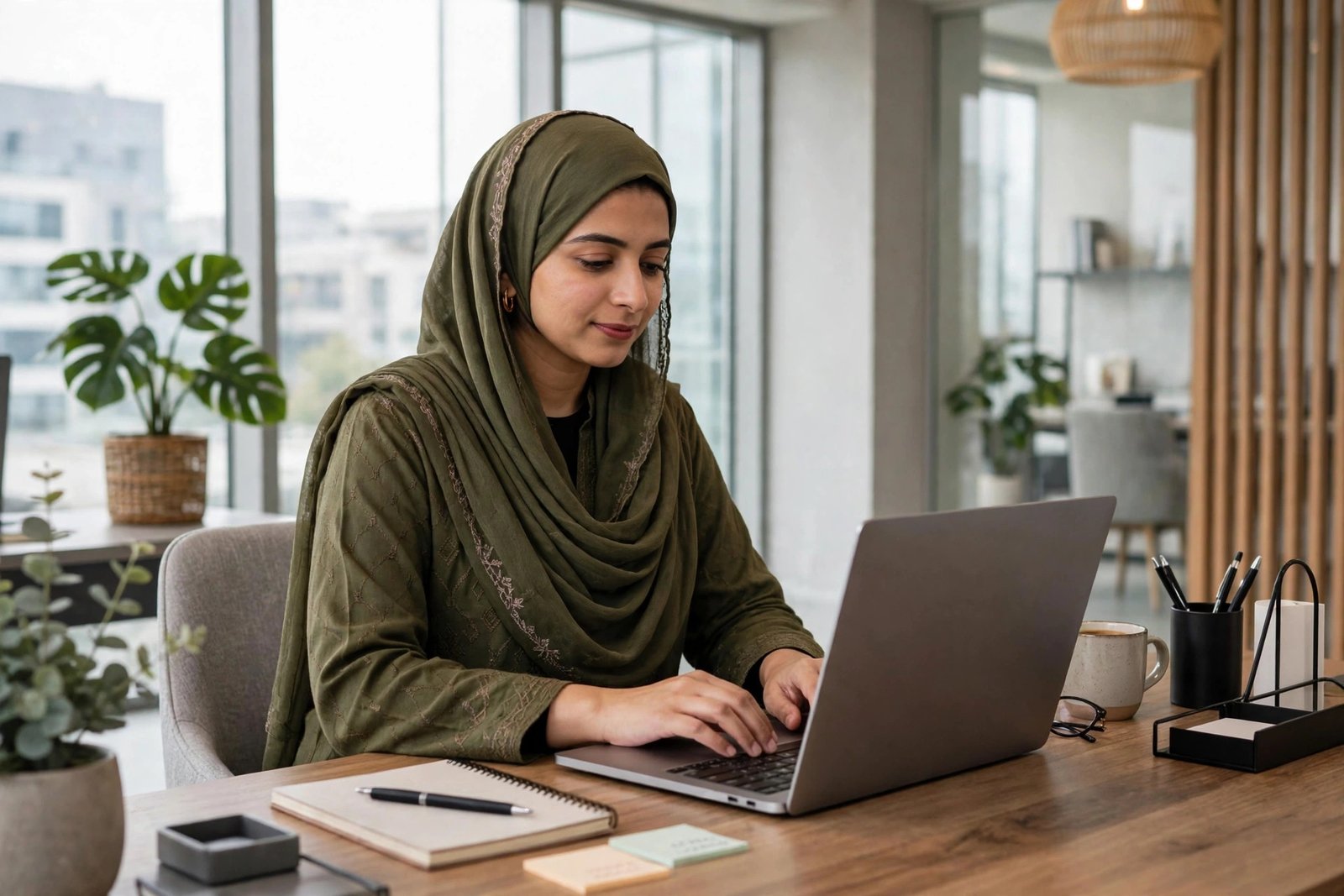
For a long time, the conversation about jobs for women in Pakistan started with what was not possible. The hours were wrong, the commute was too far, the workplace did not feel safe, or the family simply did not agree. In 2026, that conversation is changing — not all at once, and not everywhere at the same speed, but in a way that is real and visible. More schools, hospitals, banks, and tech companies are hiring women. More employers are offering remote work, flexible hours, and part-time roles. And more women are returning to work after a break, starting small businesses from home, or switching into entirely new fields.
This guide is written for the woman who is looking for honest, practical information. Whether you have just finished your degree, you are a mother thinking about going back to work, or you are already working and want something better, you will find real options here. No false promises, no claims that every job pays a fortune, and no advice that ignores the realities of daily life in Pakistan — transport, family responsibilities, safety, and the pressure to prove yourself twice as much as everyone else.
The good news is that the range of respectable, well-paid work open to women in Pakistan in 2026 is wider than it has ever been. The challenge is choosing well: picking a field with genuine demand, building the right skills, and knowing your rights once you are in a workplace. That is what this article covers, step by step.
Education: The Most Trusted Career Path for Women
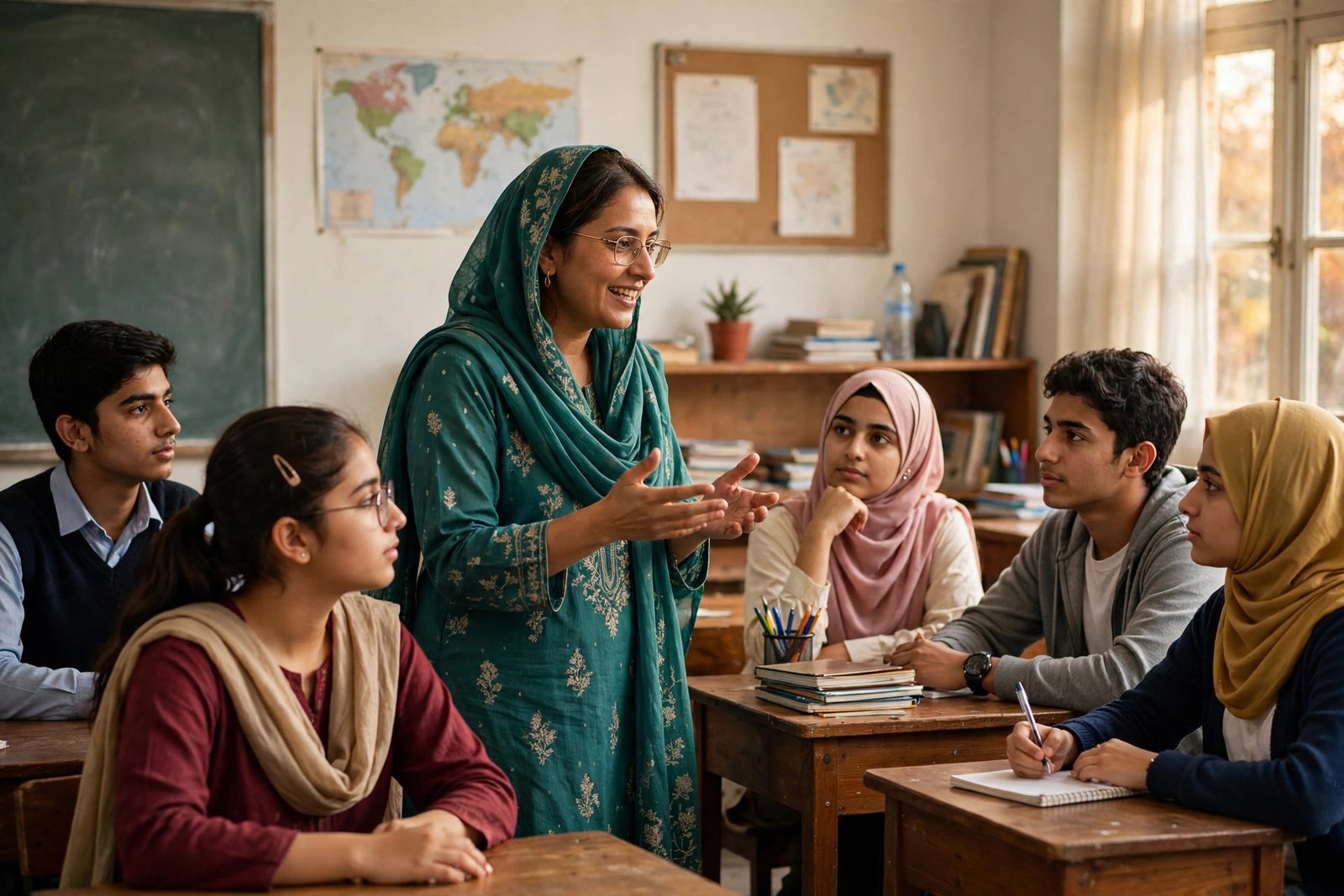
Teaching remains the most popular and most trusted profession for women in Pakistan, and for good reason. Schools, colleges, and universities across the country are hiring, and parents and families generally feel comfortable with teaching as a career. In 2026, the opportunities go well beyond the traditional classroom role.
Government schools hire through provincial education departments and public service commissions, and these jobs come with job security, a pension, and fixed working hours that fit family life better than many private-sector roles. Private schools and college chains in Lahore, Karachi, Islamabad, Rawalpindi, Faisalabad, and Multan also pay well for experienced teachers, especially for English, mathematics, science, and computer science. If you have strong English skills, international schools and Cambridge-system schools are worth looking at — they often pay significantly more than local schools.
Beyond classroom teaching, education in 2026 includes online tutoring, academy teaching, curriculum writing, and educational content creation. Many women now tutor students in Pakistan and abroad from home, teaching subjects like English, mathematics, and science over video calls in the evenings. Others write study material, prepare test preparation content, or run small home academies for neighbourhood children. A woman with a master’s degree and good communication skills can build a steady income from tutoring alone, without leaving her home.
To enter teaching, you generally need at least a bachelor’s degree in the subject you want to teach, and a B.Ed or M.Ed helps for government and reputable private schools. Short courses in classroom management, spoken English, or Montessori teaching can also make your CV stand out, especially if you are applying to private schools.
Healthcare: Growing Demand in Every City
Healthcare is another field where women are not just welcome — they are urgently needed. Pakistan has a shortage of female doctors, nurses, lady health workers, physiotherapists, nutritionists, and mental health professionals, and that shortage is felt in every city and town.
Doctors and dentists remain among the highest-paid professionals in the country, and women now make up a large share of medical college graduates. Nursing, too, has changed. It is no longer seen as a last option; trained nurses in good private hospitals earn respectable salaries, and many go on to work abroad, particularly in the Gulf and the United Kingdom, where Pakistani nurses are in demand.
But healthcare is much broader than doctors and nurses. In 2026, there is strong demand for female physiotherapists, speech therapists, dietitians, psychologists, and home-care workers. Clinics, rehabilitation centres, and wellness studios in major cities regularly hire women for these roles. Telemedicine has also opened a new door: female doctors and counsellors can now consult patients online, which suits women who want to work from home or keep flexible hours.
If you are considering healthcare, think about the length of training. Medicine and dentistry take years, but diplomas and degrees in nursing, physiotherapy, nutrition, and medical technology take less time and still lead to steady work. Lady health visitor and community midwife training programmes also offer a practical route into paid work, especially in smaller cities and rural areas where female health workers are trusted and needed.
IT and Remote Work: The Fastest-Growing Option
If there is one field that has changed the game for women in Pakistan, it is information technology. In 2026, IT and remote work offer something no other sector offers at the same scale: the chance to earn a good income from home, working for clients in Pakistan and around the world.
The most accessible entry points are graphic design, social media management, content writing, virtual assistance, video editing, and data entry. With three to six months of focused training, many women start earning from freelance platforms and local agencies. From there, the path leads to web development, software testing, digital marketing, search engine optimisation, and app development — all of which pay more and offer long-term careers.
Remote work suits women for practical reasons. There is no daily commute, no worry about transport safety, and hours can often be arranged around family responsibilities. Many Pakistani companies now hire remote staff directly, and freelance platforms connect Pakistani women with clients in the United States, the United Kingdom, the Gulf, and Europe. A woman with strong English and a solid skill in design or writing can earn more freelancing than she would in many office jobs.
The catch is that IT rewards skill, not just degrees. Employers and clients want to see a portfolio — real work samples, not just certificates. If you are starting out, take one short, practical course, build five or six strong samples, and start applying for small projects. Free and low-cost training is widely available, and government and private digital skills programmes regularly run courses for women. Consistency matters more than talent alone: the women who succeed in this field are usually the ones who practise daily and keep learning.
For a broader look at home-based work, including the kinds of roles that suit beginners, see this guide to work from home jobs in Pakistan.
Work from Home Jobs in Pakistan 2026
Banking, Finance, and Government Jobs
Banking has quietly become one of the best sectors for women in Pakistan. Banks actively hire women for branch banking, customer service, relationship management, credit analysis, and compliance roles. The work is structured, the hours are generally fixed, and the career path is clear: from officer to manager to senior leadership, with training provided along the way.
Many banks now run dedicated programmes to recruit and retain women, and some branches are staffed entirely by women. Salaries in banking start at a reasonable level for fresh graduates and rise steadily with experience. For women who want stability without the uncertainty of freelancing, banking is a strong choice.
Government jobs remain the gold standard for security. Every year, federal and provincial public service commissions advertise posts in education, health, administration, police, and revenue departments. Women are recruited into the civil service, the judiciary, the police, and the armed forces’ support services, and reserved quotas for women exist in many government recruitment processes. Competition is tough — thousands of applicants for a small number of posts — but the combination of a pension, medical benefits, and job security makes government work worth preparing for seriously.
If a government job is your goal, start early. Prepare for the written tests, practise past papers, and keep your documents ready. Many women miss out simply because they apply late or do not know a vacancy has been announced. Following official job portals and provincial commission websites regularly is a habit worth building.
Work-from-Home Options That Actually Pay
Not every woman wants, or can manage, a full-time office job. In 2026, the range of genuine work-from-home options is wider than ever, but so is the number of scams — so it is worth being clear about what actually pays.
The most reliable home-based options are online tutoring, freelance writing and design, social media management for small businesses, virtual assistance, online selling, and home-based food or stitching businesses that sell through social media. Teaching children online, managing an Instagram page for a local boutique, or writing product descriptions for an online store are all real jobs that real women in Pakistan are doing today.
What separates real work from scams is simple: a genuine employer or client will never ask you to pay a fee to start working, will explain exactly what the work is, and will pay on a clear schedule. Be very careful with any advertisement that promises thousands of rupees a day for typing, clicking ads, or forwarding messages — these are almost always frauds. A real job requires a real skill, even if that skill can be learned in a few months.
Home-based work also needs discipline. Set working hours, create a small workspace if you can, and agree on boundaries with your family about when you are working. Many women find that treating home work like office work — fixed hours, a proper routine, and regular breaks — is what turns a side income into a reliable one.
Safety and Workplace Rights: What Every Woman Should Know
A job is only a good job if you feel safe doing it. In Pakistan, the law is on your side more than many women realise, and knowing your rights is the first step to protecting them.
Every organisation with employees is required to have a policy against harassment at the workplace and to display a code of conduct where employees can see it. Under the Protection Against Harassment of Women at the Workplace Act, 2010, harassment — including unwelcome advances, comments, or behaviour of a sexual nature — is illegal, and every workplace must have an inquiry committee to hear complaints. If you face harassment, you can complain in writing to your organisation’s inquiry committee or directly to the provincial ombudsperson. You do not need a lawyer to file a complaint, and the law protects you from being punished for complaining.
In plain language, this means: no one at work is allowed to make you uncomfortable with comments about your appearance, unwanted messages, or pressure for personal favours, and your employer must take your complaint seriously. Keep a record of what happened, including dates and any messages, and do not feel you have to handle it alone — the ombudsperson’s office exists precisely for cases where an employer does not act.
Beyond harassment, women in formal employment are entitled to maternity leave under the law, and many larger employers now offer additional benefits. Before accepting a job, ask about working hours, leave policy, transport arrangements, and whether the workplace has a harassment policy and committee. A good employer will answer these questions openly; an employer that avoids them is giving you useful information too.
For your daily commute, practical safety matters as much as the law. If you travel by public transport, choose well-lit routes and regular timings where possible. Many women now use ride-hailing services or arrange shared transport with colleagues, and some employers provide pick-and-drop services for female staff — it is always worth asking about this during an interview.
Salary Ranges in 2026: What to Realistically Expect
Salary talk is often vague, so here are realistic starting ranges for women entering common fields in Pakistan in 2026. These are approximate, vary by city and employer, and rise with experience — but they give you a fair picture to plan around.
A school teacher in a private school typically earns between 40,000 and 80,000 rupees a month, while government teachers and experienced teachers in well-known schools earn more. A nurse in a private hospital generally earns between 60,000 and 120,000 rupees a month. A bank officer starts around 50,000 to 80,000 rupees a month. An entry-level IT professional or digital marketer in a company earns roughly 60,000 to 120,000 rupees a month, while successful freelancers can earn more — or less, depending on how many clients they have.
Content writers, graphic designers, and social media managers working for agencies typically start between 40,000 and 90,000 rupees a month. Government officers recruited through public service commissions start at higher grades with allowances and benefits that add up significantly over time.
Two things matter more than the starting figure. First, choose a field where salaries grow: IT, banking, and healthcare all reward experience and additional qualifications. Second, negotiate. Many women accept the first offer without discussion, but employers usually have some room to move, especially if you have a skill they need. Asking politely for a better salary is not rude — it is normal, and it is expected.
How to Apply: A Practical Step-by-Step Approach
Knowing where to apply is half the battle. Start with the major job portals in Pakistan, where employers post new vacancies daily, and set up alerts for the roles you want. A good place to begin your search is the country’s leading job portal.
Beyond portals, check the careers pages of the companies and organisations you want to work for, and follow their social media pages, where vacancies are often announced first. For government jobs, watch the federal and provincial public service commission websites and official newspapers. For freelance work, build a profile on freelance platforms and start with small projects to earn reviews.
Your CV should be short, honest, and tailored. One to two pages is enough for most roles. Put your most relevant qualification and experience first, list your skills plainly, and include a phone number and email address you actually check. If you are applying for a creative or IT role, include links or samples of your work — employers in these fields care far more about what you can do than about a long list of certificates.
Prepare for interviews by practising simple, honest answers: why you want the role, what you can do well, and what you are still learning. You do not need to pretend to know everything. Employers respect candidates who are honest about their gaps and clear about their willingness to learn. Dress neatly, arrive on time, and ask at least one question about the role — it shows genuine interest.
If you are applying from a smaller city, do not limit yourself to local employers. Remote roles, online tutoring, and freelance work mean your location matters less than it used to. A woman in Bahawalpur or Abbottabad can now work for a client in Karachi or London, as long as she has a reliable internet connection and the right skill.
Returning to Work After a Break
Many women leave work for marriage, children, or family responsibilities and later want to return. This is normal, and employers are slowly becoming more understanding — but returning still takes planning.
Start by updating your skills. If you have been away for two or three years, a short refresher course in your field — or in a new, in-demand skill like digital marketing or basic IT — can make a real difference. Employers care less about the gap itself than about whether you are ready now.
Be honest about the break in your CV and interview, without apologising for it. Raising a family, managing a home, or caring for relatives is real experience, and many women return with better time management and people skills than they had before. Part-time work, freelance projects, or a short internship can be a gentle way back in, giving you recent experience and fresh references before you apply for a full-time role.
If full-time work does not fit your life right now, that is fine too. Tutoring a few students, freelancing for a few hours a day, or running a small online business can provide income and confidence while keeping your schedule flexible. Many women start this way and move into full-time work later, on their own terms.
Above all, do not let the fear of being judged hold you back. Workplaces in Pakistan in 2026 include many women who took a break and came back stronger. Your career does not have to follow a straight line to be a successful one.
Final Thoughts: Choosing Work That Fits Your Life
There is no single best job for every woman in Pakistan. The right choice depends on your education, your skills, your family situation, your city, and what you actually enjoy doing. A woman who loves children may thrive as a teacher; a woman who loves technology may earn far more as a freelancer; a woman who wants maximum security may be happiest in a government or bank job.
What matters is that the choice is yours, made with good information. Learn a skill that employers genuinely need. Know your rights at work. Avoid scams that promise easy money. And give yourself permission to start small — a tutoring job, a freelance project, or a part-time role can grow into something much bigger.
The opportunities for women in Pakistan in 2026 are real, and they are growing. With the right skill, a careful application, and a clear understanding of your rights, you can find work that pays well, respects you, and fits the life you actually live.
Frequently Asked Questions
What are the best jobs for women in Pakistan in 2026?
The strongest options in 2026 are teaching, healthcare, IT and remote work, banking, and government service. Teaching and healthcare offer trust and steady demand, IT and freelancing offer the highest earning potential from home, and banking and government jobs offer security and clear career growth. The best choice depends on your qualifications and lifestyle.
Can women work from home in Pakistan and earn a good income?
Yes. Online tutoring, freelance writing, graphic design, social media management, and virtual assistance are all genuine home-based careers in Pakistan. Earnings depend on your skill and number of clients, but many women earn as much from home as they would in an office job, without the commute.
What is the minimum qualification needed for a good job for women in Pakistan?
Most formal jobs require at least a bachelor’s degree, but IT, freelancing, and home-based work depend more on skills than degrees. A woman with strong English, a practical digital skill, and a good portfolio can find paid work even without a master’s degree.
Is it safe for women to work in offices in Pakistan?
Most workplaces are safe, and the law requires employers to have a harassment policy and an inquiry committee. Before joining, ask about the harassment policy, working hours, and transport arrangements. If you face harassment, you can complain to your organisation’s committee or the provincial ombudsperson, and the law protects you for complaining.
How can a woman return to work after a long career break?
Start with a short refresher course in your field or a new skill, then try part-time work, freelancing, or a short internship to rebuild recent experience. Be honest about the break in interviews without apologising for it, and remember that many employers now value the maturity and time management that returning women bring.
Which field pays the most for women in Pakistan?
In 2026, IT and specialised healthcare roles generally pay the most, especially for experienced professionals and successful freelancers. Doctors, software developers, and senior digital marketers are among the highest earners, while teaching and banking offer steadier, if lower, starting salaries with strong long-term security.