
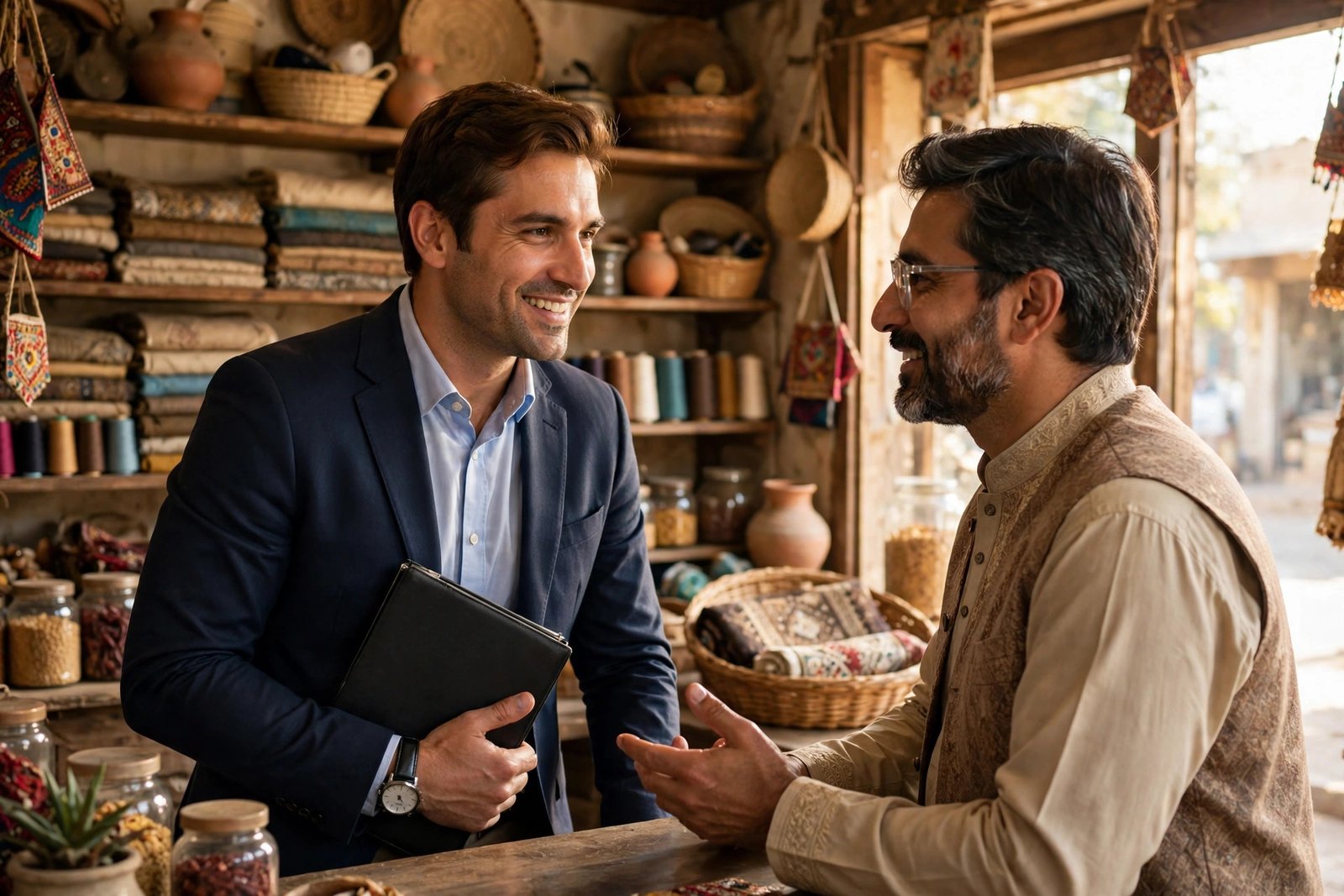
Walk into any busy bazaar in Lahore, Karachi, or Rawalpindi and you will see it before anyone explains it to you. A shopkeeper convincing a hesitant customer to try a new phone. A young man in a neat shirt going shop to shop with a bag full of samples. A woman on a headset calmly closing a deal for a telecom company. Sales is not one job in Pakistan. It is the engine underneath almost every business in the country, and in 2026 it is hiring more people than almost any other field.
Here is the part nobody tells you honestly: sales is also one of the few fields in Pakistan where your degree matters less than your results. A graduate with a first division and zero confidence will lose a sales job to an FA pass candidate who can talk to strangers without freezing up. That is unfair, maybe, but it is also good news. It means the door is open wider than you think.
This guide covers the real picture of sales jobs in Pakistan in 2026: the types of roles, the skills that actually get you hired, what you will really earn including commission, how to apply without wasting months, and the scams you must avoid.
Why Sales Jobs Are Everywhere in Pakistan Right Now
Pakistan’s economy runs on buying and selling. Every new housing society needs property dealers. Every new FMCG brand needs people to put its biscuits, soaps, and drinks on shop shelves. Every bank, telecom company, and insurance firm needs people to bring in customers. E-commerce has added another layer entirely, with online stores hiring sales teams to handle WhatsApp orders, live sessions, and customer follow-ups.
In 2026, three things are pushing demand even higher. First, companies are expanding into smaller cities, not just Karachi, Lahore, and Islamabad. Multan, Faisalabad, Sialkot, Gujranwala, and even Sukkur and Bahawalpur now have real sales teams. Second, digital payments and mobile banking have made it easier for salespeople to close deals on the spot instead of waiting for cash. Third, employers have figured out that a good salesperson pays for themselves many times over, so they are willing to hire freshers and train them rather than wait for experienced candidates.
The result is simple: if you can communicate clearly, handle rejection without falling apart, and show up consistently, there is a sales job for you somewhere in Pakistan right now.
Types of Sales Roles in Pakistan
Not all sales jobs are the same, and picking the wrong type is the most common reason people quit within three months. Here is what each type actually looks like day to day.
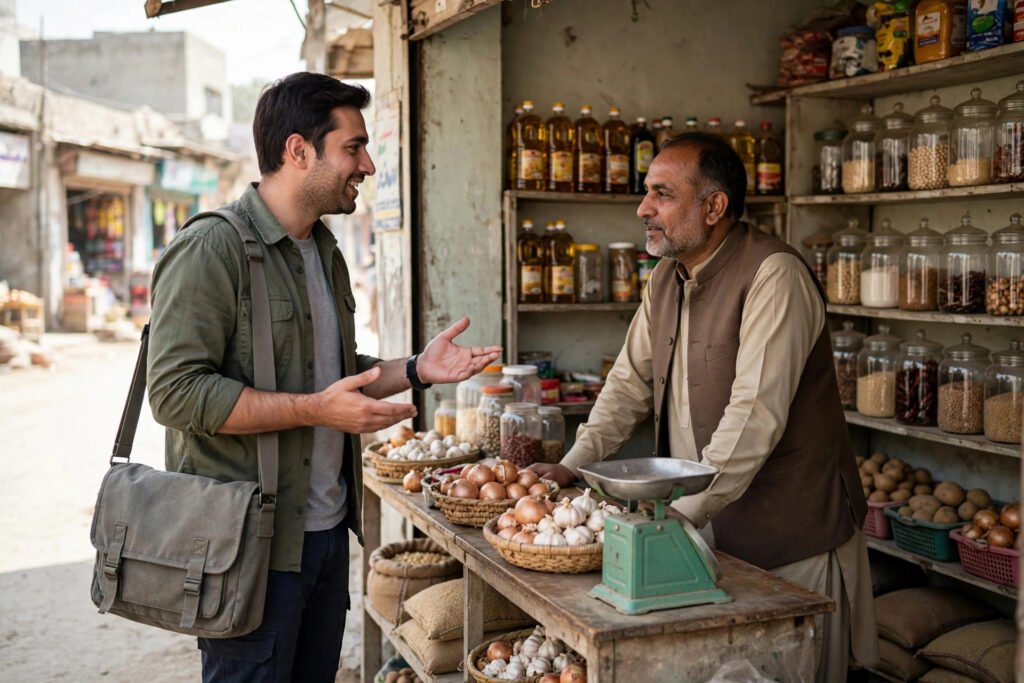
Retail Sales
Retail sales means working inside a shop, showroom, or mall outlet. You greet customers, understand what they need, show them products, and close the sale. This includes mobile shops, clothing brands, electronics stores, furniture showrooms, and car dealerships.
Retail suits people who like a fixed workplace and regular hours. You do not travel much, your income is more predictable, and you learn product knowledge deeply. The downside is standing for long hours and dealing with difficult customers face to face. Big retail brands in Pakistan now train their staff properly, so a retail job at a known brand can be a genuine career start, not just a stopgap.
Field Sales
Field sales is the classic Pakistani sales job: you go out and meet customers where they are. A field sales officer for an FMCG company visits dozens of kiryana stores, dhabas, and wholesalers every day, takes orders, checks stock, and makes sure the company’s products are visible on shelves. Pharma sales reps visit doctors and clinics. Insurance and banking field staff visit homes and offices.
Field sales is physically demanding and sometimes lonely, but it is also where the fastest growth happens. Companies promote their best field people into area and regional manager roles. If you are the kind of person who gets bored sitting in one place, field sales will suit you. It also teaches you the Pakistani market better than any classroom ever could. You learn how a shopkeeper in Saddar thinks differently from one in DHA, and that knowledge is worth real money later in your career.
Corporate Sales (B2B)
Corporate sales, also called B2B sales, means selling to businesses rather than individual customers. You might sell software to a textile mill, packaging to a food company, or fleet vehicles to a logistics firm. Deals are bigger, cycles are longer, and you deal with managers and owners rather than walk-in customers.
B2B roles usually pay better basic salaries and carry more respect, but they are harder to enter as a fresher. Employers want people who can write a professional email, prepare a presentation, and sit in a meeting without looking lost. If you have a business or commerce degree and decent English, corporate sales is a strong target. Start in a junior or business development role and work up.
Telesales and Call Centre Sales
Telesales means selling over the phone. You call potential customers, explain a product or offer, answer objections, and close the deal or book an appointment. Telecom companies, banks, insurance firms, and e-commerce brands all run large telesales teams in Pakistan, and many operate in the evening to match customer availability.
This is the easiest sales job to enter as a fresher, and it is excellent training. You learn to handle rejection fast, because you will hear “no” fifty times a day at first. You also learn to speak clearly and listen properly, which are the two skills every other sales role needs. If you are considering this path, it is worth reading about the wider world of phone-based selling too, including how call centre sales roles work in Pakistan, because the two fields overlap heavily and many people move between them. You can read more in this related guide on call centre jobs in Pakistan.
Telesales suits people who are comfortable on the phone, can work in shifts, and want a fixed office environment with a clear monthly target. Many telesales staff move into field or corporate roles after a year or two, using their product knowledge and confidence as a bridge.
Skills That Actually Get You Hired
Job ads list ten skills. Hiring managers really check four.
Communication in the customer’s language. This does not mean fancy English. It means you can explain a product in simple Urdu, Punjabi, Sindhi, or whatever your customer speaks, without confusing them. In most Pakistani sales jobs, clear Urdu and basic English beat fluent English alone. Practice explaining a product to a family member who knows nothing about it. If they understand it in two minutes, you have the skill.
Listening before talking. The worst salespeople talk non-stop. The best ones ask two or three good questions first: what do you need, what have you tried before, what is your budget. Customers buy from people who understand them, not from people who lecture them. In your interview, show this by asking the interviewer about the role instead of only answering questions.
Handling rejection without drama. You will lose more deals than you win, especially at the start. A shopkeeper will say no. A customer will hang up. A deal you worked on for a week will fall apart. Managers watch how you react. If you take it personally or make excuses, you look fragile. If you note what went wrong and move to the next customer, you look like a professional. This single trait separates people who last in sales from people who quit in month two.
Basic numbers and follow-up discipline. Sales is a numbers game. You need to track who you spoke to, what they said, and when to call back. A simple notebook or a phone reminder system is enough at the start. People who follow up properly close far more deals than people who rely on memory, because most customers buy on the second or third contact, not the first.
Two bonus skills help you stand out in 2026: comfort with WhatsApp Business, since a huge share of Pakistani selling now happens there, and the ability to make a short, honest product video or voice note for a customer. Neither requires a course. Both show initiative.
Salary and Commission Reality in 2026
Let us be honest about money, because vague promises are how people get trapped.
A fresh retail salesperson in Pakistan in 2026 typically earns a basic salary in the range of 35,000 to 60,000 rupees per month, depending on the city and the brand. Field sales officers usually start around 45,000 to 75,000 rupees plus a travel allowance, because the company knows you are spending your own time and energy on the road. Telesales staff generally start between 35,000 and 55,000 rupees, with shift allowances for evening work. Corporate and B2B junior roles often start higher, around 60,000 to 100,000 rupees, but they are harder to get without experience or a relevant degree.
Now the part that changes everything: commission and incentives. Most sales jobs add a variable component on top of the basic salary. Hit your monthly target and you might earn an extra 10,000 to 30,000 rupees. Beat it comfortably and some companies pay double incentives. Top performers in FMCG field sales, property sales, and car showrooms can genuinely double their basic salary in a good month.
But the reverse is also true. Some jobs advertise a big salary that is mostly commission, which means if you do not sell, you barely earn. Before accepting any offer, ask three questions in writing: what is the fixed basic salary, what exactly triggers the commission, and what happens in a month when you miss the target. A company that answers clearly is usually a company worth joining. A company that dodges these questions is waving a red flag.
Two more money realities. First, property and vehicle sales can pay very large commissions, but income swings wildly month to month, so you need savings to survive a dry month. Second, never accept a job that asks you to pay for training, a uniform, or a “registration fee” to start. Legitimate employers in Pakistan do not charge you to hire you. That is a scam, and we will come back to it below.
How to Apply for Sales Jobs in Pakistan
The fastest route for most people is a mix of online applications and direct visits.
Start with the big job portals. Search for sales roles in your city, filter by fresher or entry level if you are new, and apply to ten to fifteen genuine listings rather than spamming fifty. Read each job description properly. A job that says “field sales, own bike required” is telling you something important, and applying without a bike wastes everyone’s time.
You can browse current openings on a major Pakistani job portal like Rozee.pk’s sales jobs listings to get a sense of what employers in your city are actually asking for right now, including salary ranges and required experience.
Next, prepare a short, honest CV. One page is enough for a fresher. Put your contact number at the top, your education, any part-time work or internship, and two lines about why you want a sales role. Do not copy a fancy CV template full of skills you cannot demonstrate. Hiring managers for sales roles care more about a confident interview than a decorated CV.
Then walk in. For retail and showroom jobs, visiting a store with your CV and asking to speak to the manager still works in Pakistan, especially in malls and commercial markets. Dress neatly, speak politely, and be ready for a short on-the-spot conversation. Many retail hires happen exactly this way, without any online listing at all.
Finally, use your network honestly. Tell family, friends, and former colleagues that you are looking for a sales role and what kind you want. Referrals carry weight in Pakistani hiring, but only if you are specific. “I want a job” gets you nothing. “I am looking for a field sales role in Lahore, I have my own bike, and I can start next week” gets you remembered.
For the interview itself, expect a role play. The interviewer may ask you to sell them a pen, a phone, or a bottle of water. Do not panic and do not recite a speech. Ask who they are as a customer, what they need, and then explain how the product helps them. Speak slowly, smile, and treat it like a real conversation. That is what they are testing.
Scam Warnings: Protect Yourself
Sales job scams are common in Pakistan precisely because sales jobs are in demand. Here is what to watch for.
Fee scams. Any employer, agent, or “consultant” who asks you to pay for registration, training, a uniform, a security deposit, or a job confirmation is almost certainly scamming you. Real companies deduct nothing from you to hire you. Walk away and do not argue.
Fake overseas or “online sales” offers. Be very careful with ads promising huge salaries for online sales work from home with no interview and no office address. Some are real, many are not. A genuine company will have a verifiable office, a proper interview process, and a written offer letter. If the only contact is a WhatsApp number and the salary sounds too good to be true, it probably is.
Commission-only traps. Some “jobs” offer no basic salary at all, only commission, and expect you to work full days selling a product nobody wants. That is not a job, it is unpaid labour with a lottery ticket attached. Unless you are experienced and choosing commission-only work deliberately, insist on a fixed basic salary.
Document and bank detail theft. Never hand over your original CNIC, bank details, or passwords during a job application. A genuine employer may ask for a CNIC copy after you are hired, for HR records. Nobody legitimate needs your bank password or your OTP, ever.
If something feels wrong, it usually is. Check the company’s name online, ask for its office address, and talk to someone who has worked there before you commit.
Growing a Career in Sales
Sales is one of the few fields where your career path is genuinely in your own hands. A typical path looks like this: sales officer, then senior sales officer or team leader, then area sales manager, then regional or national sales manager. Each step brings a bigger team, a bigger area, and a bigger salary. The people who climb fastest are not always the smoothest talkers. They are the ones who hit targets consistently, keep clean records, and help their teammates instead of competing with them.
After a few years, you can also branch out. Experienced salespeople move into training, key account management, product management, or start their own distribution or dealership business. The market knowledge you build in field or retail sales is exactly what a small business needs, which is why so many successful shop owners and distributors in Pakistan started as sales officers for someone else.
One piece of advice for the long term: keep learning about your product and your customers. Markets change fast. The salesperson who understood customer needs in 2020 is not automatically the one who understands them in 2026. Read about your industry, watch what competitors do, and ask your customers honest questions about what they want next. That habit alone will keep you ahead of most of your colleagues.
Final Word
Sales jobs in Pakistan in 2026 offer something rare: a real chance to earn well without a long list of degrees, and a career path that rewards hard work directly. The work is not easy. You will face rejection, long days, and months when targets feel impossible. But if you can talk to people honestly, listen properly, follow up without fail, and keep going after a no, sales will pay you back faster than most other fields.
Start with the role that fits your personality, not the one with the flashiest advertised salary. Apply properly, ask clear questions about pay, and stay away from anyone who charges you for a job. Do that, and your first sales job can be the start of a genuine career, not just a way to pass the time.
FAQs About Sales Jobs in Pakistan
What qualification do I need for a sales job in Pakistan?
Most entry-level sales jobs ask for FA, FSc, or a bachelor’s degree, but many employers prioritise communication skills and attitude over qualifications. Retail and telesales roles are the most open to freshers, while corporate sales roles usually prefer a business or commerce degree.
How much can a fresher earn in sales in Pakistan in 2026?
A fresher typically earns a basic salary of 35,000 to 60,000 rupees per month, plus commission or incentives on top. Total monthly income depends heavily on performance, the company, and the city, and top performers can earn significantly more than their basic salary.
Is field sales or retail sales better for a beginner?
Retail sales suits beginners who want a fixed workplace and predictable hours. Field sales suits people who enjoy travelling, meeting new people daily, and learning the market first-hand. Both are strong starting points, and many people move between them during their careers.
Do sales jobs in Pakistan require a bike or a car?
Field sales roles often require your own bike, and the company usually pays a travel allowance on top of your salary. Retail, telesales, and corporate roles generally do not require your own transport.
Are sales jobs good for women in Pakistan?
Yes, and the number of women in sales is growing every year, especially in retail, telesales, corporate sales, and e-commerce. Many companies now have dedicated policies for safe workplaces and flexible timings, but it is still wise to check the work environment and timings of any specific employer before joining.
How do I avoid fake sales job offers?
Never pay any fee to get a job, never share bank passwords or OTPs, and always verify the company’s office address and reputation before accepting an offer. A genuine employer will give you a written offer letter and a clear salary structure.