
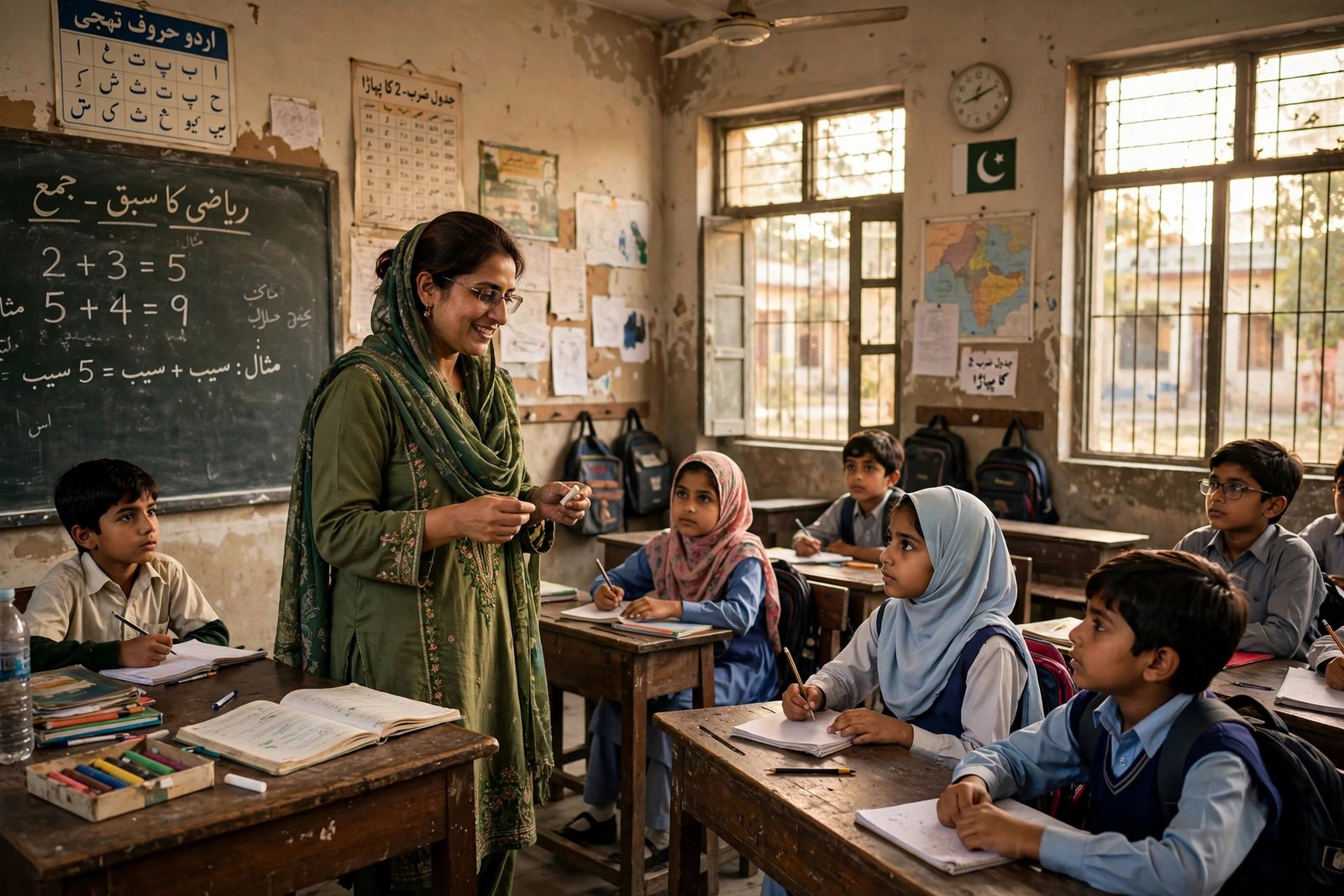
If you are looking for teaching jobs in Pakistan in 2026, you have picked one of the steadiest career paths in the country. While private-sector hiring freezes come and go, schools, colleges, academies and universities hire every single year. New campuses open, boards expand, and teachers retire or move abroad — and someone always has to fill those chairs. Whether you are a fresh graduate with an F.Sc, a B.Ed holder waiting for a government posting, or a professional thinking of switching careers, this guide walks you through the real landscape: what pays, what is required, where to apply, and how to avoid the scams that target desperate job seekers.
Why Teaching Is Still One of Pakistan’s Safest Careers
Teaching has survived every economic cycle Pakistan has seen. When factories slow down and IT companies pause hiring, schools still open their gates in April. That is not a small thing in a country where job security matters more than anything else.
A few things working in your favour right now. First, the private school sector keeps growing — chains are expanding into smaller cities and housing societies, and each new branch needs dozens of teachers. Second, the government teaching pipeline (through the Punjab Public Service Commission, Sindh Public Service Commission, KP and Balochistan commissions) is still the single biggest formal recruiter of graduates in the country. Third, online teaching has matured into a real income stream — something that barely existed a decade ago. And fourth, Pakistan’s teacher shortage in subjects like English, Mathematics and Science is genuine; good teachers in these subjects genuinely get picked up fast.
It is not glamorous. The pay in private schools can be shockingly low for beginners, and the workload is heavier than most people imagine. But if you are realistic about the trade-offs, teaching jobs in Pakistan offer something few other fields do: a floor under your career. You can always build up from it.
School Teaching Jobs in Pakistan: Public vs Private
Most teaching careers in Pakistan start in schools, and the two tracks — public and private — are almost different professions.
Government school jobs are the dream for many because of the pension, job security and prestige. These are filled through provincial public service commissions (PPSC in Punjab, SPSC in Sindh, KPPSC in Khyber Pakhtunkhwa, BPSC in Balochistan) or through educator recruitment drives announced by the provincial school education departments. In Punjab, the big “educator” recruitments — through the School Education Department — have hired tens of thousands of teachers in past rounds. For these posts you typically need a Master’s degree plus a B.Ed or M.Ed, and you must clear the commission’s written test and interview. The competition is fierce, but the payoff is a permanent, pensionable post.
Private school jobs are far easier to get and far more numerous. Big chains like The City School, Beaconhouse, Roots and countless mid-tier schools in every city hire fresh graduates regularly. The catch: starting salaries in small private schools can be as low as PKR 20,000–30,000 a month, while top-tier schools in Lahore, Karachi and Islamabad pay PKR 60,000–120,000+ to experienced teachers with strong English and subject command. Private schools care most about your demo lesson and your communication skills — your degree gets you the interview, but your classroom presence gets you the job.
A practical tip: if you cannot land a government post immediately, take a private school job rather than sitting at home. Two years of real classroom experience will make your commission-test application and every future interview dramatically stronger.
Teaching Jobs in Pakistan for College and University Lecturers
College and university teaching is the next rung up, and it pays meaningfully better — but the bar is higher too.
For lecturer posts in government colleges, you need at least a Master’s (16 years of education) in the relevant subject, and recruitment again runs through the provincial public service commissions. Pay starts around the BPS-17 scale with the usual government allowances and perks, and the job carries serious social respect.
For university teaching, a Master’s can get you a visiting-lecturer or contract role, but a permanent faculty position increasingly requires an M.Phil or PhD, plus HEC-recognised qualifications. Visiting faculty are paid per course or per lecture hour, and rates vary widely between institutions. Universities in major cities also hire research associates and teaching assistants — good entry points for M.Phil scholars.
One honest note: university posts have the most “reference culture” pressure of any teaching track. That does not mean merit does not work — it does, especially with publications and strong qualifications — but building relationships within your department and attending academic conferences genuinely helps.
Academies, Tuition Centers and Home Tuition: The Cash Engine
Here is something people rarely say plainly: in Pakistan, evening academies and home tuition often pay more than the day job. A school teacher earning PKR 40,000 a month can double or triple that with evening academy classes and a few home tuitions in the right neighbourhood.
Academies — the coaching centers that prepare students for board exams, MDCAT, ECAT and CSS — hire aggressively every admission season. They pay per batch or per hour, and star teachers in MDCAT/ECAT subjects command serious money. Home tuition, meanwhile, is the gig economy of teaching: parents in DHA, Bahria Town and similar areas pay PKR 15,000–50,000+ per month per student for home tutors in English, Maths and Science. Platforms and WhatsApp groups connect tutors with families, but most work still comes through word of mouth — teach one child well and the whole street finds out.
If you are starting out, do not look down on academy or tuition work. Many of Pakistan’s most financially comfortable teachers built their income on this second shift, not their school salary.
Online Teaching and Tutoring: Teaching Jobs in Pakistan Without a Classroom
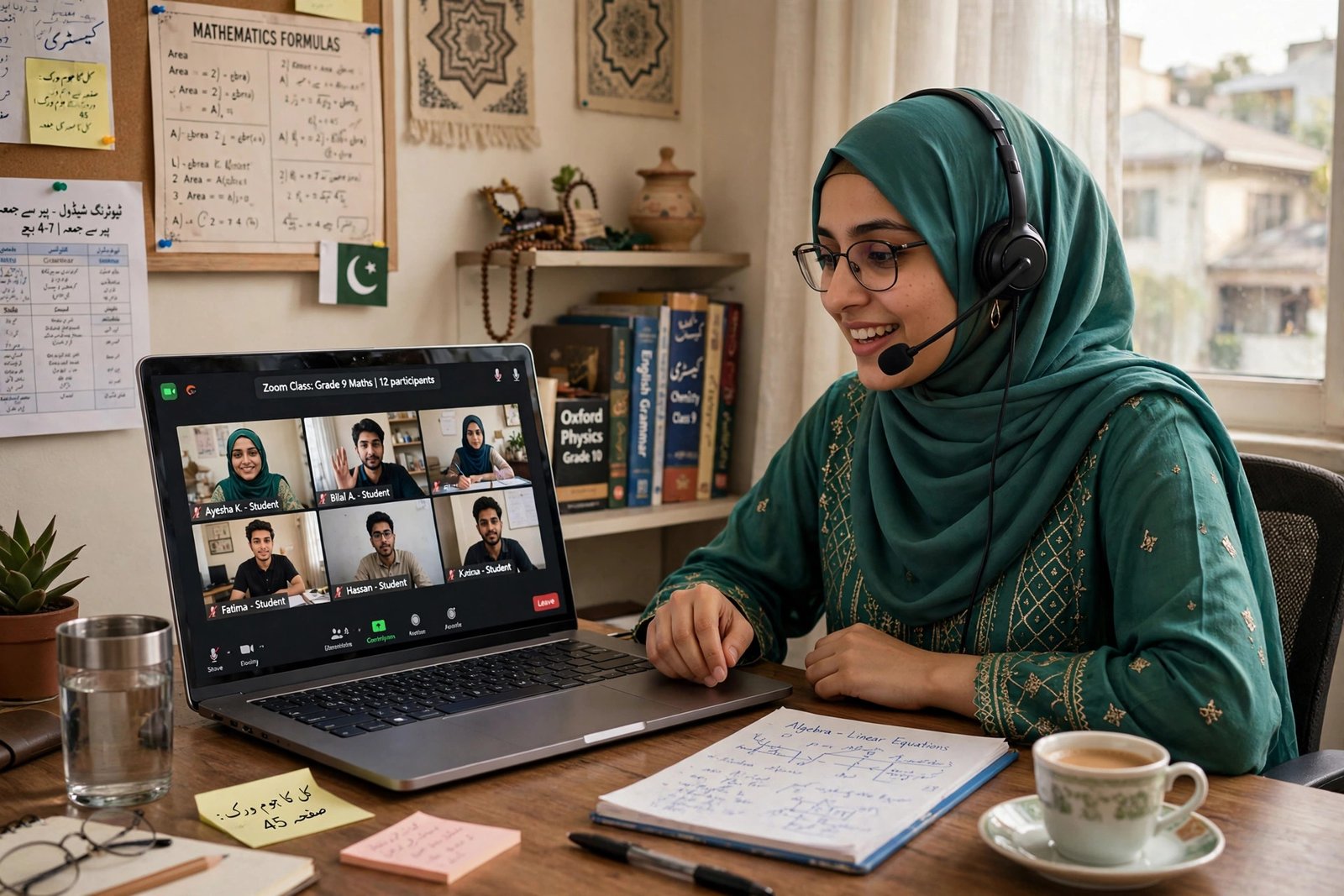
Online teaching has quietly become one of the fastest-growing routes into teaching jobs in Pakistan. You do not need a campus — you need a laptop, a stable internet connection, and command of a subject.
There are two main paths. The first is teaching Pakistani students online: matric, inter and O/A-level students whose parents hire online tutors through Facebook groups, WhatsApp communities and tutoring platforms. The rates are comparable to home tuition without the commute. The second is international tutoring platforms, where Pakistani teachers teach English, Maths or Science to students abroad — the pay, in dollars, is the real attraction here, though the competition is global and the hours can be odd.
A third path is creating your own content: YouTube channels teaching board-exam subjects have turned several Pakistani teachers into genuine brands, with ad revenue and paid course sales on top. It takes time to build, but the ceiling is far higher than any school salary.
If you are a student yourself, online tutoring pairs naturally with your studies — many students fund their degrees this way. This is also why many teachers and students earn through online tutoring alongside their studies, and it is worth reading that breakdown if you want to see how tutoring fits into the wider online-earning picture for Pakistani students.
The practical requirements are simple: a quiet room, a decent webcam and microphone, and a subject you can teach cold. Start with students you know — cousins, neighbours — record a few demo lessons on your phone, and build from there.
Education Startups and Corporate Training Roles
A newer category worth knowing about: education startups and edtech companies. Firms building learning apps, online academies and test-prep platforms hire teachers as content developers, curriculum designers, academic managers and video instructors. These roles often pay better than school jobs and give you exposure to the tech side of education.
Similarly, corporate training — teaching English communication, IELTS preparation or professional skills to company staff — is a small but well-paid niche in Karachi, Lahore and Islamabad. IELTS and PTE trainers with a proven band-improvement record are always in demand at language institutes, and the per-batch pay beats most school salaries.
Qualifications You Actually Need: B.Ed, M.Phil, and the Tests That Matter
Let us cut through the confusion about qualifications, because this is where most aspirants waste time.
- For private schools: a Bachelor’s degree is usually enough to start, especially in early years and primary sections. A B.Ed or M.Ed makes you significantly more competitive and unlocks better schools and pay scales. Subject mastery plus English fluency matters more than the degree name in interviews.
- For government school posts: you generally need a Master’s degree plus B.Ed/M.Ed, and you must pass the provincial commission’s written test. Each province announces its own eligibility criteria with every recruitment cycle, so read the actual advertisement — do not rely on what a cousin told you three years ago.
- For college lecturers: Master’s in the relevant subject (16 years of education) is the minimum for commission-based posts.
- For universities: M.Phil is the practical minimum for a career-track role, and a PhD is increasingly required for permanent assistant professor posts. HEC’s criteria change periodically, so check the latest faculty appointment rules.
- For academies and tuition: honestly, nobody asks for your degree. They ask for a demo. Your results — your students’ board marks — are your qualification.
One more thing: the teaching license and NTS/GAT-style screening tests appear in various recruitment drives. Do not pay any “agent” who promises to clear these for you. That is a scam, every single time.
Teaching Salaries in Pakistan in 2026: What to Expect
Nobody should enter teaching without honest numbers. Here is the realistic range:
- Small private schools: PKR 20,000–40,000/month starting. This is the hardest tier and the reason teaching has a reputation for low pay.
- Mid-tier and branded private schools: PKR 45,000–90,000/month, rising with experience and subject demand.
- Top-tier schools (major cities): PKR 80,000–150,000+/month for experienced teachers, coordinators and heads of department.
- Government school teachers: BPS-14 to BPS-16 starting scales with annual increments, allowances and pension — the total package beats most private schools once you factor in security.
- College lecturers (government): BPS-17 and above — a genuinely comfortable middle-class package.
- University visiting faculty: paid per course, typically PKR 30,000–80,000 per course per semester depending on the institution.
- Academy teachers: PKR 30,000–150,000+/month depending on subject, batches and reputation. MDCAT/ECAT star teachers earn at the top of this range.
- Home tutors: PKR 15,000–50,000+ per student per month in upscale areas.
- Online international tutors: USD 5–20+/hour on global platforms — the exchange rate does the heavy lifting.
The pattern is clear: the base job gives you stability, and the second shift — academies, tuition, online — gives you growth. Plan for both from day one.
How to Apply: Where Teaching Jobs in Pakistan Are Actually Advertised
Teaching vacancies are announced in a few predictable places, and checking them regularly matters more than any clever trick:
- Newspaper classifieds — yes, still. Sunday editions of major dailies carry school and college vacancies, especially in August–September and March–April hiring seasons.
- Provincial commission websites — PPSC, SPSC, KPPSC and BPSC publish educator and lecturer advertisements with syllabi and schedules. Bookmark them.
- School education department portals — educator recruitment drives are announced here first.
- Job websites — Mustakbil.com is one of Pakistan’s established job portals and regularly lists teaching vacancies from schools and institutes across the country. Filter by city and “education/training” to find relevant posts.
- School websites and Facebook pages — branded schools post vacancies on their own pages before anywhere else. Follow the schools in your city.
- Walk-in with your CV — for private schools, this still works. A neat CV, a confident demo lesson and good English will get you hired faster than any portal.
For your CV, keep it to two pages: education, teaching experience (even tuition counts — list it), subjects you can teach, and any B.Ed/M.Ed or certifications. Add a one-line teaching philosophy if you like, but skip the fluff.
Scam Red Flags: Protect Yourself
Teaching job seekers are prime targets for fraud because the demand is emotional — people desperately want these posts. Memorise these red flags:
- Any fee for a job. “Registration fee,” “security deposit,” “training fee” before joining — a real school never charges you to hire you. Walk away.
- Guaranteed government posts for money. Nobody can sell you a commission merit seat. Anyone who claims otherwise is stealing from you.
- Vague academies with no address. If the “institute” has no verifiable campus, no website and only a WhatsApp number, be very careful.
- Salaries that make no sense. A small unknown school offering PKR 150,000 for a fresh graduate is bait, not a job.
- Requests for original documents upfront. Never hand over original degrees or CNIC copies before you have a signed offer letter and have verified the institution.
- Overseas teaching offers via social media DMs. Real international school recruitment goes through proper channels and interviews, not Facebook messages asking for “visa processing fees.”
If something feels off, it is off. Ask a teacher you know, check the school’s physical existence on Google Maps, and never pay to get hired.
FAQs About Teaching Jobs in Pakistan
What is the minimum qualification for teaching jobs in Pakistan?
For most private schools, a Bachelor’s degree is enough to start, and a B.Ed or M.Ed improves your prospects and pay. Government school posts typically require a Master’s plus B.Ed/M.Ed and a pass in the provincial commission’s test. Academies and home tuition care about your demo and results more than degrees.
Which teaching jobs pay the most in Pakistan?
At the top end: university faculty with PhDs, government college lecturers (BPS-17+), star MDCAT/ECAT academy teachers, and online tutors earning in dollars on international platforms. Among school jobs, top-tier private schools in major cities pay the best starting salaries.
Can I get a teaching job in Pakistan without a B.Ed?
Yes — many private schools, academies and tuition setups hire without one. But a B.Ed or M.Ed is usually required for government posts and strongly preferred by branded schools, and it meaningfully improves your pay scale. If you are serious about a long-term teaching career, get one.
How do I apply for government teaching jobs in Punjab, Sindh, KPK or Balochistan?
Watch for educator/lecturer advertisements from your province’s public service commission (PPSC, SPSC, KPPSC, BPSC) and the school education department. Apply online through the commission’s portal before the deadline, prepare for the written test using the announced syllabus, and clear the interview. Each recruitment round has its own eligibility rules — always read the official ad.
Is online tutoring a reliable income in Pakistan?
It can be, once you have regular students. Local online tutoring (matric/inter/O-level) pays steadily and the demand is year-round; international platforms pay more but have irregular hours and global competition. Most successful online tutors in Pakistan combine a few regular students with content (YouTube or paid courses) for stability.
What subjects have the most teaching vacancies?
English, Mathematics and Science (Physics, Chemistry, Biology) are in the highest demand across schools, academies and tuition. Computer Science is rising fast. For test prep, MDCAT/ECAT subject teachers are the most sought-after and best-paid in the academy sector.
Conclusion: Teaching Jobs in Pakistan Reward the Prepared
Teaching jobs in Pakistan are not a lottery — they are a system. The government track rewards qualifications and test preparation. The private track rewards classroom skill and English fluency. The academy and tuition track rewards results. And the online track rewards initiative. Figure out which track fits your situation, prepare accordingly, and start — even a modest private school job beats waiting at home for the perfect posting. Thousands of teachers build comfortable, respected lives on this profession every year. With the right preparation and a clear-eyed view of the pay, you can be one of them in 2026.
6 Responses